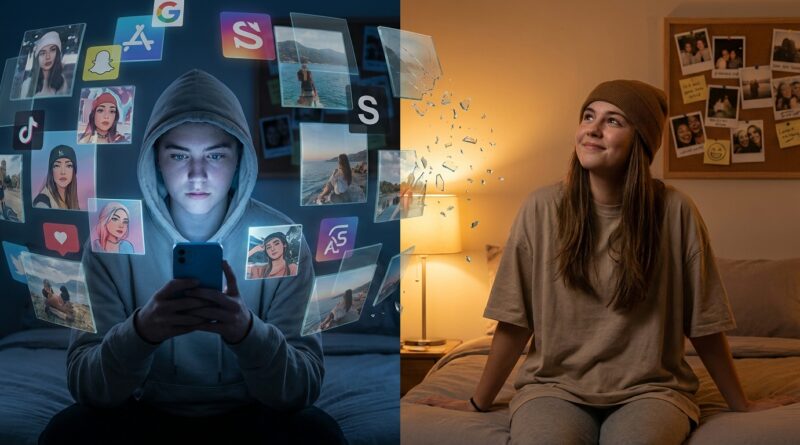
Inside TikTok’s ‘Unalive My Digital Self’ Wave: How Deleting Perfect Feeds Quietly Became Gen Z’s Boldest New Flex
Your feed can start feeling like a museum of people you used to be. The old selfie era. The productivity era. The hyper-polished “I swear I am thriving” era. Meanwhile, every platform keeps pushing the same message. Post more. Be consistent. Pick a niche. Grow. It is exhausting, especially when your online life starts to feel more fake than fun. That is why the tiktok deleting feed trend 2026 is hitting such a nerve. People are not just cleaning up bad posts. They are wiping whole moods, old aesthetics, forced personal brands, and even successful content that no longer feels true. Quietly, this has turned into a flex. Not “look how perfect I am,” but “look how little I need to perform for strangers.” For a lot of Gen Z and Gen Alpha users, deleting the polished version of yourself is not giving up. It is taking control back.
⚡ In a Hurry? Key Takeaways
- The tiktok deleting feed trend 2026 is a real shift away from “always be branding” and toward smaller, more honest online spaces.
- If your feed feels fake, start by archiving or deleting posts that no longer fit, then move personal sharing to close-friends or alt accounts.
- You do not need to erase yourself in a panic. A slow, intentional reset is usually healthier and safer than a dramatic digital scorched-earth move.
What “unalive my digital self” actually means
No, this is not about disappearing from the internet forever. Most of the time, it is much less dramatic than that.
“Unalive my digital self” is the joke-y, slightly dark phrase people are using for a very real behavior. They are deleting, archiving, muting, or abandoning old online versions of themselves that feel overperformed. Think less “I am quitting social media” and more “I cannot keep acting like a 24/7 content machine.”
On TikTok, this can look like wiping your public grid, posting less often, switching to low-effort photo dumps, or moving your real thoughts into close-friends stories and private accounts. On Instagram, it often means the return of the alt account. The messy account. The one without the pressure.
That is why this matters. It is not just a style change. It is a values change.
Why the tiktok deleting feed trend 2026 feels bigger than a normal clean-out
People have always deleted embarrassing old posts. That part is not new. What is new is the reason.
In 2026, a lot of younger users are not deleting because a photo is cringey. They are deleting because the whole setup feels wrong. The perfect feed. The niche pressure. The sense that every post has to prove something. Even “authenticity” started to feel staged.
That pressure built up for years. First came the polished influencer era. Then the “be real” push. Then even being real turned into another performance. Cry on camera, but make it relatable. Share your breakdown, but make it content. If that sounds familiar, it connects closely to Inside TikTok’s ‘Ugly Cry For The Algorithm’ Wave: How Unfiltered Meltdowns Quietly Became Gen Z’s Realest New Flex, where raw emotion started getting rewarded too. Once everything can become content, deleting starts to feel like the only honest move left.
That is the mood behind this wave. Not just “I want less stuff on my profile,” but “I want out of the performance loop.”
The big cultural shift hiding underneath
Being “a brand” is losing its shine
For years, the internet told young people to think like mini companies. Have a consistent tone. Match your visuals. Build your audience. Turn hobbies into income. Turn personality into strategy.
There is nothing wrong with creators making money. But the problem starts when everybody feels forced to act like a creator, even when they just want to exist online like a normal person.
That backlash is getting sharper. The new flex is not “I optimized everything.” It is “I do not need to optimize every part of my life.”
Private is becoming aspirational
For a long time, public visibility looked like success. More followers. More reach. More proof.
Now, small and private spaces feel more valuable. Close-friends stories. Tiny Discord groups. Locked accounts. Alt Instas. Group chats where nobody is trying to win.
That does not mean public platforms are dying. It means people are splitting their identity more carefully. Public for visibility. Private for reality.
Old selves are being retired on purpose
There is also a healthy angle here. Teenagers and young adults change fast. What felt true at 17 can feel painfully false at 20. Deleting or archiving old content can be a way of saying, “I am not trapped by that version of me anymore.”
That can be messy. It can also be freeing.
How creators are quietly testing low-pressure spaces
Here is the interesting part. Even creators who still need public platforms are experimenting with escape routes.
Some are keeping the polished main account for brand deals and search traffic, while moving their actual personality to a private second account. Others are posting less edited videos, fewer hooks, and more “this is what I am actually doing today” clips. Some are deleting older viral posts because those posts locked them into a character they no longer want to play.
This is not laziness. It is product design for the self. People are trying to build online spaces they can actually live in without burning out.
If you watch closely, the pattern is simple. Public accounts are becoming storefronts. Private spaces are becoming homes.
Why this trend feels so powerful to viewers too
Watching someone delete the “perfect” feed can feel weirdly reassuring.
Why? Because it breaks the script. Most platforms train us to think growth is always the goal. More posts, more reach, more polish. When somebody willingly steps back from that, it sends a different message. You are allowed to change. You are allowed to stop curating yourself so hard. You are allowed to be unfinished.
That lands especially well with younger users who grew up online and now feel over-documented. There is a quiet relief in seeing somebody say, “I do not want every stage of my life pinned to a profile forever.”
If your own feed feels fake, here is a sane way to reset it
You do not need to panic-delete everything at 2 a.m. Start smaller.
1. Archive before you erase
If the platform allows it, archive posts first. That gives you breathing room. You can always delete later, but it is harder to undo regret.
2. Ask one simple question
Does this post still feel like me, or does it feel like a costume I kept wearing because people liked it?
If it feels like a costume, that is your clue.
3. Separate memory from performance
Not every photo needs to stay public to stay meaningful. Save things for yourself. Move them to a private folder. Keep the memory without keeping the performance.
4. Build one low-pressure space
Create a close-friends list. Use a private alt account. Start one group chat where nobody is posting for metrics. You do not need to put your whole real self back on the main stage.
5. Leave room for a new version of you
The point is not to become invisible. The point is to stop being trapped by an old digital identity that no longer fits.
What to watch out for
This trend has a healthy side, but it can also slide into impulse.
If you are deleting because you feel ashamed, overwhelmed, or harassed, slow down and think about safety first. Screenshot important contacts. Download your data if needed. Tighten privacy settings. Block people. Ask yourself whether you need a reset, a break, or actual support from someone offline.
Also, remember that a “messy” online presence can become a performance too. The internet is very good at turning every reaction into a new aesthetic. Even anti-branding can become branding if you are not careful.
The goal is not to look more authentic. It is to feel less split between your real self and your posted self.
What this says about where authenticity culture is heading next
The next phase probably will not be full disappearance. It will be selective presence.
People still want connection. They still want to be seen. They just do not want every part of that process fed into an endless machine that rates, sorts, and monetizes personality.
So expect more half-private spaces, more throwaway posting, more intentional archiving, and more resistance to the idea that every interest has to become a niche. Expect more accounts that look plain on purpose. Less “personal brand.” More “person.”
That is why the tiktok deleting feed trend 2026 matters. It is an early signal. It shows where the emotional center of online culture is moving.
At a Glance: Comparison
| Feature/Aspect | Details | Verdict |
|---|---|---|
| Why people are deleting feeds | Less about embarrassment, more about rejecting constant self-branding and forced polish. | A meaningful cultural reset, not just spring cleaning. |
| Where real sharing is moving | Close-friends circles, private alt accounts, group chats, and lower-pressure posting spaces. | Private and semi-private spaces are becoming more valuable than public perfection. |
| Best way to respond personally | Archive first, delete slowly, save memories privately, and rebuild around comfort instead of performance. | Intentional reset beats dramatic wipeout. |
Conclusion
This wave matters because it is not just about tidying up a profile. It is a sharp, very real backlash to the idea that you have to be a brand just to exist online, and it is spreading fast through TikTok close-friends circles and private Insta alt accounts. Once you see how this “unalive my digital self” shift works, you start spotting the bigger pattern. Authenticity culture is moving away from polished confession and toward smaller, lower-pressure spaces where people can test new versions of themselves without turning every feeling into content. For Gen Z and Gen Alpha, learning to strategically kill off old digital selves may turn out to be one of the healthiest pivots of the year. You do not owe the internet permanent access to every version of you. Sometimes the boldest thing you can post is less. Sometimes the healthiest thing you can do is start over, on purpose.