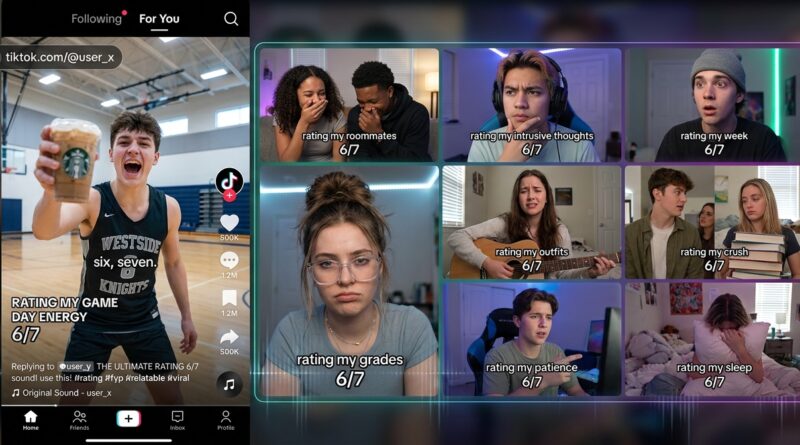
Inside TikTok’s ‘Six, Seven’ Sound Obsession: How A Throwaway Starbucks Clip Quietly Became Gen Alpha’s New Personality Test
You are not crazy. The “six, seven” TikTok sound is everywhere right now, and trying to figure out why feels weirdly harder than it should. You tap the audio, expect a neat origin story, and instead get a pile of lip-syncs, sarcastic ratings, fit checks, side-eyes and jokes that seem to assume you were in on it three weeks ago. That is the frustrating part. This is clearly bigger than one random clip, but most explainers stop at “here’s the original Starbucks video” and never answer the real question. Why did this throwaway line turn into a whole social code? The short version is that “six, seven” works because it sounds casual, judgmental, unserious and oddly precise at the same time. It lets people rank vibes without looking too invested. For Gen Z and Gen Alpha, that makes it perfect TikTok language.
⚡ In a Hurry? Key Takeaways
- The “six, seven” TikTok sound trend is not just about the original clip. It became a fast, low-stakes way to signal taste, irony and social ranking.
- If you are a creator or brand, use the sound to comment on vibes, aesthetics or soft judgments, not for hard-selling. It works best when it feels tossed off.
- The real value here is cultural. This trend shows how younger users turn random audio into a shared language long before older audiences even realize it happened.
What is the “six seven” TikTok sound trend, really?
If you want the simple version of the six seven tiktok sound trend explained, here it is. A short rating phrase from a casual Starbucks clip escaped its original context and became a reusable way to judge almost anything.
Not harshly. Not seriously. Just enough.
That matters. Online, especially on TikTok, people love language that lets them communicate a lot while pretending they do not care that much. “Six, seven” lands in a sweet spot. It is not a glowing ten. It is not a brutal three. It is the sound of someone giving you a look, making a tiny assessment, and moving on.
That is why it spread so fast across outfit videos, crush videos, “rate my room” clips, school humor, friend-group jokes and even random pet posts. The sound gives creators an instant tone. Lightly shady. Mildly amused. Very online.
Why this random Starbucks clip took off
Plenty of odd audio clips hit TikTok every week. Most disappear. This one stuck because it checks several boxes at once.
It sounds natural, not scripted
The best TikTok sounds often feel overheard rather than performed. “Six, seven” has that offhand, caught-in-the-moment feel. It does not sound like a joke someone wrote for the internet. It sounds like something a real person would actually mutter.
That makes it easy to reuse. People can drop it onto almost any clip and it still feels believable.
It gives a rating without full commitment
Younger users are very fluent in half-ironic judgment. They are constantly ranking outfits, vibes, social energy, playlists, dates, coffee orders and “would I survive in this friend group” scenarios. But they also hate looking too earnest.
“Six, seven” solves that problem. It says, “I have an opinion,” while also saying, “relax, this is not that deep.”
It fits the 2026 mood
TikTok right now is full of low-effort irony, blurry nostalgia, fake-casual editing and bits that feel like old internet behavior reborn. The mood is less polished than classic influencer culture. More shrugged shoulders. More ambient humor. More “I am posting this because the vibe is funny.”
That is also why trends like Inside TikTok’s ‘Morning Shed’ Obsession: How Going To Bed Looking Unhinged Became Gen Z’s New Glow‑Up Flex hit so hard. They are not just trends. They are little social scripts for how to perform taste, chaos and self-awareness online.
Why “six, seven” feels bigger than a meme
This is the part a lot of coverage misses.
The sound is becoming ambient culture. That means people are using it even when they barely know the source, because the source no longer matters as much as the meaning attached to it. Once a sound turns into shorthand, it stops being just audio and starts acting like slang.
Think about what “six, seven” signals now:
- A measured, almost lazy judgment
- Aesthetic taste without overexplaining
- Mild social sorting
- Detached humor
- Belonging through recognition
That last one is huge. If you instantly get why “six, seven” is funny on a fit check or cafeteria clip, you are in the room. If you do not, you feel one beat behind. TikTok trends often work like tiny personality tests. Not official ones. Social ones.
How Gen Z and Gen Alpha are using it as a personality test
Calling something a “personality test” sounds dramatic, but in practice it is pretty simple. Audio trends help people sort each other by taste.
If you use it
You signal that you understand the current joke format. You also show that your humor style leans dry, observational and lightly judgmental.
If you react to it correctly
You show you know the tone. The joke is not just the number. It is the restraint. Overdoing it ruins it.
If you miss the point
You can look too literal, too old-school, or too eager. That is why brands often fumble trends like this. They hear “rating audio” and think campaign. But the real appeal is social subtlety.
This is not a trend about accuracy. It is a trend about vibe literacy.
What “six, seven” says about status online
On paper, giving something a six or seven sounds average. On TikTok, average is not always average. It can mean a lot of different things depending on delivery.
Sometimes it means “pretty good, but not iconic.”
Sometimes it means “I am being nice.”
Sometimes it means “this is painfully mid, but I will not say that directly.”
Sometimes it means “I actually love this, but being sincere would kill the joke.”
That flexibility is why the trend is useful. It lets people negotiate status without announcing that they are doing it. They can place something on the social ladder while acting breezy about it.
That is very Gen Z. Increasingly, it is very Gen Alpha too.
Why the search results feel so chaotic
If you searched for the sound and felt like you learned nothing, there is a reason.
TikTok trends move through stages:
- Original clip appears
- Early users repeat it with context
- Mass adoption strips away context
- The sound becomes modular and means different things in different corners of TikTok
By stage three or four, trying to “look up” the meaning gets messy. You are no longer researching one joke. You are watching a social language mutate in real time.
That is what is happening here. The audio now lives across fashion TikTok, student TikTok, beauty TikTok, friend-group humor and random meme edits. Each group uses the same phrase with slightly different intent.
How creators should use the trend without looking forced
If you make content, the temptation is to grab the sound and slap it onto anything. That usually backfires.
Use it for soft judgments
This sound works best when the point is a vibe check, a casual ranking or a playful mismatch between what we see and what the audio implies.
Good fits include:
- Outfit reveals
- Room tours
- Food reviews with attitude
- Dating story clips
- “Be honest” friend content
Do not overexplain the joke
If the caption tries too hard, the whole thing feels stiff. This trend lives on understatement.
Do not make it too polished
The audio comes from a throwaway-feeling clip. It carries casual energy. Glossy brand production often strips out what made it funny.
What brands should learn from it
For brands, this trend is less about using the exact audio and more about understanding the behavior behind it.
Younger audiences are hungry for content that feels socially observant, not aggressively promotional. They like ranking systems, but only when those systems feel self-aware and a little silly.
So the lesson is not “post the meme.” The lesson is this:
- Build content around taste and vibe, not product claims alone
- Keep the tone light
- Leave room for irony
- Do not explain every reference to death
That same rule showed up in other lifestyle-driven TikTok waves too, including the messy-pretty aesthetic behind Morning Shed. The internet keeps rewarding formats that look unserious on the surface but carry a whole value system underneath.
Why this trend hit now, not six months ago
Timing matters as much as the audio itself.
Right now, TikTok is in one of its recurring “micro-language” phases. Users are tired of obvious trend-chasing, but they still want ways to signal belonging. So instead of giant challenge formats, we get small sounds and phrases that spread quietly and then suddenly seem to be everywhere.
“Six, seven” fits the current mood because it feels:
- Low effort
- Slightly nostalgic
- Very remixable
- Open to irony
- Socially useful
That 2016-nostalgia-meets-2026-irony mix is powerful. It brings back the fun of random internet catchphrases, but with a sharper awareness of how taste gets performed online.
How to spot the next trend like this early
If you are trying to read where TikTok culture is going, this is the useful part.
Look for sounds that feel overheard
People trust messy, human audio more than content that sounds written for virality.
Watch for phrases that are specific but flexible
“Six, seven” is weirdly precise, but still broad enough to fit hundreds of situations. That is the sweet spot.
Pay attention when context starts disappearing
Once users stop caring about the source and start using the sound as a mood marker, you are looking at a trend with real staying power.
Notice when comments become as important as the videos
That usually means a sound has moved from meme to shared language.
At a Glance: Comparison
| Feature/Aspect | Details | Verdict |
|---|---|---|
| Original clip vs current use | Started as a casual Starbucks moment, now used as a broad reaction and rating language across TikTok niches. | The meme has outgrown its source. |
| Why people like it | It lets users judge vibes with humor and distance, without sounding too serious or too mean. | Very sticky social shorthand. |
| Best use for creators and brands | Works for playful commentary, aesthetics and taste-based posts. Fails when it is overproduced or too salesy. | Use carefully. Tone matters more than format. |
Conclusion
The big thing to understand is that the “six, seven” trend is not really about a number. It is about how younger internet users talk around judgment instead of stating it outright. That is why this matters more than the usual “here is the original audio” explanation. The sound is quickly becoming part of the background language of TikTok, and that makes it useful for creators, brands and anyone trying to keep up without feeling lost. If you can see why a tiny, tossed-off rating clip became a signal for taste, status and belonging, you are already reading the platform more clearly than most trend roundups do. And that is the real payoff. Once you know how a silly sound turns into social glue, you get much better at spotting the next clip that looks random today and ends up quietly changing how people talk tomorrow.