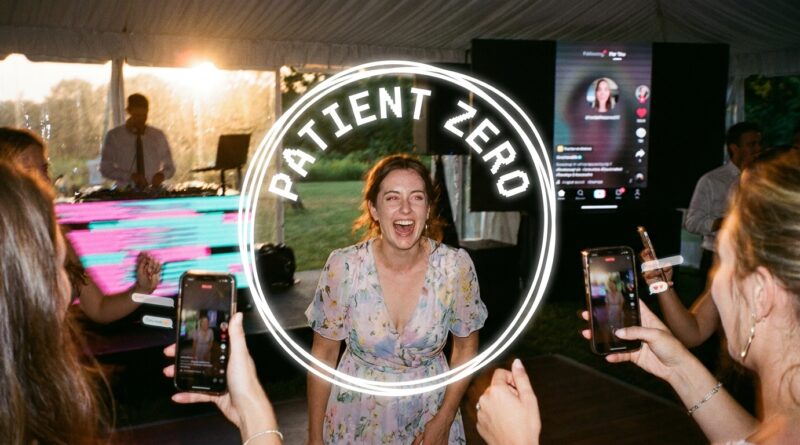
Inside TikTok’s ‘Patient Zero Wedding Edit’ Wave: How One Cursed Party Clip Quietly Became Gen Z’s New Way To Blame Everything On The Group Chat
If you keep seeing “patient zero” in wedding comment sections and feel like everyone else got the joke three days early, you are not alone. A lot of people are landing on these clips halfway through the bit. They see a bride, a dance floor, maybe one awkward guest, then hundreds of comments acting like a full social collapse started because of one person. It can feel weirdly intense for what looks like a normal wedding edit. That is because the joke is not really about the wedding. The patient zero wedding edit TikTok trend is a way users turn one tiny moment from a real event into a fake origin story for all the chaos that followed. It mixes meme language, fandom-style overanalysis, and group chat humor. Once you see that, the comments stop looking random and start reading like collaborative storytelling with a side of blame, cringe, and gossip.
⚡ In a Hurry? Key Takeaways
- The “patient zero wedding edit” trend is not just about messy weddings. It is a joke format where viewers pick one person or moment and act like it caused all the later drama.
- If you want to understand a clip fast, read the comments for the “origin point,” then watch how people build a shared story around it.
- Be careful before joining in. Real wedding footage often gets turned into public fan fiction about private people who did not agree to become meme characters.
What the “patient zero wedding edit” trend actually means
“Patient zero” used to be a clinical phrase. Online, it has been repurposed into meme shorthand for “the first person who started this whole mess.” In WeddingTok, that means users take a clip from a reception, ceremony, bridal party entrance, or after-party and point to one guest, one expression, one outfit choice, or one dance move as the moment everything went off the rails.
Sometimes the person is not even doing anything dramatic. They might just look a little too excited. Or too calm. Or like they know something. That is the joke. The internet fills in the rest.
So when commenters write things like “we found patient zero” or “this is where the group chat started lying,” they are not usually reporting real scandal. They are playing a shared game of assigning origin blame to the most suspicious-looking detail in the footage.
Why this specific joke spread so fast
The patient zero wedding edit TikTok trend took off because it sits right in the sweet spot of how short-form video works now.
It rewards people for noticing tiny details
TikTok loves rewatchable clips. A wedding video with one odd look in the background gives commenters something to “solve.” It feels like spotting lore in a TV show, except the source material is a real person’s reception.
It turns ordinary footage into a dramatic universe
Gen Z is very good at turning a 12-second clip into a full fictional timeline. One bridesmaid side-eye becomes proof of a feud. One groomsman dancing too hard becomes the reason “the night was never the same.” It is less journalism, more improv.
It borrows language from stan culture
If you spend time online, you have seen this before in fan edits and celebrity discourse. People map relationships, assign motives, and build narratives from scraps. WeddingTok just moved that habit onto everyday people and dressed it up as a joke.
Where the “cursed party clip” part comes in
Most trends like this do not start with a polished influencer wedding. They start with a clip that feels a little off. Maybe the edit lingers too long on one guest. Maybe the music choice makes an innocent moment feel sinister. Maybe the comments get there first and tell everyone else how to watch it.
That is what makes one random party clip feel “cursed.” Not because anything terrible happened, but because the internet agrees to treat it like a key piece of evidence from a social disaster.
Once that framing locks in, every repost adds another layer. Captions get more dramatic. Reaction videos pretend to investigate. Viewers start acting like they are historians of an event they know almost nothing about.
Why people keep linking it to “the group chat”
This is the part that makes the trend more interesting than a basic wedding meme.
When people blame “patient zero,” they are often joking about group dynamics, not just one wedding guest. The real target is the familiar feeling that every friend group has a person who starts the chaos, leaks the vibe, invites the wrong plus-one, says “should we do shots?” at exactly the wrong time, or accidentally turns private drama into public content.
So the joke lands because it gives people a shared way to talk about blame. Not serious blame. Social blame. Vibe blame.
That is why comments often sound less like event recap and more like this:
- “You just know she sent the first text.”
- “That is the friend who says ‘wait till I tell you what happened.’”
- “Patient zero of the bridesmaid civil war.”
It is really a meme about how friend groups narrate themselves after the fact.
What makes it funny, and what makes it uncomfortable
The humor is easy to get once you are in on it. The problem is that these are often real weddings, with real families, real friendships, and real stakes.
The funny part
People enjoy pattern-finding. They enjoy assigning roles. They enjoy treating ordinary social footage like prestige TV. The comments become a live writers’ room.
The uncomfortable part
The people in the video did not necessarily agree to become characters in a mass improv session. A joke about “patient zero” can quickly slide into wild assumptions about cheating, feuding, drinking, class, family tension, or someone “ruining” a wedding.
That is where the trend stops being harmless decoding and starts looking like crowd-authored gossip.
How to spot when a patient zero edit is just a meme, and when it is turning mean
There is a simple test. Ask yourself what the comments are doing.
Mostly meme behavior
- People are joking about expressions, timing, or dance energy.
- The claims are obviously exaggerated.
- No one is trying to identify or contact the people involved.
Crossing the line
- Commenters are naming non-public people.
- People are inventing serious accusations.
- Users are reposting clips to mock one guest over and over.
- The original event starts getting overshadowed by harassment.
That is the bigger reason this trend matters. It shows how fast internet humor can turn private people into public symbols.
How to decode the trend quickly when it shows up on your feed
If you want to understand the joke without getting lost in 50 stitched videos, here is the shortcut.
1. Find the supposed “origin moment”
Look for the person or detail the comments keep circling. It could be a guest in the back, a toast reaction, a dance move, or someone entering frame at the wrong time.
2. Read the comments like a script room
Do not ask, “What literally happened?” Ask, “What story are people collectively building?” That is usually the real trend.
3. Separate the edit from the event
The music, crop, slow zoom, and caption often do more work than the raw footage. A normal moment can be made to feel incriminating with the right edit.
4. Check whether the creator is in on the joke
If the uploader is laughing with the audience, the tone is usually lighter. If the clip has escaped its original context and been reposted by strangers, things can get messier fast.
Why brands and older trend-chasers are likely to get this wrong
A lot of late adopters will read this as “another chaotic wedding trend.” That misses the point. The patient zero wedding edit TikTok trend is not mainly about weddings. It is about how online audiences assign blame, perform social intelligence, and test the boundary between playful commentary and invasive storytelling.
That is why a brand trying to copy it with a cheesy “Who is patient zero in your office?” post could land badly. The phrase works because it comes with a very specific online tone. It is suspicious, ironic, and a little judgmental on purpose. Strip out that context and it just sounds forced.
What this trend says about Gen Z internet culture
This is where the trend gets more revealing.
Gen Z has grown up in a world where every event can be documented, clipped, captioned, and publicly reinterpreted. So instead of treating a wedding video as a memory, the internet treats it as raw material. People are not just watching. They are rewriting.
That changes the social contract.
A wedding used to have one official story. Now it can have thousands, built in comments by strangers who were never there. One of those stories might become the dominant version, even if it is based on almost nothing.
That is why the “patient zero” label feels so sticky. It gives the crowd a neat villain, catalyst, or mascot. It makes a messy social moment easier to package and share.
Should you join in?
Sure, if the joke is clearly harmless and the creator is playing along. But it is worth using a little restraint.
If your comment depends on humiliating a random guest, accusing someone of something serious, or making a private person into a meme they cannot escape, it is probably not as funny as it feels in the moment.
The best way to engage is to keep the joke focused on the format, not the person. Laugh at the overanalysis. Laugh at the dramatic framing. Be careful about turning a real human into internet evidence.
At a Glance: Comparison
| Feature/Aspect | Details | Verdict |
|---|---|---|
| Core joke | Viewers pick one person or moment and jokingly blame them as the origin of all later wedding chaos. | Funny once you know it is collaborative storytelling, not literal reporting. |
| Why it spreads | It rewards detail-spotting, comment participation, and fandom-style overanalysis of short clips. | Built for TikTok and Reels. Very easy to remix and repost. |
| Main risk | Real people can get turned into meme villains or gossip targets without context or consent. | Worth understanding early, and worth engaging with carefully. |
Conclusion
The big thing to know is that this is not just a messy wedding joke. The patient zero wedding edit TikTok trend is really about how internet culture assigns blame, creates characters, and turns real moments into group-written lore. That is why it is moving so quickly from niche corners into mainstream TikTok and Reels. It sits right where parasocial fandom, gossip habits, and digital consent all meet. If you understand that now, you will read these clips more clearly than the brands and late adopters who think it is only about bad receptions and awkward guests. You will see the real story underneath, which is how online friend groups are renegotiating cringe, blame, and what should stay private once a camera is rolling.