Inside Mean Girls Day 2026: How A 22-Year-Old Movie Quietly Became Gen Z’s Newest ‘Fake Holiday’ To Signal You’re Extremely Online
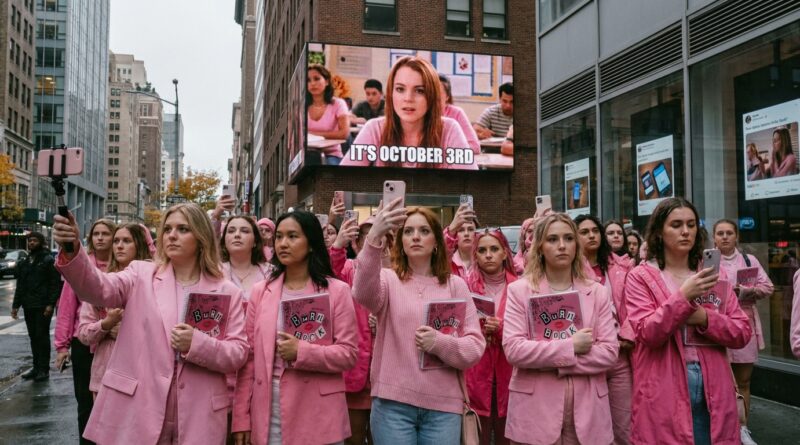
If your feed suddenly turned pink and weirdly specific, you are not imagining it. Over the last day, Mean Girls Day got another big burst, and if you missed the reference, it can feel like everyone agreed to celebrate a holiday you were never told about. The basic joke comes from one line in the 2004 movie Mean Girls. A character asks, “What day is it?” and gets the answer, “It’s October 3rd.” That tiny moment has grown into an annual internet ritual. In 2026, it hit harder again because nostalgia accounts, fashion creators, meme pages, brands, and regular users all posted the same cues at once. Pink outfits. Burn Book jokes. “On October 3rd” captions. Screenshots. Reaction memes. It is less about the date itself and more about signaling that you get the reference, you know the internet rhythm, and you belong in that mix of millennial nostalgia and Gen Z irony.
⚡ In a Hurry? Key Takeaways
- Mean Girls Day is the yearly October 3 meme based on one line from the movie, and the Mean Girls Day October 3 2026 trend spiked because lots of accounts posted the same visual language at once.
- If you want to join in, use simple cues people already recognize. Pink, “On October 3rd,” Burn Book jokes, Plastics references, or a knowingly overdramatic caption.
- You do not need to overthink it. This is low-stakes internet culture. If it feels fun, remix it. If not, mute it and move on.
Why Mean Girls Day felt bigger in 2026
Some years, Mean Girls Day comes and goes as a quick movie quote. This year, it felt more like a coordinated wave.
That usually happens when three groups all push at once. First, nostalgia posters bring back the original scene and classic quotes. Second, Gen Z meme accounts turn it into a format, not just a reference. Third, brands jump in because it is safe, recognizable, and easy to dress in pink.
When all three stack together, your feed stops looking like random fan posts and starts looking like a shared event. That is why it can feel strangely bigger than a joke deserves.
What Mean Girls Day actually is
The whole thing comes from a very small moment in Mean Girls. Aaron Samuels asks Cady what day it is. She answers, “It’s October 3rd.” That is it. No deeper plot twist. No in-universe holiday. The internet did the rest.
Over time, October 3 became one of those “fake holidays” people celebrate online. Think of it like a password with glitter on it. If you post it, you are saying a few things at once.
- I know the movie.
- I know the yearly posting ritual.
- I get the joke that this tiny line has become a major event.
That last part matters. Mean Girls Day is not just fandom. It is performative internet literacy.
Why Gen Z and millennials are co-owning it
This is part of why the trend has staying power. It hits two generations for different reasons.
For millennials, it is pure nostalgia
Mean Girls came out in 2004. For a lot of millennials, the movie is not just familiar. It is foundational. The quotes were already social currency long before TikTok existed. Posting on October 3 is a yearly check-in with a shared pop culture language.
For Gen Z, it is a remixable meme format
Gen Z does not need to have seen the movie in theaters, or even at all, to use the trend. What matters is that the format is easy to understand and easy to style. The joke is simple. The visuals are obvious. The caption writes itself. That makes it perfect for short-form social posting.
So millennials supply the emotional memory. Gen Z supplies the meme energy. Together, they keep reviving it.
What people are really signaling when they post it
This is the part that makes the Mean Girls Day October 3 2026 trend more interesting than it looks.
Most people are not just saying, “I like this movie.” They are signaling identity in a very online way.
Nostalgia with taste
Posting Mean Girls content says your nostalgia is a little curated. It is not random. It is specific, quotable, fashion-friendly nostalgia.
Online fluency
You know the date. You know the quote. You know that everyone else knows the quote. That loop is the point.
Camp and irony
There is almost always a wink built into these posts. People know it is silly to treat October 3 like a civic holiday. That silliness is part of the appeal.
Belonging
Fake holidays work because they create easy participation. One caption, one pink accessory, one screenshot, and you are in.
The visual cues taking over feeds right now
If you are trying to decode the posts still rolling by, these are the most common signs.
Pink, obviously
Not every post is a full costume. Sometimes it is just a pink top, pink nails, pink lighting, or a pink product flat lay. The color does half the work.
“On October 3rd…” captions
This is the cleanest tell. It often appears with a still from the movie, a selfie, a fit check, or a joke about talking to a crush.
Burn Book styling
Scrapbook fonts, notebook paper, cutout collage looks, doodles, stars, and messy glam editing all tap into the Burn Book feel.
Plastics-coded language
You will see references to “On Wednesdays we wear pink,” “so fetch,” “you can’t sit with us,” and “get in loser.” These get mixed freely, even though they are not all tied to October 3 itself.
Hyper-polished brand posts
Brands love this trend because it lets them feel playful without taking much risk. If a company account suddenly sounds like your cousin who runs a meme page, that is why.
Why brands keep using fake holidays like this
Because they are low effort, high recognition, and easy to package.
A real holiday comes with expectations and, sometimes, controversy. A fake holiday like Mean Girls Day just asks for a quote, a pink graphic, and a wink. It gives brands a way to sound culturally aware without having to say much.
That can be fun when it is done lightly. It can also feel try-hard fast. Usually the difference is whether the post understands the joke or just copies the surface.
How to tell if a post is sincere, ironic, or just engagement bait
Not every October 3 post means the same thing.
Sincere fandom
This usually comes from personal accounts, movie fan pages, fashion creators, or people quoting scenes they genuinely love.
Ironic participation
This is the “yes I know this is ridiculous and I am posting anyway” zone. A lot of the funniest posts live here.
Pure engagement bait
If the post is generic, late, or mashes every famous quote together with no real point, it is probably just trying to catch the trend wave.
That does not make it evil. It just means you are looking at internet weather, not deep culture.
Should you join in or skip it?
Honestly, either is fine.
If you want to lean in
Keep it simple. Post a pink outfit. Use the “On October 3rd” line. Share a favorite quote. Or make the joke fit your corner of the internet, whether that is beauty, books, work memes, or group chats.
If you want to remix it
The best remixes usually cross Mean Girls with another niche. Fashion creators do this with Y2K looks. Office meme pages do it with coworker drama. Fandom accounts do it by recasting “the Plastics” into whatever universe they cover.
If you want to move on
That is also a valid move. A lot of these fake holidays are fun for a day and then vanish. You are not behind if you ignore them. You are just preserving your attention span.
Why this trend keeps surviving year after year
Because it is easy, visual, quotable, and familiar. That is the whole recipe for a durable internet tradition.
It also helps that Mean Girls sits in a sweet spot. It is famous enough to be mainstream, but still specific enough to feel like a cultural wink. Not every movie can do that.
And unlike trends that depend on one platform, Mean Girls Day travels well. It works on TikTok, Instagram, X, Threads, Snapchat, group chats, and even brand email subject lines. Anywhere captions and images exist, the joke can live.
At a Glance: Comparison
| Feature/Aspect | Details | Verdict |
|---|---|---|
| What it is | A yearly October 3 meme built around one famous line from Mean Girls. | A fake holiday with very real posting power. |
| Why it spiked in 2026 | Millennial nostalgia, Gen Z meme culture, and brand participation all hit at once. | Bigger than usual because multiple internet groups amplified the same cues. |
| How to respond | Join with a simple reference, remix it to fit your niche, or ignore it. | Low stakes. Participate only if it feels fun. |
Conclusion
So yes, Mean Girls Day really did spike hard again right after October 3, 2026, and no, you were not missing some official event. You were watching a very online ritual do what it does best. Pull millennials and Gen Z into the same joke, give brands a safe meme to copy, and let regular users signal nostalgia, identity, and taste with one pink-tinted post. If your feed still looks like a Burn Book exploded on it, now you know what the language and visuals are saying. That gives you the context to decide what to do next. Lean in, remix it for your corner of the internet, or scroll past and save your energy for the next wave.