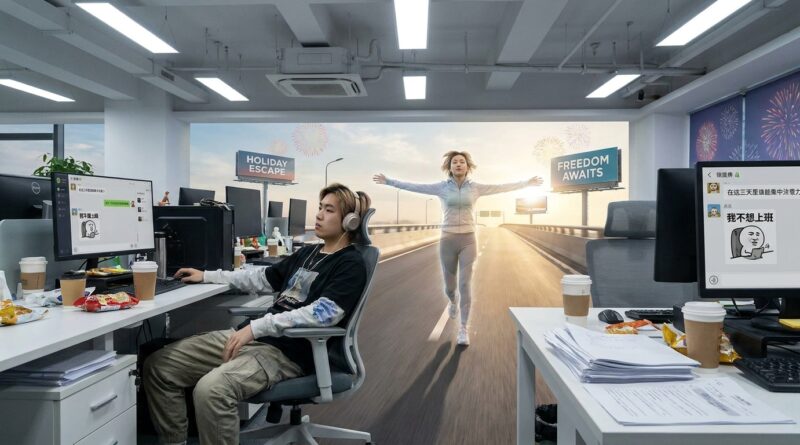
Inside China’s ‘Who Can Even Work Right Now’ Meme: How Pre-Holiday Burnout Quietly Became Gen Z’s New Global Work Rebellion
You know that weird stretch right before a holiday when your body is at your desk, your laptop is open, your chat app is blinking, and absolutely nothing meaningful is happening in your brain? That is the feeling behind China’s “who can even concentrate on work right now” meme. And if you feel a little guilty about it, you are not alone. The joke spreading across Chinese social platforms is funny because it is painfully honest. People are clocked in, but mentally halfway to the train station, the airport, or their parents’ couch. For Gen Z especially, the meme is not just laziness dressed up as humor. It is a small act of rebellion against the idea that every minute at work must be productive, polished, and cheerful. What looks like a throwaway joke is really a pressure valve. It gives burnt-out workers a way to say, “I cannot do this fake urgency thing today,” without turning it into a dramatic manifesto.
⚡ In a Hurry? Key Takeaways
- This China pre holiday burnout meme who can concentrate on work trend is really about shared exhaustion, not simple slacking.
- If your team is mentally checked out before a break, shrink deadlines, cut fake-busy meetings, and name the mood out loud.
- The meme matters because it helps spot a wider global shift. Younger workers are using humor to push back on grind culture before formal workplace language catches up.
What the meme actually means
On the surface, the meme is simple. Workers joke that nobody can focus right before a major holiday. Their “soul” has already left, even if their body is still stuck in the office.
But underneath that joke is something bigger. It captures a very modern kind of burnout. Not collapse. Not dramatic quitting. Just low-grade emotional exit. You are present enough to answer messages, maybe finish a spreadsheet, maybe nod through a meeting. But your real energy is gone.
That is why the meme travels so well. You do not need to live in China to get it. Anyone who has stared blankly at a screen the day before time off knows exactly what it is saying.
Why this is hitting Gen Z so hard
Gen Z did not invent burnout. They did, however, get very good at naming it with jokes, screenshots, memes, and short videos.
For a lot of younger workers, especially in fast-moving city jobs, pre-holiday burnout is not only about being excited for a break. It is about finally feeling the weight of weeks or months spent pretending everything is fine. The holiday does not create the exhaustion. It reveals it.
Humor feels safer than complaining
In many workplaces, saying “I am too drained to care about this task” can sound risky, immature, or unprofessional. Posting a meme that says the same thing with a laugh feels safer.
That is why these jokes spread. They do two jobs at once. They protect the person posting them, and they help everybody else say, “Yes. Same.”
It is rebellion, just in a quieter form
This is not the big public rebellion of storming out, quitting on camera, or posting a long anti-work speech. It is smaller than that. But it still matters.
When thousands of people repeat a joke about being unable to perform fake productivity before a break, they are pushing back on a work culture that expects endless enthusiasm. They are saying the script is broken.
Why China is a useful window into a global mood
China’s online culture often produces sharp, fast-moving phrases for collective feelings. Sometimes those feelings stay local. Sometimes they end up describing something much wider.
This is one of the wider ones.
The “who can concentrate on work right now” trend lands because it captures a problem that office workers around the world share. We are surrounded by productivity tools, status indicators, chat pings, and calendar alerts. Yet right before a holiday, everybody can see the truth. A lot of work in that period is just performance.
People are not always producing. Often, they are signaling availability. The meme calls that out in one line.
Why pre-holiday burnout feels worse than normal tiredness
There is a reason this specific time window creates such strong reactions.
The finish line is visible
When a break is close, your brain starts protecting itself. It loosens its grip. That is not a character flaw. It is a basic response to strain.
The office still expects full-speed output
This is the maddening part. Even when everyone knows attention is slipping, many workplaces keep acting like this is the perfect time for extra meetings, rushed approvals, and one-last-thing emails.
People start doing emotional math
You begin counting all the unpaid overtime, all the performative urgency, all the tiny tasks that somehow became emergencies. The approaching holiday makes that math harder to ignore.
So is this laziness?
Usually, no.
Laziness is a lazy explanation. What this meme shows is friction between human energy and workplace theater. Most people in this state are not refusing all effort. They are refusing to pretend their focus is infinite.
That is a big difference.
There is also a practical truth here. When people are deeply distracted before a break, forcing them through long meetings and low-value tasks does not magically restore concentration. It just wastes everybody’s time more efficiently.
What managers and teams should learn from it
If you manage people, this meme is useful feedback. It is telling you something your dashboard probably will not.
Stop scheduling fake-important work
The day before a major holiday is not the time for strategic workshops, complex brainstorms, or tense performance discussions. Nobody wins.
Trim work to essentials
Ask one simple question. What actually must be done before the break, and what is just habit? Cut the habit work first.
Name the mood honestly
You do not have to run a therapy circle. But saying, “I know focus is low this week, so let’s keep this practical,” can instantly lower tension.
Use smaller goals
People who are mentally checked out can still do useful work if the tasks are clear and limited. Think tidy handoffs, short summaries, final approvals, and setting up a calmer return after the holiday.
What workers can do without making things worse
If this meme feels a little too close to home, the goal is not to shame yourself back into peak productivity. That rarely works.
Do a “minimum honest work” list
Write down the three things that truly need your attention before the break. Not ten. Three. Finish those first.
Avoid performative busyness
Filler tasks feel productive, but they often make burnout worse. If you are low on focus, use it on something real.
Set expectations early
If you owe updates, send them before people start disappearing. A clear note now saves a pile of stress later.
Do not confuse rest with failure
If your brain is slowing down ahead of a holiday, that does not always mean you are broken. Sometimes it means you have been carrying too much for too long.
Why brands, creators, and culture watchers should pay attention
This trend is useful far beyond office gossip. It is a live read on collective emotion.
If you work in media, marketing, internal comms, or community management, these memes are early warning systems. They show where language is changing before official reports, trend decks, or HR surveys catch up.
That matters because the best content often starts by noticing how people are already talking. A meme like this tells you that audiences are tired of polished productivity language. They want honesty. They want jokes that admit the meeting could have been an email. They want content that sounds like a human being.
At a Glance: Comparison
| Feature/Aspect | Details | Verdict |
|---|---|---|
| What the meme says | People are physically at work but mentally already on holiday, and they are joking about being unable to focus. | Funny on the surface, but rooted in real burnout. |
| What it reveals about Gen Z | Younger workers often use humor as a safer way to criticize unrealistic productivity demands. | A quiet pushback against grind culture. |
| What teams should do | Reduce low-value tasks before breaks, keep goals small, and be honest about lower energy. | Better than pretending everybody is operating at 100 percent. |
Conclusion
The reason this trend matters is simple. The “bodies at the desk, souls already on the highway” joke moving through Chinese social feeds is not just a local meme. It is a global mood wearing local clothes. Once you see it that way, it becomes more than a funny post. It becomes a way to talk about burnout without turning it into a lecture, to notice similar mood swings in other countries early, and to build better responses, whether you run a team, make content, or are just trying to survive the week before a holiday. Sometimes a meme is just a meme. Sometimes it is the clearest workplace report you are going to get.