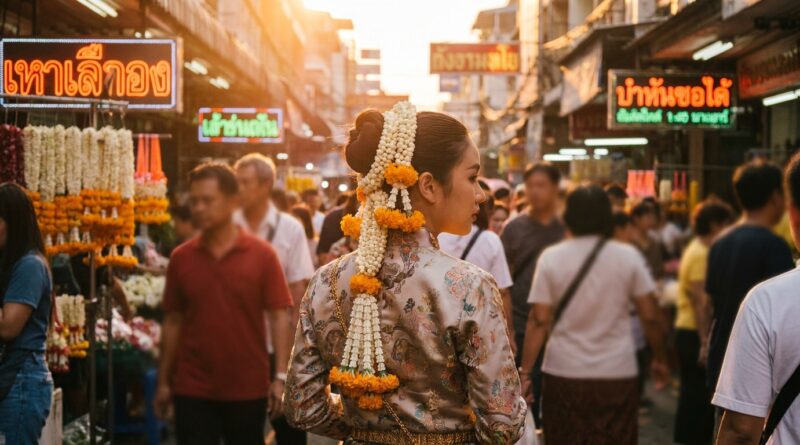
Inside TikTok’s Thai Garland Hair Wave: How ‘Malai Maxxing’ Quietly Became Gen Z’s New Shortcut To Wearing Culture As A Flex
Your feed suddenly looks like a flower market. Braided jasmine. Thick marigold loops. Garland crowns pinned into glossy buns. And if you are not Thai, it is fair to feel a little stuck. Is this just another fast-moving festival look, or are you watching a style with real cultural weight that should make you pause before copying it? That confusion is exactly the issue with the Thai garland hair trend TikTok is pushing right now. A lot of posts frame it as cute, dreamy, and easy to recreate. What they skip is the part that matters. In Thailand, many of these garlands, often called malai, are not random accessories. They can be tied to respect, blessing, celebration, devotion, and ceremony. So before you save the look for your next photo dump, it helps to know why Thai Gen Z are remixing it, where the line is, and how to avoid turning someone else’s culture into your latest costume.
⚡ In a Hurry? Key Takeaways
- The Thai garland hair trend TikTok loves right now comes from real Thai floral traditions, not just a random beauty aesthetic.
- If you want to join in, start by learning what kind of garland you are referencing, credit Thai creators, and avoid ceremonial pieces as casual costume content.
- What looks charming online can read disrespectful fast if it strips away meaning, especially around religion, weddings, offerings, and tourism-heavy clout posts.
Why this trend feels bigger than a normal micro-aesthetic
Most viral beauty trends are pretty disposable. They burn bright for two weeks, then vanish under the next “core.” This one is different because it pulls from objects that already have a life outside the app.
Thai floral garlands, often referred to as malai, are commonly used as offerings, gifts of respect, decorations for weddings and celebrations, and symbols of blessing or welcome. The exact meaning depends on the flowers, the form, and the setting. That is why flattening all of it into “festival hair” misses the point.
What TikTok sees as fresh and photogenic may be something a Thai viewer connects with family rituals, temple visits, school events, performances, Mother’s Day jasmine symbolism, or ceremonies they grew up around.
What “malai maxxing” actually means online
“Malai maxxing” is internet language doing what internet language does. It takes a real cultural object and turns it into a hyper-shareable style formula. More flowers. Bigger shapes. More dramatic placement. Better photos.
On social apps, the look usually shows up in a few forms:
- Fresh jasmine or mixed floral strands woven into braids
- Crown-like loops around buns or ponytails
- Garlands paired with silk outfits for shoots, graduations, or travel content
- Editorial versions with oversized florals inspired by traditional forms but pushed into fashion styling
That does not automatically make it fake or offensive. Thai Gen Z are also part of this wave, remixing heritage in ways that feel proud, playful, modern, and extremely online. The issue is not remixing. The issue is context, credit, and intent.
How the Thai garland hair trend TikTok spread so fast
1. It is visually perfect for short video
Flowers read well on camera. They move nicely. They signal softness, romance, and effort. Even if a viewer knows nothing about Thai traditions, the look stops the scroll.
2. It fits several trends at once
This wave sits at the intersection of coquette styling, soft girl beauty, wedding guest glam, Southeast Asian fashion visibility, and travel content. So it spreads across different corners of the app without needing one single trend name.
3. Thai creators are reclaiming and refreshing familiar forms
This is the part many trend roundups ignore. A lot of the momentum is coming from Thai users and regional creators who are not “discovering” floral garlands. They are restyling something culturally familiar for a new generation and a global audience.
4. Brands and tourism content amplify the surface, not the meaning
Once resorts, photographers, beauty pages, and travel influencers join in, the educational part often disappears. The look gets packaged as “tropical goddess” content. That is usually when the discourse starts getting messy.
What these garlands can mean in Thai culture
Not every garland means the same thing. That is important. “Thai garland hair” is already a broad label, and broad labels can cause trouble.
Depending on the design and setting, garlands may be linked to:
- Offerings in religious contexts
- Respect for elders, teachers, or honored guests
- Weddings, blessings, and major life events
- Performance, dance, and formal dress
- Celebratory decoration with regional or family-specific meaning
This is why a non-Thai creator cannot really treat every floral strand as the same thing. A tiny jasmine braid for a respectful cultural event is not identical to grabbing ceremonial-looking pieces for a “who did it best” vacation reel.
So is it okay for non-Thai people to wear it?
Sometimes yes. Sometimes no. Most often, it depends on the situation.
A good rule is this. If your relationship to the look starts and ends with “it matches my dress,” you probably need more context before posting it. If you are attending a Thai wedding, festival, cultural program, or event where hosts are styling you or inviting participation, that is a very different thing.
Respect usually looks like invitation, understanding, and specificity. Disrespect usually looks like vague exotic styling, no credit, costume energy, or using sacred-adjacent items for thirst traps and engagement bait.
Green flags and red flags
Green flags
- You learned from Thai creators, florists, stylists, or hosts
- You know whether the piece is ceremonial, festive, or fashion-inspired
- You credit the Thai source of the style or explain the context
- You are wearing it in a setting where it makes sense culturally or socially
- You treat it as part of a living culture, not a costume category
Red flags
- You call it “island fairy hair” or strip out the Thai reference entirely
- You wear offering-style garlands casually without understanding them
- You buy cheap imitation pieces just for clout content, then toss them
- You pair the look with stereotypes about “mystical Asia” or “temple chic”
- You get corrected by Thai viewers and react defensively
Why Thai Gen Z are remixing it without it meaning the same thing for everyone else
This is the part people often miss. Members of a culture get to play with their own references in ways outsiders do not. That is not hypocrisy. It is how culture works.
Thai Gen Z can wear garland-inspired hair with irony, pride, nostalgia, glamour, or rebellion because they are speaking from inside the culture. They know the codes, or at least they are closer to them. They are not borrowing from a distance. They are remixing from within.
When outsiders do the same thing, the power dynamic changes. Especially if the content gets more money, more likes, and more media attention than Thai creators themselves.
If you want to join the trend, do it like this
Start with research, not shopping
Before you order floral hair pieces, spend twenty minutes with Thai creators, florists, bridal stylists, and cultural explainers. Search for terms tied to weddings, jasmine garlands, and Thai floral traditions, not just “cute flower hairstyle.”
Pick inspired, not ceremonial
If you love the softness of the look, try floral styling inspired by Thai aesthetics rather than copying exact ceremonial forms. Fresh flowers in the hair can be respectful if you are careful about what you are referencing.
Credit where the look comes from
If you post, say it plainly. Mention Thai inspiration. Better yet, tag the Thai stylist, florist, or creator you learned from. Cultural credit is not a perfect fix, but it is better than acting like you invented jasmine braids last Thursday.
Avoid “dress-up Thailand” content
If the whole vibe is “look at me becoming exotic,” stop. That is usually the moment a trend shifts from appreciation to performance.
Listen if people push back
You do not need to win the comments section. If Thai viewers tell you a certain piece has ceremonial meaning, take that seriously. Delete, clarify, or change course if needed.
What brands and influencers keep getting wrong
A lot of coverage treats Thai garland hair like a neutral beauty hack. That is the same mistake brands make whenever a culturally rooted look starts trending. They want the image, not the meaning.
It turns real objects into props. It also pressures viewers into copying before they understand what they are copying. Then everybody acts shocked when the backlash arrives.
The fix is not to ban cross-cultural style. The fix is better framing. Explain what the object is. Explain where it belongs. Explain when it is celebration, when it is ceremony, and when it is better left alone.
At a Glance: Comparison
| Feature/Aspect | Details | Verdict |
|---|---|---|
| Source of the look | Rooted in Thai floral and ceremonial traditions, though social media often strips that context away. | Treat it as culture first, trend second. |
| Okay for non-Thai wearers? | Sometimes, especially when invited, informed, and specific about what is being worn. | Possible, but context decides everything. |
| Biggest risk | Turning ceremonial or meaningful garlands into aesthetic content for likes, tourism, or costume play. | This is where “pretty” turns into “yikes.” |
Conclusion
The smart move here is not panic and it is not blind copying either. Thai garland hair is exploding across TikTok and Instagram because it is beautiful, expressive, and deeply photogenic. But it is also more than a cute festival look. These are real cultural objects with rules, meanings, and limits. If you understand how the trend spread, why Thai Gen Z are remixing it, and where respect matters, you can make a better call about whether to wear it at all and how to do it without flattening someone else’s tradition into content. That kind of cultural literacy is what keeps you from looking careless online. Better to be the person who asked one extra question than the person who went viral for the wrong reason.