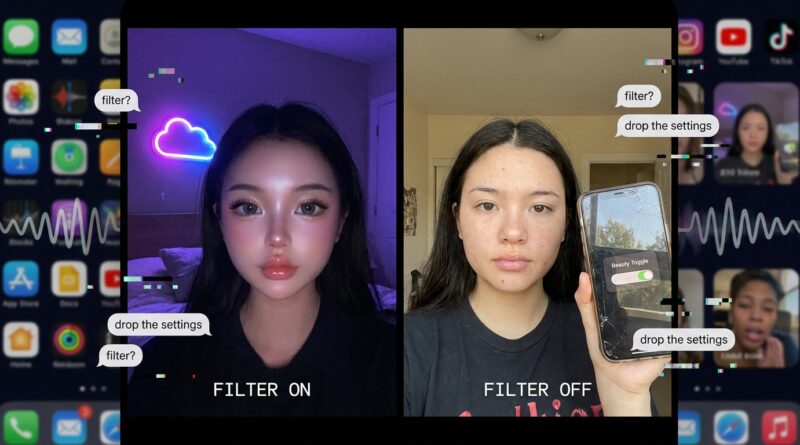
Inside TikTok’s ‘I Asked AI To Fix My Face’ Wave: How Extreme Beauty Filters Quietly Became Gen Z’s Scariest New Party Trick
You are not imagining it. TikTok really does feel extra strange right now. Scroll for five minutes and you will see faces with glass skin, pinched noses, lifted eyes, softened jawlines and a kind of polished symmetry that looks almost human, but not quite. The awkward part is not just the look. It is that lots of creators are posting these clips like nothing happened, while commenters play detective in real time. If you are trying to keep up without getting dragged into a “be honest about the filter” stitch, this is one of those trends worth understanding before you copy it. The current tiktok ai beauty filter trend is less about cute sparkles and more about identity. It changes how people judge honesty, attractiveness and even fandom. And because backlash is growing as fast as the views, the smartest move is not panic or moral grandstanding. It is learning how the trend works, why people are reacting so hard, and where the safer lane is if you still want to participate.
⚡ In a Hurry? Key Takeaways
- The current tiktok ai beauty filter trend is blowing up because the edits are stronger, harder to spot at a glance, and tied to “natural” looking videos.
- If you want to reference the trend without backlash, label the effect clearly or make the filter the joke instead of pretending it is your real face.
- The real risk is not just cringe. It is trust. Followers are getting quicker at spotting hidden edits, and callout stitches can spread fast.
Why this wave feels different from old beauty filters
We have had smoothing filters forever. Most people can spot the obvious ones. Big anime eyes. Fake freckles. Cartoon blush. That is not what is rattling people now.
This new round of AI face editing is more slippery. It often keeps your skin texture just enough to look “real.” It tweaks multiple features at once. Cheeks get a little tighter. Under-eyes get brighter. Lips get fuller. The whole face starts looking like you after eight hours of sleep, perfect lighting, pro makeup and a minor trip through a 3D rendering engine.
That is why the clips feel uncanny. Your brain can tell something is off, even when it cannot instantly name the filter.
What is actually happening in the videos
The basic format is simple. A creator uses an aggressive AI beauty effect, often stacked with flattering lighting, makeup, camera angles and maybe a second edit pass. Then they post a casual video. GRWM. Lip sync. Storytime. “No makeup” check-in. Concert fit reveal. The key is that the clip is framed as normal.
That is where the tension starts.
People do not usually get mad when a creator says, “Look at this wild filter.” They get mad when the whole bit seems to be, “This is just me.” The comments then split into three camps. One group is impressed. One group is suspicious. One group is annoyed that we are all pretending not to notice the digital nose job.
The telltale signs people are spotting
Comment sections have become mini forensic labs. People are looking for:
- Edges around the nose, jaw or hairline that wobble
- Eyes that stay oddly sharp while the rest of the frame shifts
- Skin that is too even but still somehow textured
- Lips that look reshaped instead of simply glossed
- A face that changes slightly when a hand passes in front of it
- “Natural” selfies that look more like game-engine rendering than camera footage
None of these signs alone prove anything. But together, they are fueling the callout culture around the trend.
Why Gen Z is reacting so hard
This is not just about vanity. It is about trust.
Younger users grew up online. They already know every image is curated. But there is still a difference between “I picked good lighting” and “I quietly let AI redesign my face while acting casual.” One feels like normal posting. The other feels like hidden advertising for a face that does not exist.
That is why the backlash is moving fast. Followers do not like feeling manipulated. Fans do not like discovering that someone’s signature look is partly software. Friends do not like comparing themselves to a filtered face presented as effortless reality.
It is the same reason style trends can turn tense once they cross from performance into everyday life. We saw a version of that with dramatic makeup trends too. The difference is that makeup is usually visible as makeup. AI face editing tries to disappear. That makes it feel sneakier. If you want a good example of how a once-niche aesthetic can suddenly break into the mainstream and change the social rules around appearance, Inside TikTok’s ‘Corpse Paint At Every Show’ Wave: How Extreme Metal Makeup Quietly Crashed The Mainstream Concert Scene is a useful parallel.
The “I asked AI to fix my face” angle
Part of the trend’s appeal is the joke itself. Some creators are openly framing the filter like a makeover machine. “I asked AI to fix my face.” “AI made me pretty.” “This is me if genetics were nicer.” That kind of caption lands because it is funny, bleak and instantly shareable.
But the joke carries baggage.
It turns beauty standards into a one-click answer. It suggests your actual face is a draft, and the app is the final version. For some people, that reads as self-aware humor. For others, especially younger viewers, it lands more like a casual endorsement of algorithmic self-loathing.
That is why this particular tiktok ai beauty filter trend feels bigger than a passing effect. It taps into insecurity, irony and performance all at once.
How creators are getting caught
Most callouts are not coming from advanced software experts. They are coming from regular viewers who spend too much time online and know what faces usually look like.
Common ways the callout stitch starts
A creator says “no filter” while using one. Someone notices facial warping. A stitched reply zooms in, slows the video down and circles the weird movement. Then the comments fill with side-by-sides, screen grabs and arguments over whether lighting alone could do that.
Sometimes the creator really is using only makeup and angles. But because the hidden-filter trend is so hot right now, even real faces are getting questioned. That is another ugly side effect. Suspicion spreads beyond the people actually using the effects.
The new “proof” culture
In response, some users are posting “no filter proof” clips. They move close to the camera. Cover half their face. Use bad overhead lighting on purpose. Show the filter tray. Start recording in-app and switch effects on and off.
This is not foolproof, but it shows where the culture is heading. People now expect receipts.
If you want to join the trend, here is the safer playbook
You do not have to avoid every effect forever. You just need to be smart about how you use it.
1. Make the filter obvious, or say it out loud
If the whole point is “look how weird this AI face is,” great. That is honest. What gets people irritated is hiding strong edits inside an otherwise normal post.
Simple captions help. “Using that scary AI face filter.” “This effect is wild.” “Not my real face, before anyone asks.” That one line can save you a lot of grief.
2. Do not pair a heavy AI beauty effect with “no makeup” or “just woke up” framing
That is where trust falls apart fast. If you present the clip as effortless reality, people are much more likely to see it as deceptive.
3. Let the uncanny look be the bit
The funniest and safest posts are usually the ones that admit the face looks absurd. If you treat the wax-museum effect as the joke, viewers are in on it with you.
4. Avoid moral superiority too
There is also a trap in rushing to become the anti-filter hero. If your whole content angle becomes shaming other people’s faces, that can backfire just as badly. It is possible to critique the trend without turning into the comment section police.
5. Use contrast content
If you are a creator, one smart move is to show both versions. Filter on. Filter off. Explain what changed. That turns a risky trend into useful media literacy content. It also builds trust because people can see you are not trying to sneak one past them.
How to spot when the trend is peaking
If you are trying to read the room before posting, watch for these signals:
- More stitch callouts than original filter videos on your For You Page
- Comment sections full of “what filter is this” and “be serious”
- Creators making parody videos about “AI fixing” everyone the same way
- Rise in “proof” videos showing unedited skin and facial movement
- Brand-safe creators joking about the trend without fully using it
That usually means the trend has moved from novelty to discourse. Views may still be high, but the social risk goes up.
What this is doing to fandom and self-image
This matters beyond one app trend. Fandom runs on intimacy. Followers feel close to creators because they think they are seeing the person, not just a polished product. Heavy hidden AI filtering chips away at that feeling. It can make every face seem negotiable, every selfie suspect, every compliment a little less grounded.
For viewers, especially teens and young adults, the effect is more personal. If your feed is packed with subtly remixed faces presented as normal, your brain quietly updates its idea of what “normal” looks like. That can happen even when you know filters exist.
That is why this trend is not just harmless fun for everyone. The issue is not a single filtered video. It is the cumulative effect of a feed full of almost-real faces.
How to talk about it without sounding dramatic
If this comes up in your group chat, you do not need to give a lecture. Keep it simple.
You can say the current AI beauty stuff is different because it is less obvious and more deceptive. You can point out that the backlash is mostly about pretending, not experimenting. And you can remind people that if a face looks too perfect in a strangely plastic way, there is a good chance software is doing more than the creator is admitting.
That makes you the person who gets the trend without sounding smug about it.
At a Glance: Comparison
| Feature/Aspect | Details | Verdict |
|---|---|---|
| Obvious novelty filter | Clearly changes the face for comedy or effect, and viewers know it is a filter right away. | Low trust risk if labeled or used as the joke. |
| Hidden AI beauty edit | Subtle but aggressive reshaping presented as a normal selfie, GRWM or casual post. | Highest backlash risk. This is what people are calling out. |
| Filter transparency content | Creators show before-and-after, name the effect, or explain what the app changed. | Best option for trust, and often smarter long-term content. |
Conclusion
The current tiktok ai beauty filter trend is moving fast because it offers instant shock value, instant aspiration and instant debate. But that also means it burns hot. If you just want views, you can probably get them by hopping on. If you want trust, you need a better plan. That is why understanding the mechanics matters right now, while hyper-aggressive AI beauty filters are exploding and the backlash is building just as fast. The useful move is to watch how the callout stitches are forming, notice the quieter “no filter proof” push, and decide where you want to stand before the trend picks for you. You do not have to ignore the uncanny look. You just do not want to be the person pretending the wax-museum version of your face is reality. Done right, you can reference the trend, stay self-aware, and be the one in the group chat who actually understands why everyone suddenly looks a little too perfect to trust.