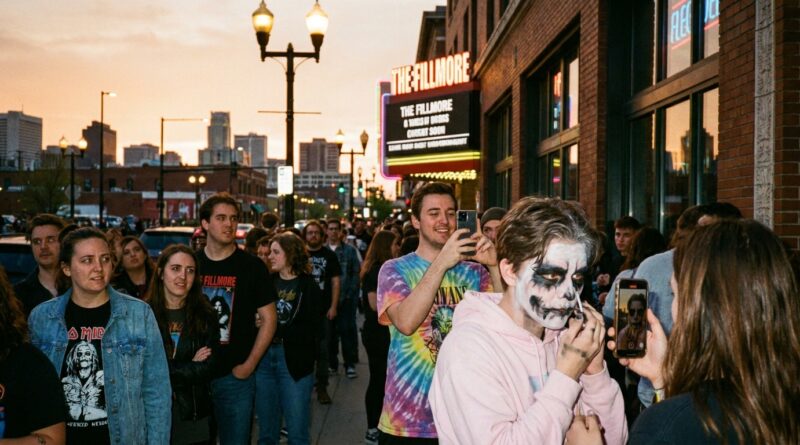
Inside TikTok’s ‘Corpse Paint At Every Show’ Wave: How Extreme Metal Makeup Quietly Crashed The Mainstream Concert Scene
You are not imagining it. One minute corpse paint was something you saw at black metal shows, old band photos and niche corners of the internet. The next, your TikTok feed was full of people wearing full white face, blacked-out eyes and dramatic lip lines to pop tours, EDM festivals and indie gigs. If you are stress-scrolling before a concert wondering, “Is this actually a thing now, or am I about to embarrass myself in public?” that confusion makes sense. The TikTok corpse paint concert trend moved fast because it sits right at the intersection of concert fashion, cosplay, alt beauty and short-form video. It looks bold on camera, it signals “I have a point of view,” and it borrows just enough from metal history to feel edgy without requiring deep scene knowledge. Offline, though, the reality is more mixed. Some crowds love it. Some barely notice. Some venues and security teams care a lot more about visibility, masks and mess than about the style itself.
⚡ In a Hurry? Key Takeaways
- The TikTok corpse paint concert trend is real, but it is much bigger online than it is at most actual shows.
- If you want to try it, check venue rules first, keep it breathable and transfer-resistant, and match the look to the event vibe instead of chasing a viral moment.
- The main concerns are not “Is this allowed by music law?” but practical stuff like security visibility, heat, smudging on other people and whether your makeup turns you into the person blocking everyone else’s night.
How corpse paint jumped from black metal to everyone’s FYP
Corpse paint started as a very specific visual language. In black metal, it was part theater, part anti-glamour statement, part identity marker. It was not just “cool spooky makeup.” It carried scene history.
What TikTok did was strip that history down to a recognizable visual template. White base. Dark eyes. Sharp lines. A little menace. Then the app dropped that template into the content blender with festival makeup, e-girl beauty, cosplay, goth revival and “get ready with me for the show” videos.
That is how niche style becomes mainstream now. Not by everyone studying where it came from. By everyone seeing a version that looks good in a 12-second clip.
Why this look spread so fast
There are a few simple reasons.
First, it reads instantly on camera. A lot of detailed makeup disappears in bad venue lighting or phone video. Corpse paint does not. It pops.
Second, it works across fandoms. A metal fan can wear it sincerely. A pop fan can wear it as camp. An indie fan can wear it as performance art. An EDM fan can mix it with rave styling. That flexibility matters.
Third, it gives younger concertgoers a ready-made “main character” look at a time when concerts are not just concerts anymore. They are content backdrops, outfit reveals and identity check-ins.
And fourth, it fits the current mood. Beauty trends have been getting weirder, darker and more costume-adjacent for a while. What used to be “too much” is now often the point.
Did this really become normal overnight?
Not exactly. TikTok makes style shifts feel instant because you see dozens of examples back to back. That does not mean your local venue will be packed with demon-faced Swifties.
What is actually happening is more uneven.
At giant pop tours and festivals, you may spot a handful of people doing full corpse paint, plus a bigger group doing toned-down versions. Think white accents, exaggerated black liner, stitched-mouth details or gothic blush instead of the full Norwegian black metal treatment.
At indie shows, it depends heavily on the artist and city. In some scenes, nobody blinks. In others, it reads as attention-seeking because the crowd norm is still jeans, boots and a jacket.
At EDM festivals, it blends more easily because dramatic face art is already part of the culture. The line between “corpse paint” and “festival face design” gets blurry fast.
So yes, the TikTok corpse paint concert trend is real. No, it is not universal. Online hype is outrunning offline adoption.
Who is actually wearing it offline?
Mostly younger fans, especially Gen Z and younger millennials who are already comfortable treating beauty as fandom language. Not everyone wearing it is trying to make a metal statement. A lot of them are just pulling from a shared internet mood board.
You can roughly break the crowd into three groups.
1. Scene-aware fans
These are people who know where corpse paint comes from and may be borrowing it with care, sometimes adjusting it for a non-metal show. They tend to know the difference between homage and random costume.
2. Trend-first concertgoers
These are the people most influenced by TikTok. They are not necessarily disrespectful. They just met the look through the algorithm first and the history second, if at all.
3. Hybrid creators and beauty fans
This group is really interesting. They are mixing alt makeup, cosplay, concert dressing and creator culture into one package. For them, a concert is part live event, part editorial shoot, part social post.
This third group is one reason brands are paying attention. Not always openly yet, but they are watching. When a style starts crossing music genres, it usually means a beauty and fashion crossover is brewing too.
Why some people love the trend, and some really do not
This is where the argument gets touchy.
Fans who like it usually see it as creative self-expression. Their view is simple. Concerts are emotional, theatrical spaces. Dressing up is part of the fun. If friendship bracelets, cowboy hats and chrome festival makeup are fair game, why not corpse paint?
Critics usually split into two camps.
The first camp cares about context. To them, lifting a look with roots in an extreme music scene and wearing it to any random show can feel shallow, especially if the person wearing it treats it like a spooky filter made flesh.
The second camp cares less about scene purity and more about behavior. They are fine with weird makeup. They just do not want someone turning a shared event into a personal content studio.
That second complaint comes up a lot for a reason. Most concert etiquette fights are not really about clothes or makeup. They are about attention, space and disruption.
Where artists, venues and security are actually drawing lines
This part matters more than TikTok comments.
Most venues are not writing “no corpse paint” into policy. They are looking at practical issues.
Visibility and identification
Some venues and security teams get cautious if makeup is so heavy that it significantly changes your appearance from your ID, especially at age-restricted events. Usually this is manageable. You may just get an extra look at check-in. But if you are worried, carry a fresh-faced photo on your phone along with your ID.
Masks versus makeup
There is a big difference between face paint and a hard mask. A lot of venues ban full-face masks or anything that obstructs identification. If your “corpse paint” includes prosthetics, horns, studs or a removable mask, that is where problems start.
Mess and transfer
If your makeup rubs onto seats, barriers, strangers’ clothes or venue property, staff may not love your artistic vision. Transfer-proof products are your friend.
Safety and comfort
Heavy makeup at a hot summer festival can become a small survival test. Sweat, dehydration, eye irritation and skin reactions are a lot less glamorous at 9:45 p.m. in a packed crowd.
Respect for the event
Artists rarely issue rules about this specific trend, but the vibe of the show matters. A highly theatrical artist may inspire big looks. A quiet acoustic set in a seated hall is a different story. Same face paint, totally different social landing.
How to tell if the look fits the show
If you are trying to avoid becoming “the cringe main character on someone else’s TikTok,” ask three basic questions.
What is the artist’s visual world?
If the artist already plays with horror, camp, gothic fashion, heavy stage makeup or surreal visuals, corpse paint-adjacent looks make more sense. If the whole show aesthetic is minimal and intimate, maybe scale it back.
What is the venue like?
An outdoor festival gives you more room for experimentation than a tiny club with no ventilation. Big arena crowds are often more forgiving than small rooms where every person stands out.
Are you dressing for the show, or for the camera?
This is the real test. If the answer is mostly “for TikTok,” that does not automatically make it wrong. But it does increase the chance you will overdo it for the actual setting.
A simple rule of thumb for fans
If your look adds to your experience without making extra work for venue staff or extra annoyance for the crowd, you are probably fine.
If it blocks views, smears everywhere, needs constant bathroom repairs or turns the concert into a filming session, it has crossed from self-expression into public hassle.
How to wear corpse paint to a concert without making your night miserable
You do not need a professional makeup kit and a six-part tutorial. You do need a little planning.
Go lighter than you think
Phone cameras flatten details. In person, heavy white base can look much more intense. A softened version often lands better at non-metal shows.
Use products built to stay put
Look for long-wear cream products, setting powder and setting spray. Test the look before concert day. The time to discover an eye product burns is not on the train to the venue.
Keep your eyes comfortable
A lot of corpse paint looks center on the eye area. Be careful with waterline-heavy designs, especially in hot or sweaty spaces. Bring eye drops if you know you get irritated easily.
Think about sweat and heat
Outdoor festivals and packed indoor venues are rough on face makeup. Bring blotting papers or a small touch-up kit, but do not count on doing a full rebuild halfway through the night.
Avoid sharp add-ons
Studs, spikes, glued-on hardware and rigid facial accessories can get flagged by security or become genuinely unsafe in a crowd.
Plan for the trip home
Bring wipes. Future you will be grateful when you are tired, sticky and staring at your own ghost face in a gas station bathroom mirror.
The cultural question nobody agrees on
Is this appropriation, evolution or just internet remix culture doing what it always does?
The honest answer is: all three, depending on the person.
Some wearers are thoughtful and clearly inspired by metal aesthetics in a way that respects the source. Some are flattening a subculture into a viral costume. And some are doing what youth culture has always done, grabbing symbols, remixing them and moving on before anyone finishes the argument.
That does not mean context stops mattering. It just means context now travels badly. By the time a visual style reaches mainstream TikTok, it has usually been detached from the original scene and repackaged as “a vibe.”
If you like the look, the respectful move is easy. Know where it came from. Do not pretend you invented it. Do not mock the scene that shaped it. And do not act shocked if longtime metal fans have mixed feelings.
Why brands and creators are watching this closely
This trend is small enough to feel niche, but broad enough to matter. That is usually where the interesting stuff happens first.
Beauty brands are always looking for signs that dramatic subcultural makeup is crossing into everyday event dressing. Concert culture is one of the clearest places to spot that shift. If people start treating alt makeup the way they treat festival glitter or themed manicure sets, brands will follow.
Creators should notice this too. The audience is not just asking, “How do I copy this look?” They are also asking, “Where can I wear it without looking ridiculous?” That is a much more useful content angle.
Small labels, makeup artists and costume-adjacent businesses may have the biggest opening here, because they can respond faster than giant marketing teams. By the time big agencies figure out a polished phrase for this mix of music fandom, alt beauty and cosplay, smaller creators may already own the conversation.
So, should you do it?
If you want to, yes. Just do it with a little awareness.
The internet tends to frame every style choice as either iconic or humiliating. Real life is softer than that. Most people at a concert are focused on their friends, the setlist and whether they can see the stage.
You do not need permission from TikTok to dress up. You also do not need to prove your originality by going as hard as possible.
The best version of this trend is not “full corpse paint no matter the context.” It is “take inspiration, read the room and make choices you can comfortably wear for four hours in public.”
At a Glance: Comparison
| Feature/Aspect | Details | Verdict |
|---|---|---|
| Online trend vs real-life adoption | TikTok makes the look seem everywhere, but at most shows it appears in small numbers or toned-down versions. | Real trend, exaggerated by the algorithm. |
| Venue acceptance | Most venues care more about masks, visibility, safety and mess than the aesthetic itself. | Usually fine if practical and non-obstructive. |
| Best way to wear it | Use long-wear products, avoid bulky add-ons, scale the look to the artist and venue, and prioritize comfort. | Smart styling beats shock value. |
Conclusion
The TikTok corpse paint concert trend did not appear out of nowhere. It grew because internet beauty culture loves a dramatic, easy-to-read visual, and concerts have become one of the main places people perform identity in public. But what looks normal on your FYP is not always normal at your specific venue, with your specific crowd, on your specific night. That is why it helps to map how this any-genre corpse paint wave spread, who is actually wearing it offline and where artists, venues and security are drawing the line. For younger fans, that takes some of the panic out of the pre-show scroll and makes it easier to find the sweet spot between self-expression and respect for the space. For creators and small brands, it is also an early clue about where alt beauty, music fandom and cosplay are starting to overlap in ways bigger marketers have not fully named yet. In other words, wear the look if it feels like you, just make sure you are dressing for the room, not just the algorithm.