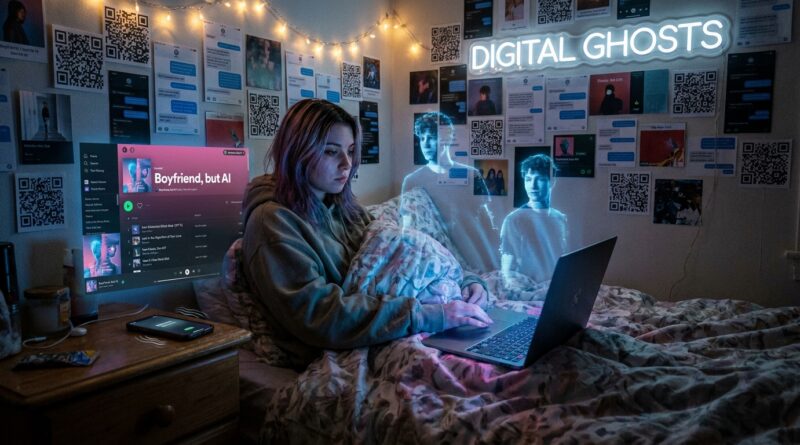
Inside TikTok’s ‘AI Boyfriend Playlist’ Wave: How Custom Love Songs Quietly Became Gen Z’s Weirdest New Coping Mechanism
Your TikTok feed did not gently ease into this one. It just turned into a wall of fake boyfriends, AI love songs, screen-recorded playlists, and suspiciously detailed romantic lore from people who may or may not be joking. If that feels a little unsettling, you are not overreacting. The AI boyfriend playlist TikTok trend looks silly on the surface, but it is tapping into something real. People are using custom-generated songs, fake Spotify visuals, and imaginary relationships to package loneliness, wish fulfillment, and soft public oversharing into content that feels safer than telling the truth outright.
What makes this trend different is how fast it moved from niche joke to social language. It is not just a filter or a meme format. It is a low-risk way to perform intimacy online without the mess of an actual relationship. For viewers, that can be funny, creative, and oddly comforting. It can also blur the line between playful fantasy and emotional outsourcing. If you want the grounded version of what is happening, why it spread so quickly, and how to engage without losing the plot, here it is.
⚡ In a Hurry? Key Takeaways
- The AI boyfriend playlist TikTok trend is really about synthetic intimacy. People are using AI songs and fake relationship packaging to express needs, fantasies, and loneliness in a safer public way.
- If you want to join in, treat it like creative roleplay, not emotional proof. Make the bit clear, protect your privacy, and notice if the fantasy starts replacing real connection.
- For creators and brands, this is a signal. Gen Z is getting comfortable with AI-generated emotional content faster than most platforms and marketers are ready for.
What is the AI boyfriend playlist TikTok trend, exactly?
At the simplest level, people are making TikToks around invented boyfriends and pairing them with AI-generated love songs that sound custom-made for a relationship. Then they add fake playlist covers, mock Spotify canvases, text screenshots, made-up backstories, and mini romantic story arcs.
The result feels weirdly complete. It is not just, “here is my imaginary crush.” It is, “here is his playlist, our lore, our vibe, and the song he would send me at 1:14 a.m. after a fight.”
That level of specificity is the point. The trend works because it turns fantasy into a recognizable content package. Viewers instantly get the emotional message, even when the boyfriend is fictional.
Why did it blow up so fast?
1. It is easy to make, but feels deeply personal
AI music tools, image generators, and editing templates now make it very easy to produce something that looks polished and emotionally rich. You do not need to be a songwriter. You just need a prompt and a mood.
That matters on TikTok. Low effort plus high emotional payoff is usually a recipe for a trend taking off.
2. It lets people overshare without fully oversharing
This is the secret engine behind the whole thing. A fake boyfriend creates distance. You can post about wanting tenderness, stability, obsession, reassurance, or heartbreak without saying, “this is exactly what I need and I am not getting it.”
That makes the trend feel safer than direct vulnerability. It is the same emotional logic behind another recent wave, Inside TikTok’s ‘AI Boyfriend Recap’ Obsession: How Fake Partners Quietly Became Gen Z’s Safest Place To Overshare. Different format, same core behavior. People are using fictional relationship content as a buffer for very real feelings.
3. It is half joke, half coping mechanism
That “are they serious?” tension helps trends spread. Some users are clearly in on the bit. Some are using humor to cushion something more real. Most are doing both at once.
TikTok loves content that can be consumed at multiple levels. You can laugh at it, relate to it, or quietly use it.
4. It fits how Gen Z talks about dating now
Modern dating already runs on screenshots, playlists, niche references, “soft launches,” and relationship aesthetics. The AI boyfriend playlist trend simply removes the human boyfriend from the process and keeps the emotional performance.
That sounds bleak, but it is also honest. A lot of dating culture online is already about managing the story of a relationship as much as the relationship itself.
Why fake love songs hit harder than they should
Music has always been a shortcut to emotion. A custom AI song makes that shortcut even shorter. It can be built around your exact fantasy, your exact pain point, and your preferred level of intensity.
Real music asks you to find yourself in a song. AI music can be made to find you first.
That is why these clips feel sticky. They are not just catchy. They are personalized emotional mirrors. Even when the “boyfriend” is made up, the feeling being targeted usually is not.
What people are actually doing with this trend
Underneath the jokes, a few clear use cases keep showing up:
Fantasy as emotional rehearsal
People are testing out what they wish romance felt like. Attentive. Devoted. Calm. Dramatic. Safe. The fake playlist becomes a low-stakes prototype for desire.
Loneliness with plausible deniability
If you post a fake boyfriend song, nobody can fully prove you are lonely. It is content. It is irony. It is lore. That ambiguity protects people.
Identity building
The invented boyfriend often reflects the creator as much as any romantic ideal. Their taste, aesthetics, emotional style, and boundaries all show up in the fiction.
Audience bonding
Comments become mini confessionals. People swap their own imagined partner details, compare songs, and build a shared language around attachment issues without naming them too directly.
Is this harmless fun or a red flag?
Usually, it is just playful internet behavior with a slightly uncanny tech layer. Not every trend needs a moral panic attached to it. Making fake playlists and AI songs is not automatically unhealthy.
But there is a line worth watching.
If the trend is helping someone write a joke, tell a story, or process feelings creatively, fine. If it starts replacing real-world effort, deepening isolation, or making actual relationships feel unbearably messy by comparison, that is when fantasy stops being a fun filter and starts becoming emotional outsourcing.
Good signs
You know it is pretend. You are making art, joking with friends, or using the format to express a mood. You can log off and still handle ordinary human connection.
Less good signs
You feel more attached to the AI scenario than to real people. Real dating starts to seem irritating because it cannot compete with a custom-generated fantasy. You keep feeding the bit because it gives you comfort you are not getting elsewhere.
Why this trend matters beyond TikTok
This is not just about one odd feed moment. It is an early signal for something bigger. Young people are getting used to synthetic intimacy packaged as entertainment. That includes AI companions, fake relationship roleplay, custom voice messages, generated songs, and emotionally tailored content loops.
The AI boyfriend playlist TikTok trend matters because it normalizes the idea that emotional needs can be met, or at least simulated, by generative tools.
That does not mean people suddenly cannot tell fantasy from reality. It means the boundary is becoming more casual, more aesthetic, and more socially acceptable.
And once a behavior becomes a joke, it often becomes a habit.
What creators and social strategists should pay attention to
The format is the story
This trend spread because the package is instantly readable. Playlist. Song snippet. Relationship caption. Lore drop. Screenshot energy. It is modular and easy to remix.
Emotional utility beats novelty
People are not using this just because AI can make songs. They are using it because the content does a job. It lets them express longing, control the narrative, and avoid embarrassment.
Synthetic intimacy is becoming mainstream content language
If you make content or read trend signals for work, this is the part to remember. AI is no longer only a productivity story or a visual gimmick. It is becoming an emotional interface.
The next wave may not look like fake boyfriends. It could be AI best friends, family voice simulations, personalized affirmation loops, or generated memory content. Same pattern. Different wrapper.
If you want to join the trend without getting lost in it
Keep the joke visible
Let your audience know it is a bit, even if it is emotionally honest underneath. A little framing helps keep fantasy from hardening into confusion.
Do not hand over too much personal data
If you are using AI tools to generate songs or visuals, be careful with names, locations, voice samples, and identifying details. Some tools keep prompts or use uploads in ways people do not fully read.
Notice what part feels good
Is it the music? The storytelling? The attention in the comments? The idea of being chosen? That answer tells you more than the trend itself.
Use it as a mirror, not a substitute
If your fake playlist reveals what you want from love, great. That is useful. Just do not stop there. Bring that clarity back to real life.
At a Glance: Comparison
| Feature/Aspect | Details | Verdict |
|---|---|---|
| Why it spread | Easy AI music tools plus a highly shareable fake relationship format that feels personal fast | Built for virality |
| Emotional value | Lets users express loneliness, desire, and attachment indirectly through fiction | Useful, but emotionally slippery |
| Risk level | Mostly harmless as creative play, risky if it starts replacing real connection or pushing oversharing into AI tools | Fine in moderation |
Conclusion
The AI boyfriend playlist TikTok trend is not just another random internet joke that appeared out of nowhere. It is a fast-moving example of how AI romance content jumped from fringe to feed-dominant almost overnight, and how public conversations about attachment, loneliness, and dating are being reshaped in real time. If you understand why this format clicked, you are much less likely to get swept up in the fantasy without noticing what it is doing. You can enjoy the creativity, read the emotional subtext, and keep a clear line between playful projection and handing too much of your inner life to synthetic comfort. For creators, strategists, and anyone trying to read culture before the big outlets catch up, this is the real takeaway. Watch the emotional use case, not just the tool. That is where the next wave will start.