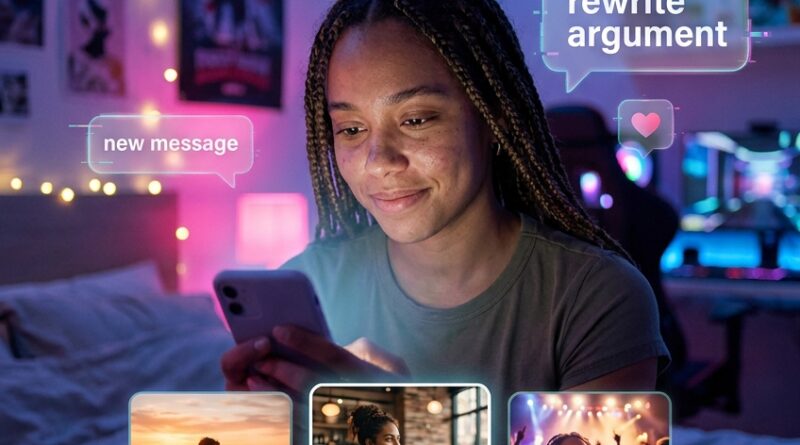
Inside TikTok’s ‘AI Boyfriend Recap’ Obsession: How Fake Partners Quietly Became Gen Z’s Safest Place To Overshare
If your TikTok feed suddenly looks like people are posting breakup montages, anniversary dumps, and soft-launch selfies with partners who are not even real, you are not imagining it. The TikTok AI boyfriend trend is moving fast, and it is confusing for anyone who has not been living inside relationship content for the last week. What looks silly on the surface is actually hitting a nerve. A lot of people are tired. Tired of dating apps, tired of ghosting, tired of feeling watched online, and tired of being judged for wanting too much too soon. So instead of risking that mess with a real person, they are testing intimacy on an AI partner first. That is why these “AI boyfriend recap” posts feel half joke, half diary entry. They are not really about fake romance. They are about control, safety, and having one place to say the messy stuff without getting hurt immediately.
⚡ In a Hurry? Key Takeaways
- The TikTok AI boyfriend trend is less about “dating a bot” and more about using AI as a low-risk place to process loneliness, burnout, and relationship stress.
- If you use an AI partner app, treat it like a journal with guardrails. Do not share private details you would not want stored, screenshotted, or used for training.
- These tools can feel comforting, but they should be a bridge, not a replacement. Real-life support still matters.
What the TikTok AI boyfriend trend actually is
The format is simple. Someone posts a “recap” video or photo dump showing chats, generated selfies, fake couple moments, or captions about their AI boyfriend or girlfriend like it is a real relationship. Sometimes it is funny. Sometimes it is dead serious. Often it is both.
That mix is the whole point. Internet culture loves irony because irony gives people cover. You can say, “Haha this is my AI boyfriend,” while also quietly admitting, “I needed someone to talk to.”
That is why this trend is landing so hard with Gen Z. It turns emotional risk into content. You get to share vulnerability without fully standing in the spotlight.
Why people are oversharing with fake partners
1. AI does not ghost you
A real person can leave you on read for 14 hours and then come back with “sorry lol.” An AI partner replies instantly, remembers your tone, and acts interested every single time. That reliability is powerful, especially for people who feel worn down by modern dating.
2. It feels safer than a real relationship at first
You can confess weird fears, attachment issues, jealousy, grief, or family stuff without worrying that someone will screenshot it and send it to the group chat. At least, that is how it feels. The emotional safety is real. The privacy safety is more complicated.
3. It gives people a first draft of intimacy
This is the part many adults are missing. For some users, an AI boyfriend is not the final destination. It is rehearsal. A place to practice saying, “I need reassurance,” or “I am scared you will leave,” before saying it to a real human.
That is also why this trend sits next to other TikTok self-reveal habits. The same app that pushed people to post oddly personal snapshots like Inside TikTok’s ‘Screenshot My Lock Screen’ Wave: How Sharing Your Raw Home Screen Became Gen Z’s New Personality Test is very good at turning private signals into public identity markers.
What this says about dating burnout
The big story here is not “young people are dating robots now.” That is the lazy take.
The real story is that many people do not trust the current dating setup to handle honesty well. Dating apps can feel performative. Social media can make every crush feel like branding. And real vulnerability often gets punished with silence, mockery, or mixed signals.
So a synthetic partner starts to look appealing because it removes three things people are exhausted by.
- Rejection
- Unpredictability
- Social embarrassment
That does not make AI romance healthy by default. It just makes it understandable.
The part nobody says out loud
Some of these recap posts are not really celebrating the AI relationship. They are grieving the fact that the fake one feels easier than the real thing.
That is the uncomfortable truth inside the TikTok AI boyfriend trend. People are not only choosing bots because bots are fun. They are choosing bots because people have started to feel emotionally expensive.
Is this harmless, or a problem?
Both can be true.
When it can be useful
An AI partner can help someone name feelings, calm down after a fight, or practice difficult conversations. For shy users, it can lower the pressure enough to start opening up. That is not nothing.
When it gets risky
Problems start when the AI becomes your main emotional outlet, your main source of reassurance, or your main model for what relationships should feel like. Real people are slower, messier, and imperfect. If a bot becomes the standard, actual connection can start to feel disappointing by comparison.
There is also the data issue. These apps are software products. They may store chats, use data to improve systems, or have policies most users never read. So while the emotional appeal is obvious, the privacy trade-off is real.
A practical script for using AI partners without losing the plot
If you are curious and want to try one, use it with boundaries. Here is the simple version.
Use it for practice, not replacement
Good use: rehearsing a hard text, naming feelings, figuring out why you are upset.
Bad use: replacing all close friends, avoiding every real conversation, or treating the bot as your only safe person.
Do not feed it your whole life story
Avoid sharing bank details, exact addresses, private photos, passwords, health IDs, workplace secrets, or anything you would panic over if leaked.
Check how you feel after
Ask yourself one question. “Do I feel clearer, or more stuck?” If the chat helps you move toward real life, good. If it keeps you hiding from real life, time to slow down.
Turn insights into human action
If the AI helped you realize you need reassurance, better boundaries, or a calmer communication style, bring that insight to a friend, therapist, partner, or journal. That is where the real value is.
Why this trend blew up so fast
TikTok loves content that is easy to copy and easy to personalize. “AI boyfriend recap” checks both boxes. It gives people a ready-made format, but each post still feels deeply personal. That is algorithm gold.
It also lands at the perfect cultural moment. People are already used to performing identity online through playlists, notes app screenshots, lock screens, camera rolls, and “dump” posts. A fake relationship recap is just the next step in that same pattern. It says, “Here is who I am, but with one extra layer of protection.”
What parents, friends, and older users should understand
If someone you know is into this trend, mocking them will not help. Most users are not confused about whether the AI is real. They are using the format because it feels emotionally manageable.
A better response is curiosity. Ask what they like about it. Ask whether it feels comforting or addictive. Ask whether it is helping them say things they could not say before. Those questions get you much closer to the truth than “why are you dating a chatbot?”
At a Glance: Comparison
| Feature/Aspect | Details | Verdict |
|---|---|---|
| Emotional comfort | AI partners offer instant replies, validation, and low-pressure conversation. | Helpful in small doses |
| Privacy and data | Chats may be stored or used by the app, even if the experience feels private. | Use caution |
| Impact on real relationships | Can help users practice vulnerability, but can also make real people seem frustratingly imperfect. | Best as a tool, not a substitute |
Conclusion
The TikTok AI boyfriend trend matters because it is not just another weird internet joke. It is a snapshot of how people are coping with dating burnout, safety worries, and the pressure of being emotionally “on” all the time online. That is why this helps the community right now. The trend is exploding across TikTok and Reels, but very few people are explaining what it actually signals. If you understand why synthetic partners are becoming a first draft for intimacy, you can spot both the comfort and the risk. Use these tools if they help you think, calm down, or find words. Just do not let a polished chatbot become your only safe place. The goal is still real connection, even if AI is where some people start practicing it.