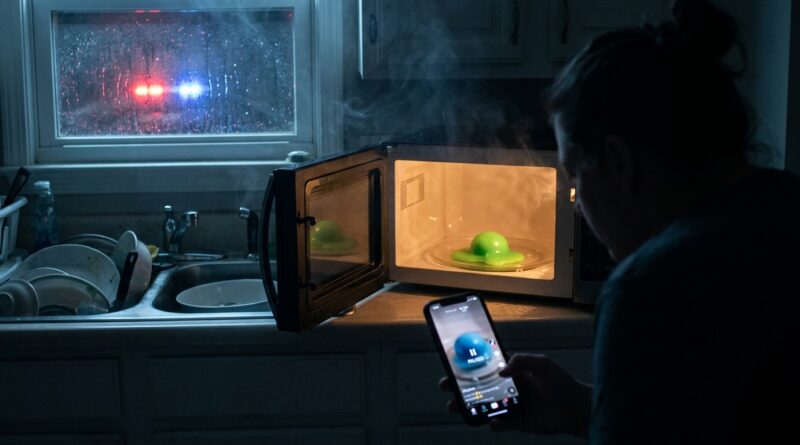
Inside TikTok’s ‘Microwave NeeDoh’ Scare: How A Squishy Toy Trend Quietly Turned Into A Real‑World Health Crisis
Parents are not overreacting here. A weird little TikTok stunt involving NeeDoh squishy toys and microwaves has turned into a real safety problem, fast. Kids see bright colors, a satisfying squish, and a few viral clips that make the toy look bigger, stretchier, or somehow “upgraded” after heating it. What they do not see is the trip to urgent care after a toy bursts, leaks hot goo, or sprays melted plastic and chemicals onto skin. That is the part showing up in ERs.
The TikTok Microwave NeeDoh trend spread because it looks harmless, cheap, and easy to copy at home. It also fits the exact kind of video TikTok rewards. Short setup. Big reveal. Shock reaction. Repeat. If you are trying to figure out how something this niche reached your kitchen in a day, the answer is simple. It was built for the algorithm and packaged as a joke, a challenge, and a sensory hack all at once.
⚡ In a Hurry? Key Takeaways
- The TikTok Microwave NeeDoh trend is not harmless fun. It has been linked to burns, ruptured toys, and chemical exposure risks.
- If your child has a NeeDoh or similar squishy toy, make one rule today. Do not heat it, freeze it, puncture it, or try “hack” videos from TikTok.
- The fastest way to spot the next risky trend is to watch for “wait for it” reveal videos, copycat captions, and clips that turn ordinary household items into toy experiments.
What is the TikTok Microwave NeeDoh trend?
At the center of this is the NeeDoh, a soft squishy toy meant for fidgeting and stress relief. On TikTok, some users started microwaving it to see what would happen. The promise was simple. Heat it up and it gets softer, stretchier, more dramatic on camera, or more satisfying to squeeze.
That sounds silly. It also sounds low stakes. That is why it traveled so quickly.
For a kid scrolling at full speed, the trend does not register as “playing with chemicals in a microwave.” It registers as “making my squishy toy cooler.” That gap matters.
Why it got dangerous so quickly
A NeeDoh is not designed to be heated. When put in a microwave, the outer material and inner filling can heat unevenly. That creates the perfect setup for a nasty surprise. The outside may feel only warm while the inside gets much hotter. Then the toy can rupture under pressure or split when squeezed.
When that happens, the result is not just a ruined toy. It can mean hot contents on hands, face, chest, or eyes. It can also mean melted material stuck to skin, which is especially painful and harder to remove safely.
This is one of those cases where “but it was only in there for a few seconds” is not much protection. Microwaves heat fast, unevenly, and unpredictably. Different toy batches, microwave power levels, and timing all change the outcome.
What doctors and parents are worried about
Burns
The most immediate risk is thermal injury. If the filling gets superheated, a toy can burst like a tiny heat pack under pressure. Kids often squeeze the toy right after heating because that is the whole point of the video. That puts hot material directly onto skin.
Chemical exposure
Even when the contents are labeled non-toxic for normal use, “non-toxic” does not mean “safe after being microwaved and sprayed into eyes or onto broken skin.” Normal play and misuse are very different things.
Melted plastic accidents
If the outer shell softens, warps, or tears, kids may try to grab it bare-handed or peel it off surfaces. That can make burns worse. A toy that leaks inside a microwave can also leave residue where food is later heated.
Delayed symptoms
Another problem is that kids may not tell an adult right away. Some are embarrassed. Some do not want the toy taken away. Some honestly think the pain will pass. That delay can make a minor burn become a bigger medical issue.
How did this blow up so fast?
The TikTok Microwave NeeDoh trend has all the ingredients that help a risky idea spread before adults even hear about it.
It looks visually safe
There are no obvious warning signs in the first few seconds. No sparks. No flames. Just a cute squishy toy and a microwave. To a young viewer, it does not look much more dangerous than reheating leftovers.
It has a satisfying payoff
TikTok loves transformations. Before and after shots do well. So do clips with texture, squish sounds, and reaction faces. A NeeDoh video checks every box.
It is cheap to copy
No special gear needed. Most homes have a microwave. Many homes with kids already have fidget toys. That lowers the barrier to trying it.
It rides on copycat language
These trends often use captions like “I had to try this,” “does this actually work,” “don’t do this, but…,” or “part 2 because my last one popped.” That wording feels playful, not serious, and it nudges kids to test it themselves.
The warning signs inside the videos themselves
If you want to read TikTok like a weather radar for risk, start with the packaging, not just the act.
Look for these aesthetics
Bright countertop lighting. Close-up shots. Satisfying squish sounds. Quick cuts from toy to microwave to reaction shot. A “science experiment” tone without any actual safety gear.
Listen for these audio patterns
Comedy audio. Suspense music. “Wait for it” pacing. Sound clips built around shock, surprise, or “OMG.” If the reveal is the whole point, that is a clue the setup is being downplayed.
Watch the captions
Risky trends often hide behind joking language. Think “for educational purposes,” “my mom said no,” “I was curious,” or “TikTok made me do it.” Those captions let creators flirt with danger while making it feel unserious.
What parents, teachers, and older siblings should do right now
You do not need a dramatic lecture. In fact, that can backfire. Keep it short and specific.
1. Name the exact behavior
Say, “Do not microwave NeeDohs or any squishy toy.” Not “be careful online.” Kids do better with concrete rules.
2. Explain the real reason
Tell them the danger is not the toy itself. The danger is heating a sealed toy that can burst and spray hot contents. That makes more sense than a vague “because I said so.”
3. Check the kitchen and play area
If you have younger kids, make sure squishy toys are not sitting near the microwave as a reminder or dare. Small environmental changes matter.
4. Ask to see the video
If your child mentions it, ask them to show you the clip. Not to shame them. To understand how it is being framed. You will often learn more from ten seconds of video than from a whole secondhand retelling.
5. Tell older siblings they matter here
A lot of these trends spread sideways, not just parent to child. A middle schooler sees a high schooler do it. A younger sibling copies them. Older kids can be the fastest brake if they know this one is causing real injuries.
What to do if a heated squishy toy bursts
First, keep calm. Then move fast.
For burns
Cool the burned area under cool running water for about 20 minutes. Do not use ice. Do not put butter, ointment, or random home remedies on it right away.
If material is stuck to skin
Do not peel it off aggressively. That can tear skin and make the injury worse. Get medical help.
If it gets in the eyes
Flush with clean lukewarm water and seek urgent medical care.
If fumes or residue are involved
Ventilate the area. Stop using the microwave until it is fully cleaned according to the manufacturer’s directions. If you are worried about exposure or symptoms, call poison control or your local medical advice line.
When to go to urgent care or the ER
Go if the burn is on the face, hands, genitals, or over a large area, if there is blistering, severe pain, trouble seeing, trouble breathing, or if a child was exposed to hot contents in the eyes or mouth.
Why “non-toxic” and “kid safe” can mislead adults
This is the part that trips up a lot of smart people. We see a product sold for children and assume it has a large safety margin for every kind of use. But toy safety is about normal use, not internet dares.
A dishwasher pod is not safe because it is colorful. A battery is not safe because it came inside a toy. And a squishy toy is not safe to microwave because it is sold in a toy aisle.
Context changes everything.
How to spot the next harmless-looking toy hack before it spreads
The TikTok Microwave NeeDoh trend will fade. Another one will replace it. The useful takeaway is not just “watch out for this toy.” It is learning the pattern.
Red flag pattern 1: Everyday appliance plus toy
If a video combines a toy with a microwave, freezer, oven, hair dryer, charger, or blender, pause right there. Household gear changes the risk level instantly.
Red flag pattern 2: Transformation promise
“Make it bigger.” “Make it crunchier.” “Make it glow.” “Make it stretch more.” Those are classic bait lines for misuse.
Red flag pattern 3: Copycat challenge energy
If the video is easy to recreate with things already at home, expect rapid spread. That is especially true when the item is already popular with younger kids.
Red flag pattern 4: Fake warning labels
“Don’t try this” in a playful tone often works like an ad, not a warning. It makes the clip feel forbidden and irresistible.
At a Glance: Comparison
| Feature/Aspect | Details | Verdict |
|---|---|---|
| What kids think is happening | They are “leveling up” a squishy toy for better texture and a more viral video. | Misleading and unsafe. |
| What can actually happen | The toy can overheat, rupture, leak hot filling, or leave melted residue and possible irritants behind. | Real injury risk. |
| Best response for families | Set a direct rule, explain why, watch for copycat captions and reveal-style clips, and treat burns quickly if an accident happens. | Practical and effective. |
Conclusion
The TikTok Microwave NeeDoh trend is a good reminder that not every viral toy video is just goofy internet noise. Sometimes it is an early warning. This one already crossed from FYP curiosity into real-world injuries, which is why it matters to catch the signs early. The good news is that once you know the pattern, you can spot the next one faster. Look for the harmless-looking object, the easy home experiment, the big visual reveal, and the joking caption that makes risk feel like fun. That gives your family a head start. Not panic. Just a better radar. And that is the real value here. You do not have to wait for a local news segment after kids start getting hurt. You can see the storm forming while it is still just a weird clip in the feed.