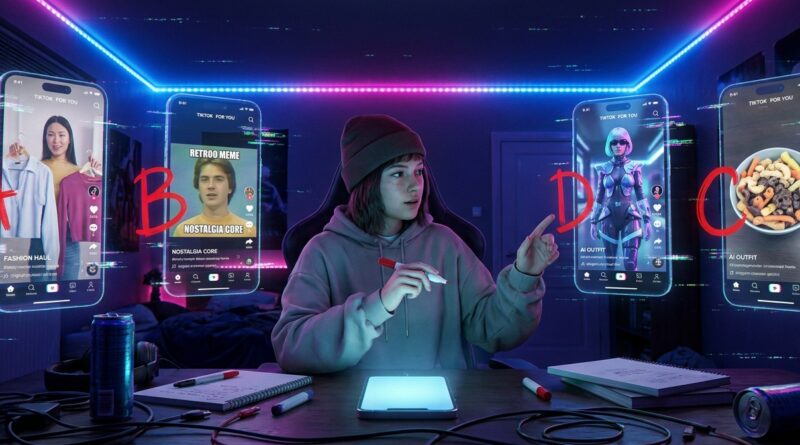
Inside TikTok’s ‘Algorithm Taste Test’ Craze: How Calling Out Your FYP Became Gen Z’s New Power Move Against The Feed
Your For You Page can feel creepy when it starts serving videos that match your mood, your niche hobbies, even your late-night spirals before you have fully admitted those things to yourself. That is exactly why the TikTok algorithm taste test trend is catching on. People are tired of quietly letting the feed define them, so they are turning the whole thing into a public experiment. They scroll, react, rate the accuracy, and call out the strange little character profile TikTok seems to have built for them. Part joke, part protest, part self-diagnosis, it gives users a way to say, “Hold on. Is this really me, or is this just what the app wants me to become?” For viewers, it is weirdly validating. For creators, it is smart content. It turns an invisible system into something everyone can see, laugh at, and argue with in the comments.
⚡ In a Hurry? Key Takeaways
- The TikTok algorithm taste test trend is users publicly “grading” how well their FYP has profiled them, and whether that profile feels accurate or unsettling.
- If you are a creator, turn your own feed into a repeatable series by reacting to what the algorithm thinks you like and asking followers if it got you right.
- This trend is useful because it gives people language for algorithm fatigue, but it is also a reminder not to treat your feed like a perfect mirror of your real personality.
What the TikTok algorithm taste test trend actually is
At its core, this trend is simple. Someone opens TikTok, scrolls through their FYP, and comments on what the app is feeding them as if they are taking a personality quiz they never agreed to.
Maybe the feed says they are in their “cottagecore healing era.” Maybe it insists they are now a sneakerhead, an aspiring chef, or one breakup away from buying a bookshelf and reading Russian novels. The creator then scores the feed. Too accurate. Totally off. Disturbingly specific.
That is the appeal. It takes something hidden, the recommendation system, and turns it into something visible and debatable.
Why this trend is blowing up now
People have joked about the algorithm reading their mind for years. What changed is that users are getting more comfortable talking about the feed itself as the subject, not just the stuff inside it.
Hyper-personalization used to feel convenient. Now it can feel claustrophobic. If you pause on one sad video, your whole night can turn into a sadness marathon. If you watch one skincare clip, suddenly the app acts like your full identity is pores and serums.
The TikTok algorithm taste test trend works because it names that feeling. It says, “I know this machine is making choices about me. Let’s inspect those choices together.”
It is funny, but it is also a quiet act of pushback
A lot of Gen Z internet behavior looks playful on the surface and deeply analytical underneath. This is one of those cases.
By publicly reacting to their FYP, users are not just making a joke. They are showing that they know the feed is shaping what they see, what they want, and sometimes what they think they are supposed to be into.
That is why this feels like a power move. Even if the user cannot fully control the algorithm, they can at least drag it into the light.
Why viewers connect with it so fast
This trend lands because it solves a problem many people have but struggle to explain. The problem is not just “my feed is weird.” It is “my feed is influencing my taste so smoothly that I can’t always tell where my preference ends and the app begins.”
That is a very online, very modern anxiety. And once somebody says it out loud in a 30-second video, everyone in the comments suddenly has a story.
You will see replies like:
“My feed thinks I am planning a divorce.”
“Mine decided I am a gym girl after two workout videos.”
“TikTok wants me to become a person I do not remember applying to be.”
That shared recognition is what keeps the format moving.
What makes it smart for smaller creators
If you are trying to grow on TikTok or Instagram Reels, this is more than a trend. It is a format with legs.
You do not need a huge production setup. You do not need expert credentials. You just need a point of view and a willingness to react honestly.
It creates comments naturally
The best version of this trend invites people to compare feeds. Once a creator says, “The algorithm thinks I am becoming a minimalist plant parent with commitment issues,” viewers instantly want to share what their own feed is saying about them.
That means comments come built in. And comments are fuel.
It can become a series
One post can turn into five fast.
You can do “rating my FYP after a breakup.”
“Rating my FYP after searching one recipe.”
“What Instagram Reels thinks my personality is versus TikTok.”
That series structure matters because it gives creators a repeatable idea they can use without sounding stale.
It fits the low-polish internet mood
People are responding to content that feels less staged and more immediate. That overlaps with the same mood behind Inside TikTok’s ‘Only One Take’ Panic: How Posting Your First Draft Became Gen Z’s New Authenticity Flex, where rougher, less overworked videos feel more honest. The algorithm taste test trend works best when it feels like a real-time reaction, not a scripted commercial.
What this trend says about the bigger algorithm mood
For years, platforms sold personalization as a gift. “We know what you like, so we can save you time.” That pitch still works to a point. Nobody wants to start from zero every time they open an app.
But there is a downside. When recommendation systems get too good, they stop feeling helpful and start feeling invasive. Worse, they can trap people in tiny loops.
If the app decides you are into a certain aesthetic, political mood, body image standard, or relationship story, it can keep reinforcing that version of you. Not because it is true, but because it performs well.
The TikTok algorithm taste test trend exposes that loop in a way that feels easy to understand. It turns machine prediction into social commentary.
How to do your own algorithm taste test without overthinking it
If you want to try the format as a creator, keep it simple.
Start with a clean framing line
Open with something like, “I’m rating how accurately TikTok thinks it knows me today,” or “Let’s see what my FYP has decided my personality is this week.”
That gives viewers the setup immediately.
Show specific examples
Do not just say, “My feed is weird.” Show the categories that keep appearing. Beauty routines. Tiny apartments. Marathon training. Pet grief. Expensive coffee gear. Whatever is there.
The more specific, the funnier and more relatable it gets.
Score it honestly
Give each theme a quick rating. Accurate. Not me. Concerningly precise. Fully manipulative. This is where your personality comes through.
End with a question
Ask viewers what their own FYP has decided about them. That is the easiest way to pull people into the conversation.
What regular users can learn from it
You do not have to be a creator to get something out of this trend.
It can help you notice patterns in what you are being shown. That matters more than it sounds. Once you spot the loop, you are a little less likely to confuse repetition with destiny.
If your feed keeps pushing one kind of lifestyle, body standard, or emotional tone, pause and ask a basic question. Do I actually like this, or have I just seen it so many times that it feels familiar?
That small moment of awareness is the real value here.
Does calling out your FYP actually change the algorithm?
Not directly, at least not in some magical one-step way.
Making a video about your feed does not reset the recommendation system on its own. But your behavior still shapes what comes next. Skipping videos faster, searching for different topics, following new accounts, and using “not interested” tools all help steer things over time.
So no, the trend is not a technical fix. It is more like a social fix. It helps people understand what is happening and talk about it with clearer language.
Why brands and platforms should pay attention
This trend is a signal. Users are not just passively consuming feeds anymore. They are critiquing them in public, turning recommendation logic into content, and building mini communities around that critique.
That means platforms cannot assume personalization always feels good. And brands cannot assume a highly targeted feed equals trust.
People like relevance. They do not like feeling boxed in.
At a Glance: Comparison
| Feature/Aspect | Details | Verdict |
|---|---|---|
| What the trend does | Users publicly review and score the personality profile their FYP seems to have built for them. | Funny on the surface, surprisingly useful underneath. |
| Why creators like it | It is easy to film, easy to repeat as a series, and naturally pulls comments from viewers comparing their own feeds. | A strong low-effort, high-conversation format. |
| What it cannot do | It does not instantly reset your algorithm or solve personalization fatigue by itself. | Best used as awareness and conversation, not a miracle fix. |
Conclusion
The TikTok algorithm taste test trend matters because it turns a vague, nagging feeling into something people can actually point to. Instead of just saying the feed feels off, users are showing exactly how the app is guessing their taste, mood, and identity in real time. That gives people language for a frustration they all share but rarely break down. It also gives smaller creators a smart series idea that can build loyalty, spark debate, and stay flexible as TikTok and Instagram keep changing the rules. The bigger lesson is simple. Your feed may know your habits, but it does not get the final word on who you are. Calling that out, even jokingly, is its own kind of control.