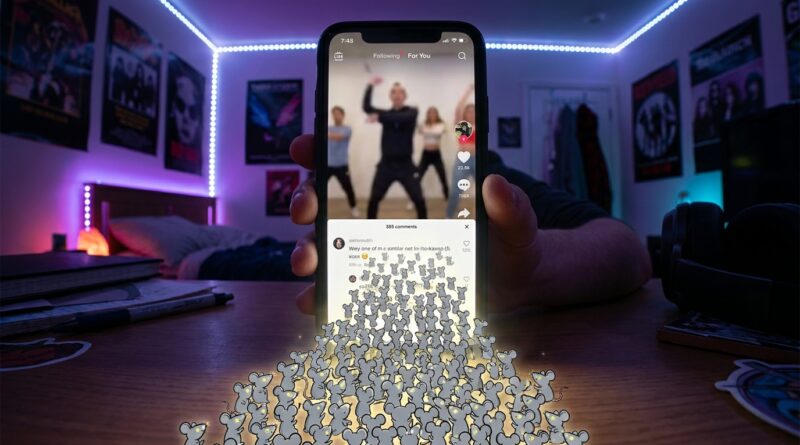
Inside TikTok’s ‘Stuart Little Comments’ Swarm: How A Mouse Sticker Quietly Became Gen Z’s New Way To Hijack Any Video
You are not imagining it. One minute you open TikTok to watch a cooking clip or a gym post, and the next minute the comments are full of a tiny Stuart Little sticker like the whole app joined a secret joke without telling you. That is annoying, especially when every so-called explainer either acts like it is deep internet history or pretends the answer is more complicated than it is. The short version is simple. The Stuart Little TikTok comment trend is a swarm joke. People are dropping the mouse sticker into unrelated comment sections because the randomness is the joke, and because once enough people copy it, the comments become the real content. It is less about the movie itself and more about joining a live in-group signal. If you are a creator, brand, or just someone trying to keep up, the useful question is not only “what does it mean,” but “what do I do with it before the crowd moves on.”
⚡ In a Hurry? Key Takeaways
- The Stuart Little TikTok comment trend is mostly a spammy in-joke. It usually does not “mean” anything deep beyond signaling that users are part of the moment.
- If you are a creator, decide fast whether to ignore it, join it once, or pin a funny reply so the swarm works for you instead of taking over your comment section.
- It is not usually a safety threat by itself, but comment swarms can bury real feedback, confuse audiences, and make moderation harder if you leave them unchecked.
What the Stuart Little sticker actually means
Most of the time, it means almost nothing on its own. That is the point.
The Stuart Little sticker works like a digital inside joke. Users paste it under videos that have little or no connection to Stuart Little because absurdity travels fast on TikTok. A tiny mouse showing up under a skincare routine, breakup story, or football highlight feels weird enough to be funny. Then the copying starts.
Once enough people repeat the same sticker, the joke shifts. It is no longer “look, a mouse.” It becomes “look, we all know to do this here.” That shared recognition is what powers the Stuart Little TikTok comment trend.
Why this feels confusing to normal users
If you missed the first wave, you arrive late to a party where everyone is laughing at a joke nobody explains. TikTok is full of that. The app rewards speed, not clarity. By the time a meme gets properly defined, users have already moved on or changed how they use it.
That is why the sticker can seem meaningless and meaningful at the same time. It is weak as language, but strong as participation.
How a random mouse took over comment sections
This did not explode because people suddenly became huge Stuart Little fans. It spread because comment swarms are now one of TikTok’s favorite formats.
Older TikTok trends mostly lived in the video itself. You copied a dance, a sound, a format, or a catchphrase. Now more culture gets built underneath the post. Comments have become their own performance space.
The recipe for a comment swarm
Most swarms take off when they have three things:
- Something easy to copy
- Something odd enough to stand out
- Very low effort to join
The Stuart Little sticker checks all three boxes. You do not need to write a joke. You do not need context. You just tap, post, and become part of the wave.
Why stickers spread faster than words
Stickers are visual. They are easy to spot when scrolling. And because they look identical, they create instant pattern recognition. A wall of the same tiny mouse tells your brain, “something is happening here.”
That makes other users more likely to copy it, even if they do not fully get it yet. TikTok trends often run on that exact energy.
When people are “supposed” to use it
There is no formal rulebook, which is part of the problem. But there are patterns.
People usually use the Stuart Little sticker in one of four ways:
1. To hijack unrelated videos
This is the main use. A totally normal video gets flooded with the sticker, and the comments turn into a swarm event.
2. To signal “I’m in on the trend”
Even if the post has nothing to do with the joke, dropping the sticker says, “I know what is happening on TikTok right now.”
3. To test whether a comment section is ripe for takeover
Sometimes one person starts it, then others pile on. It is like tossing a match into dry grass. If the audience is online and trend-aware, the swarm catches.
4. To be intentionally annoying in a playful way
Yes, sometimes the joke is basically low-level chaos. Not malicious, just disruptive enough to be funny to the people doing it.
What creators and brands should do when it hits their post
This is where the trend matters. If your comments get flooded, you have a choice. Treat it as noise, or turn it into signal.
Option 1. Ignore it
If the swarm is small, doing nothing is often fine. Most comment trends burn hot and fade fast.
Best for: small bursts, low-stakes posts, or when the comments still contain useful discussion.
Option 2. Acknowledge it once
A single funny reply can absorb the joke and stop it from feeling like your audience is running the room.
Examples:
- “I see the mouse has arrived.”
- “Can someone tell Stuart to pay rent if he is staying here?”
- “This was a sandwich video, but okay.”
Best for: creators who want to look current without fully surrendering the thread.
Option 3. Pin a comment and redirect
This is the smartest move if you still want engagement to stay useful. Pin a playful line, then add a real prompt.
For example: “Yes, yes, hello Stuart. Now which outfit actually looks best?”
You are not fighting the trend. You are using it to funnel people back into the conversation you want.
Option 4. Moderate if it starts burying real comments
If you are a brand, a nonprofit, or a creator discussing something serious, a swarm can become a problem. It can hide customer questions, community feedback, or important context.
At that point, it is okay to filter, delete, or limit comments. Not every meme deserves open access to every post.
How to tell if the joke is already dying
This matters because late meme use can make a post feel painfully out of touch.
Signs the trend is still alive
- You are seeing it across unrelated niches
- New users are still asking what it means
- Big creators are getting swarmed in fresh posts
- People are riffing on it, not just repeating it
Signs it is fading
- Brands start forcing it into captions
- Commenters begin mocking the meme itself
- The sticker appears mostly in “explaining the trend” posts
- No new variations show up
A good rule is simple. If you are asking whether it is too late, it might already be close.
Why Gen Z keeps moving the action into comments
Because comments are faster, cheaper, and more flexible than making a full video.
Posting a comment lets users join a trend in seconds. No filming. No editing. No risk of making a bad post that sits on their profile forever. It is casual participation.
It is also a power move. When enough people flood a comment section with one image, phrase, or joke, they change what the post is about. The audience starts steering attention. That is a big shift.
The For You Page still matters, of course. But increasingly, the meaning of a post gets decided under the video, not in it.
How to spot the next comment swarm early
The Stuart Little TikTok comment trend is useful because it shows what to watch for next time.
Look for repeated low-effort symbols
Not every swarm starts with a full sentence. Sometimes it is an emoji, sticker, nickname, or one odd phrase repeated over and over.
Watch unrelated videos, not just trend explainers
The best clue is seeing the same thing jump categories. If a joke moves from beauty TikTok to sports TikTok to pet TikTok, it is no longer niche.
Notice when the comments become more entertaining than the post
That is often the tipping point. Once users visit a video partly to see whether the swarm is there, the trend has real traction.
Track whether creators start responding
When creators pin replies, joke back, or mention the meme in follow-up videos, the trend has moved from background noise to platform behavior.
Should regular users join in or sit this one out?
Either is fine. The key is timing and tone.
If you want to join, do it where the swarm is already happening. That reads as playful. Randomly forcing it into older or serious posts can read as tired or rude.
If you want to skip it, skip it. You do not need to understand or perform every meme to use TikTok correctly. A lot of these trends are less about humor and more about social proof.
A good rule for serious posts
If a video is about grief, health, danger, or a personal crisis, maybe leave the mouse in the drawer. Internet culture loves chaos, but context still matters.
At a Glance: Comparison
| Feature/Aspect | Details | Verdict |
|---|---|---|
| Meaning | Usually a shared absurd joke, not a coded message or fandom deep cut | More about participation than content |
| Best use | Joining an active swarm or lightly acknowledging it on your own post | Fine in playful contexts, awkward if forced |
| Risk for creators | Can drown out real discussion, confuse followers, or make comments harder to manage | Use humor early, moderation later if needed |
Conclusion
The Stuart Little TikTok comment trend looks silly on the surface, and honestly, it is. But it also shows something real about how TikTok works now. The comment section is no longer just where people react. It is where people compete to shape the joke, steal the spotlight, and decide what a post means. If you understand why this one tiny mouse blew up, you are better prepared for the next swarm too. That helps whether you want to join early, keep your own comments from getting hijacked, or turn a chaotic pile-on into useful engagement. The joke will fade. The pattern will not.