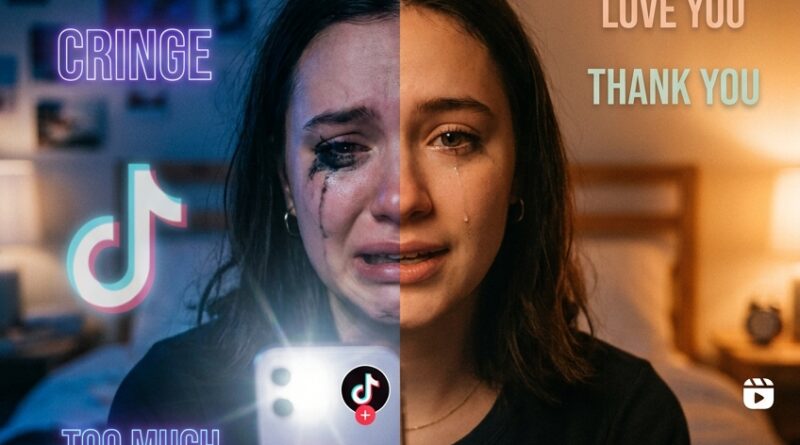
Inside TikTok’s ‘Ugly Cry For The Algorithm’ Wave: How Unfiltered Meltdowns Quietly Became Gen Z’s Realest New Flex
You are not imagining it. You open TikTok, see someone crying so hard they can barely speak, and somehow that clip has 2 million views by lunch. Meanwhile, your carefully edited post with decent lighting, good pacing and actual effort gets ignored. That feels awful, and a little confusing. The tiktok ugly cry trend is hitting a nerve because it makes raw emotion look like a growth hack. For younger creators especially, the message can feel dark. Be more exposed. Be less okay. Share the worst moment and maybe the app will finally care. The problem is that virality and emotional safety are not the same thing. What spread over the past day across TikTok and Reels was not just “authenticity.” It was a format. A recognizable, copyable performance of collapse. If you are wondering whether you now have to post your breakdown to stay relevant, the short answer is no. You do need honesty. You do not need self-harm disguised as content.
⚡ In a Hurry? Key Takeaways
- The tiktok ugly cry trend is being rewarded because it grabs attention fast, not because oversharing is suddenly required for growth.
- If you want to post honestly, use a “processed not fresh” rule. Share after you have had time to think, not while you are in the middle of a meltdown.
- You do not need to traumatize yourself on camera to build an audience. Boundaries are not bad for engagement. They are important for your future self.
What the tiktok ugly cry trend actually is
At its simplest, this trend is exactly what it looks like. Front camera. Tear-streaked face. Choked-up voice. Minimal editing. A caption that hints at betrayal, burnout, family stress, money problems, loneliness, or plain emotional overload.
Some of these clips are real in the moment. Some are filmed after the fact but framed as immediate. Some are fully sincere. Some are clearly tuned for the algorithm. Most sit somewhere in the messy middle.
That is why the trend feels so slippery. It is not one clean category. It mixes confession, performance, diary entry, coping mechanism and content strategy.
Why these videos blew up in the past 24 hours
Three things happened at once.
1. They are easy to understand in one second
TikTok rewards instant readability. A crying face needs no setup. Viewers know right away that something intense is happening, so they stop scrolling.
2. The comments do half the work
Once a crying clip starts getting traction, the replies often split into camps. “Are you okay?” “This feels staged.” “I felt this.” “Girl stand up.” That argument keeps the post moving because every comment tells the app people are engaged.
3. The format is copyable
Like many TikTok waves, once one version hits, dozens of variations follow. People stitch it, parody it, confess their own story, or react to it. Suddenly it is not one person crying. It is a whole emotional ecosystem.
We have seen this pattern with other TikTok pile-ons and inside jokes too. A trend starts as one post, then mutates into something much bigger and stranger. That same fast-copy behavior helped fuel things like Inside TikTok’s ‘Turning Iraqi’ Filter Frenzy: How One Controversial Face Effect Became 2026’s Loudest Culture War In-Joke, where repetition mattered more than nuance.
Why viewers cannot stop watching
This is the uncomfortable part. People are not only watching because they care. They are also watching because emotional distress is hard to look away from.
That does not make every viewer cruel. It makes them human and very online.
Doom-scrolling loves intensity
When people are tired, anxious or bored, they often respond to content that cuts through the fog. Sobbing does that. It jolts the feed.
It feels more “real” than polished content
After years of filtered, optimized posting, messy emotion reads as proof. The logic is simple. If someone looks terrible, they must be telling the truth. That is not always fair or accurate, but it is a powerful internet instinct.
It invites projection
Viewers fill in the blanks with their own story. They think about their breakup, their family, their stress, their loneliness. A vague crying video becomes a mirror.
The part creators are quietly worried about
A lot of younger creators are asking the same question right now. If vulnerability performs, do I have to keep escalating mine?
That is the trap.
Once a creator gets a spike from posting raw pain, it can start to train both the audience and the creator. The audience expects deeper access. The creator feels pressure to stay emotionally open, even when it hurts.
Then every hard day starts whispering the same thought. Maybe I should film this.
That is not a healthy relationship with your own feelings.
Authentic does not have to mean live-streaming your worst moment
This is where it helps to separate honesty from immediacy.
You can be genuine without posting in the middle of emotional free fall. In fact, the safest honest content usually comes after a little distance.
Try the “processed, not fresh” rule
If the feeling is still so hot that you cannot think clearly, do not post it yet. Record it if you want. Save it to drafts. Come back tomorrow.
Ask yourself:
- Would I still want this online next week?
- Am I sharing because it helps me say something true, or because I hope pain will get attention?
- Will I feel exposed, relieved, or worse after posting?
Share the lesson, not the live wound
A safer framework is: here is what happened, here is what I learned, here is what I am doing next.
That still feels personal. It just does not require you to perform your nervous system in real time.
Use specifics without giving away everything
You do not owe names, screenshots, medical details, family secrets or exact timelines. You can say, “I had a brutal week and needed to reset,” without handing strangers your entire private life.
Practical posting frameworks that still feel honest
If you want the emotional truth without the emotional hangover, these formats work well:
The aftercare post
“I cried for an hour today, then I did three things that helped.”
This gives viewers something real plus something useful.
The voiceover version
Use calmer footage, like a walk, your desk, or making tea, and talk about what happened in voiceover. The feeling is still there, but you keep some breathing room.
The boundary-forward caption
Example: “I am sharing this because I know I’m not the only one, but I’m keeping the details private.”
That sentence alone sets the tone. It tells your audience honesty is welcome, entitlement is not.
The close-friends test
Before posting publicly, ask, “Would I send this exact clip to five people I trust?” If the answer is no, that is worth listening to.
How to tell if a post is too much for you right now
Here are some red flags that mean hit pause:
- You are posting to get a specific person’s attention.
- You are hoping strangers will tell you what to do next.
- You feel panicky at the thought of deleting it, but panicky at the thought of keeping it up too.
- You have not slept, eaten, or calmed down.
- You know the comments could wreck you, and you are not ready for that.
If several of those are true, draft it. Do not publish it.
What to do instead if you need support, not views
This matters. TikTok comments are not care. Sometimes they feel comforting for an hour, then brutal by the evening.
If you are in a real emotional spiral, better options are boring but much safer:
- Text one actual friend.
- Leave yourself a voice note instead of posting.
- Write the caption in Notes and do not upload it yet.
- Turn off the front camera and go for a short walk.
- Talk to a therapist, counselor, trusted adult or support line if things are heavy.
The internet is good at witnessing. It is not always good at caring for you.
For brands and managers watching this trend
If you work with creators, do not mistake distress for “strong engagement.” A crying video can spike numbers and still be a bad outcome.
Healthy creator strategy in 2026 should include boundaries, cooldown periods and explicit permission not to monetize personal crises. If someone feels they must break down publicly to keep momentum, the system around them is broken.
At a Glance: Comparison
| Feature/Aspect | Details | Verdict |
|---|---|---|
| Why it spreads | Crying clips stop the scroll fast, trigger comments, and are easy for others to copy or react to. | High algorithm appeal, but not proof that more pain equals better content. |
| Best way to post honestly | Share after processing the event. Focus on reflection, context and boundaries instead of filming the breakdown live. | Safer and usually more sustainable. |
| Main risk | Oversharing can create regret, invite harsh comments, and train both creator and audience to expect emotional escalation. | Set limits early. Virality is temporary. Digital footprints are not. |
Conclusion
The tiktok ugly cry trend looks like radical honesty, but a lot of the time it is really a fast-moving content format built around emotional intensity. That distinction matters. This helps the community today because a lot of younger creators are quietly asking whether they have to traumatize themselves on camera to grow in 2026. They do not. By mapping how these clips spread across TikTok and Reels in the past 24 hours, unpacking why viewers are doom-scrolling emotional collapse as entertainment, and offering safer alternatives that still feel honest, we get something more useful than a hot take. We get language, boundaries and practical posting frameworks. If you create online, the goal is not to become less real. It is to stay real without handing the internet more of your pain than it has earned.