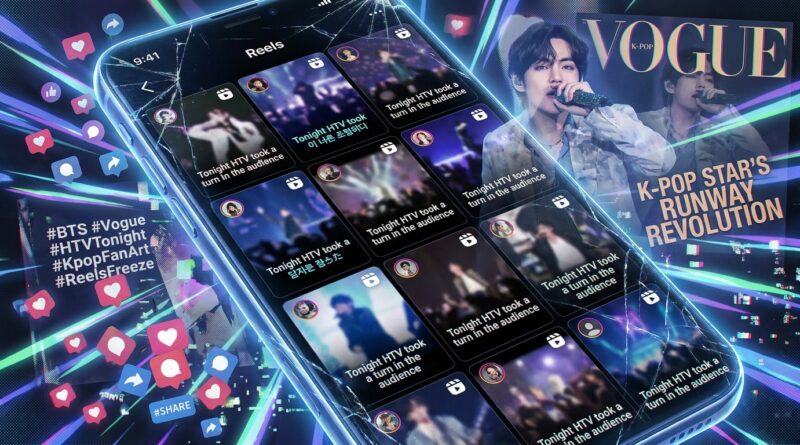
Inside TikTok’s ‘Tonight HTV Took A Turn In The Audience’ Caption Takeover: How One Kim Taehyung Fan Edit Quietly Hijacked Instagram And Reels Overnight
You are not imagining it. One minute you are watching a random cat reel, a football clip, or a makeup edit, and suddenly the caption says, “Tonight HTV took a turn in the audience.” It looks like broken English. Or bot spam. Or some inside joke the whole internet agreed not to explain to you. That is exactly why this phrase has spread so fast. It feels mysterious, easy to copy, and oddly “viral-looking,” so people keep pasting it onto unrelated videos to catch the same attention wave. The short version is this: the line appears to have started from a Kim Taehyung fan edit, then escaped its original context and turned into a reusable caption template across TikTok reposts and Instagram Reels. Once enough fan pages, edit accounts, and clip farms reused it, the algorithm did the rest. What you are seeing is not a platform bug. It is a live example of fandom energy, copycat posting, and recommendation systems feeding each other in real time.
⚡ In a Hurry? Key Takeaways
- The “Tonight HTV took a turn in the audience” meaning is not a secret coded message. It is a fan-edit caption fragment that got copied far beyond its original Kim Taehyung context.
- If you want to figure out viral phrases fast, search the exact caption in quotes, sort by newest posts, and look for the earliest fan edit or repost cluster.
- This is mostly trend behavior, not malware. Still, do not click weird bio links or assume every account using the caption is legit.
So what does “Tonight HTV took a turn in the audience” actually mean?
For most people seeing it now, it does not really “mean” anything on its own.
That sounds like a cop-out, but it is the honest answer. The phrase likely made sense, or half-made sense, in the original fan-edit setting tied to Kim Taehyung, often called V. “HTV” seems to function like a fandom-specific shorthand, edit label, mistranscribed phrase, or reposted text fragment that got detached from the original clip. Once it left that first context, people stopped using it for meaning and started using it as a signal.
A signal for what? For trendiness. For reach. For “this looks like the kind of caption the algorithm is already rewarding.”
That is why you now see it under clips that have absolutely nothing to do with K-pop, Taehyung, concerts, or even music.
How one fan edit turns into everybody’s caption overnight
Step 1: A fandom post catches fire
Big fandoms move fast. Really fast. A caption used on one strong edit can get copied by fan accounts, reaction pages, translation pages, and repost farms within hours.
Kim Taehyung content has a global fan base with serious repost speed. Once a line gets attached to a high-performing edit, it can spread before most casual users even realize where it came from.
Step 2: Repost accounts copy everything, including the weird part
Plenty of clip accounts do not understand the original text they are copying. They just paste the full caption, hashtags included, because it saves time and sometimes helps the post blend into an existing trend.
This is how strange wording survives. Nobody pauses to fix it, because the oddness is part of what makes it sticky.
Step 3: The algorithm starts connecting the phrase to engagement
Once enough posts with the same line get views, likes, shares, or saves, that text starts to act like trend metadata. Not official metadata. Just a pattern the platform keeps seeing.
At that point, other creators and meme pages start copying it because they think, correctly or not, that the caption itself might help their post travel.
Step 4: The phrase becomes context-free
This is the final stage. The line no longer points back to Taehyung for most viewers. It becomes a floating caption shell. A viral accessory. Something people paste under edits, pets, sports clips, thirst traps, and random Reels because they saw it working elsewhere.
Why the caption looks like broken English
Because it probably is, at least partly.
That does not mean it is fake. Viral captions often get scrambled for very normal internet reasons:
- auto-translation weirdness
- bad transcription from audio
- cropped reposts that lose context
- fan shorthand outsiders do not recognize
- people copying text without checking it
Once a phrase starts spreading, accuracy stops mattering. Familiarity matters more.
If enough users have already seen the line, then the line feels “right” even when it reads like nonsense.
Why people keep using it on unrelated videos
Because social apps reward pattern-matching behavior.
Creators, fan pages, and low-effort repost accounts are always looking for clues about what the feed likes. Sometimes that means using a trending sound. Sometimes a visual style. Sometimes a weird caption.
Think of it like a fashion trend for text. Most people wearing it did not design it. They just know they have seen it everywhere.
How to reverse-engineer a viral phrase in real time
If you want to stop feeling lost every time the feed spits out another strange line, here is the simple process.
1. Search the exact phrase in quotes
Type “Tonight HTV took a turn in the audience” into TikTok, Instagram, Google, and X. Use quotation marks on search engines when you can. That helps narrow it down to the exact wording.
2. Sort by newest, not just top posts
Top posts show you where the phrase is now. Newest posts can show you where it started spreading.
3. Look for repeated account types
Are the earliest results fan edits? Repost pages? Translation accounts? Meme pages? That tells you what community launched the phrase.
4. Check whether the same video is being mirrored
If lots of accounts are posting the same clip with the same caption, you are likely looking at a repost wave, not an organic trend that grew from many creators at once.
5. Ignore the most confident comments at first
Comment sections are full of people guessing. Some are right. Many are just saying whatever sounds smart.
6. Find the first context, then compare it to the current one
This is the key move. Ask, “What did the phrase mean at the start?” Then ask, “What are people using it for now?” The gap between those two answers is the whole story.
What this says about fandom power in 2026
Fandoms are no longer just communities reacting to internet trends. They create them, rename them, remix them, and accidentally export them into the mainstream.
A single caption attached to a strong Taehyung edit can now travel into beauty content, sports edits, meme pages, and faceless clip accounts in less than a day. That is not small. It shows how tightly connected repost culture has become.
It also shows that recommendation systems do not care much about preserving original meaning. They care about activity. If a caption travels with engagement, the platforms keep serving it.
Is this spam, bot behavior, or something dangerous?
Usually, it is just trend copying.
That said, there are three versions of this kind of wave:
Normal trend copying
Real users and fan accounts paste the same line because they saw it everywhere.
Engagement farming
Pages use a confusing caption on purpose because mystery drives comments. People ask, “What does this mean?” and that helps the post.
Low-quality network posting
Some content farms mass-post clips with recycled captions to test what gets reach. Not always harmful, but not exactly authentic either.
As a rule, the caption itself is not the danger. The risk is what sometimes comes with these posts, like scammy links in bios, impersonation accounts, or fake giveaway hooks.
What creators should do if they want to ride the trend without looking clueless
You do not need to pretend you understand a caption if you do not.
Better options:
- Use the phrase only if your post is directly about the trend
- Explain it in your own caption and add the viral line second
- Make the joke the point, instead of pasting it blindly
- Credit the fandom origin if you know it
If you are a brand or a business account, be careful. Context-free meme captions can make you look late, confused, or weirdly spammy.
What casual scrollers should take from this
The feed is not always trying to tell you a coherent story. Sometimes it is just showing you the leftovers of a very fast-moving repost machine.
That is why a phrase like “Tonight HTV took a turn in the audience” can feel huge and meaningless at the same time. It is huge because repetition made it visible. It feels meaningless because the original context got stripped out on the way.
At a Glance: Comparison
| Feature/Aspect | Details | Verdict |
|---|---|---|
| Origin | Likely tied to a Kim Taehyung fan edit or repost cluster before spreading to unrelated content. | Real trend root, but quickly detached from original meaning. |
| Current use | Used as a copy-and-paste caption on TikTok reposts and Instagram Reels, often with no connection to the source. | Mostly a viral template now. |
| Risk level | Usually harmless trend behavior, though some repost or spam accounts may piggyback on it for reach. | Low risk, but stay careful with links and fake accounts. |
Conclusion
If you were searching for the “Tonight HTV took a turn in the audience” meaning, the big answer is simple. You did not miss a genius joke. You are watching a fan-caption fragment break free from its original Kim Taehyung setting and turn into a feed-wide copycat label. That is why it seems to be everywhere and nowhere at once. This helps right now because the HTV caption wave is peaking across Instagram edits and TikTok reposts, and a lot of people still think it is broken English or plain spam. What it really shows is how fandom power, recommendation systems, and keyword-stuffing can collide in under 24 hours. Once you know how to trace the first post, spot repost clusters, and separate origin from current use, you stop being the confused person in the comments. You start reading the feed for what it is, a fast, messy signal machine, and that makes you much better at spotting the next one early.