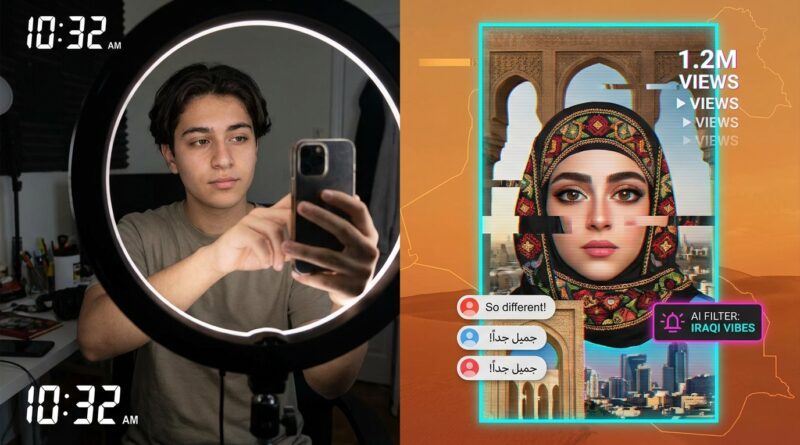
Inside TikTok’s ‘Turning Iraqi’ Filter Frenzy: How One Controversial Face Effect Became 2026’s Loudest Culture War In-Joke
You open TikTok for five minutes and suddenly everyone is “turning Iraqi” on camera. The comments are split between people crying laughing, people calling it racist, and people trying to explain geopolitics in 14 seconds. If you feel like you missed the meeting where the internet decided this was the joke of the week, you are not alone. This trend moved fast, and like a lot of TikTok trends, the filter itself is only half the story. The other half is what people are projecting onto it. What looks like a silly face effect is actually tied up with stereotypes about Arab identity, beauty standards, war, migration, and the weird way social media turns real people into characters. So let’s slow it down and make sense of it. Here’s the TikTok Turning Iraqi filter trend explained, without assuming you already know the lore.
⚡ In a Hurry? Key Takeaways
- The “Turning Iraqi” trend is a viral TikTok face-filter meme that uses exaggerated visual cues to suggest an “Iraqi” look, which is why many people see it as funny, loaded, and potentially offensive all at once.
- If you want to engage with the trend, pause first. Check who made the filter, how Iraqi and Arab creators are reacting, and whether your post adds context or just repeats a stereotype.
- This is not just internet nonsense. It shows how filters can turn identity, race, migration, and war into a joke shortcut, so a little cultural awareness goes a long way.
What is the “Turning Iraqi” filter?
At the most basic level, it is a TikTok face effect that changes a person’s features in a way users read as “Iraqi” or broadly “Arab.” Depending on the version, the filter may darken skin tone, sharpen facial structure, change eyebrows, add facial hair, alter nose shape, or create a more stylized “Middle Eastern” look.
That description is exactly why the trend got messy so fast. A face filter is not neutral when it starts making identity look like a costume pack.
Some users treat it like a dramatic glow-up effect. Others use it as parody. Others use it to comment on family ancestry, diaspora identity, or how outsiders stereotype Iraqis and Arabs. And then there are people using it with zero context, which is usually where the backlash starts.
Why did it blow up so quickly?
Because it hits three things TikTok loves.
1. Instant visual payoff
You do not need to explain the joke. People see a before-and-after transformation in one second. TikTok rewards that.
2. Built-in controversy
Any filter tied to ethnicity, nationality, or race is going to spark debate. That debate fuels comments, stitches, duets, and reaction videos. In TikTok terms, that means reach.
3. Layers of irony
Gen Z and Gen Alpha rarely post one-note jokes anymore. A trend can be funny, critical, self-aware, offensive, and satirical at the same time. That ambiguity is part of why older viewers often feel lost. Was the post mocking Iraqis, mocking people who stereotype Iraqis, or trying to reclaim the joke? Sometimes it is genuinely hard to tell.
Where did the joke come from?
Like many TikTok trends, it did not appear from nowhere fully formed. It seems to have grown out of a mix of meme culture, AI-style beauty filters, nationality jokes, and long-running social media habits where users assign facial features to regions, ethnic groups, or “types.”
That kind of humor is not new. What is new is how fast filters automate it. You no longer need a caption explaining the bit. The app does the visual framing for you.
In many cases, trends like this also pick up steam because users remix them for different purposes. One creator uses it to joke about their dad. Another uses it to talk about diaspora identity. Another uses it to bait outrage. Another uses it with a military or migration reference. Soon, one filter is carrying ten different meanings at once.
Why is it controversial?
Because “looking Iraqi” is not a real, single visual category.
Iraq is ethnically, linguistically, and culturally diverse. Iraqi people can have a huge range of skin tones, facial features, hair textures, and styles. So when a filter claims to make someone “Iraqi,” it often ends up flattening that diversity into a bundle of stereotypes.
That is the core issue.
It turns identity into a visual shortcut
The filter suggests that nationality can be reduced to a face preset. That may sound obviously silly, but silly things still shape how people think. Plenty of users, especially younger ones, absorb these visual cues without stopping to question them.
It brushes against race and “digital brownface” concerns
If a filter darkens skin, changes features associated with a racialized group, and invites people to perform that identity for laughs, critics will understandably compare it to digital brownface. Even if the creator did not mean it that way, intent is not the only thing that matters.
It cannot be separated from politics
Iraq is not just a random country name in the algorithm. For many people, Iraq is tied to war, invasion, displacement, Islamophobia, refugee narratives, and decades of Western media framing. That history is sitting in the room, whether a TikTok caption mentions it or not.
Why are some people from Iraqi and Arab communities joining in?
This is where outsiders often get confused. If the trend is problematic, why are some Iraqi and Arab creators using it too?
There are a few reasons.
Reclaiming the joke
Some creators use the filter to mock how non-Arabs imagine Arabs. The joke is not “haha, Iraqis look like this.” The joke is “look how absurd and narrow your stereotype is.”
Playing with diaspora identity
For some people, the trend becomes a way to talk about mixed identity, family resemblance, immigrant parents, or the weird pressure to “look” more or less connected to your roots.
Using humor as a pressure valve
Communities that are constantly stereotyped often use humor to survive that pressure. That does not automatically make every version of the trend okay, but it does explain why the same filter can land differently depending on who is using it and why.
Why reactions are all over the place
Because there is no single Arab or Iraqi response. Social media loves neat consensus. Real communities do not work that way.
Some people find the trend funny. Some find it lazy. Some think it is harmless until non-Arabs start using it. Some think it is offensive no matter who posts it. Some are less bothered by the filter itself than by the comments underneath it, where the mask usually slips.
And that comments section matters. A lot.
Sometimes the filter is only mildly questionable on its own, then the replies fill up with old stereotypes about terrorism, body hair, religion, refugees, or “foreign” looks. That is often when a trend stops being edgy and starts being ugly.
What the trend is really doing under the surface
This is the part most viral clips skip.
The “Turning Iraqi” craze shows how younger internet users are using filters as a shortcut for bigger conversations they do not want to spell out in a paragraph. The filter becomes a stand-in for questions like:
- Who gets treated as “normal” and who gets treated as “other”?
- Why do certain facial features get exoticized or mocked?
- How do migration and diaspora show up in beauty standards?
- What happens when war-tied identities become meme material?
That does not mean every person using the trend is making a smart political statement. A lot of them are absolutely just chasing views. But even low-effort trends can reveal deeper attitudes.
How to tell if a post is commentary or just stereotype recycling
Here is a simple gut-check list.
Look at who is posting
Is the creator Iraqi or Arab? That does not automatically make the post fine, but it gives you useful context.
Read the caption and comments
Are they adding context, joking about family or identity, or are they fishing for “you look like a terrorist” style responses? Captions tell you a lot.
Notice what the joke depends on
If the humor only works because “Iraqi” is being used as shorthand for ugly, dangerous, hyper-masculine, or foreign, that is your answer.
Ask whether the post punches up, sideways, or down
Is the creator critiquing stereotypes, joking within their own community, or using a marginalized identity as a prop? Those are not the same thing.
Should you use the filter yourself?
You can. The better question is whether you should.
If you are not Iraqi or Arab, be careful. You do not need to panic, but you do need to think for ten extra seconds before posting. That alone will put you ahead of half the app.
A safer playbook
Before you post, ask yourself:
- Am I using this because I actually have something to say, or because I want a quick reaction?
- Would this feel different if the identity in the filter were another marginalized group?
- Have I checked how people from that community are talking about it?
- Will this read as critique, or just costume humor?
If you cannot answer those clearly, maybe sit this trend out. Not every viral joke needs your version.
How to engage without becoming the villain of the comments
If you want to talk about the trend without making a mess, try one of these approaches instead:
Share creators from the community
Boost Iraqi and Arab voices who are already explaining the trend with nuance. That is often more useful than adding your own lukewarm take.
Talk about the pattern, not just the punchline
You can discuss how nationality filters flatten identity and still keep the tone casual. You do not need a dissertation. Just avoid acting like it is “not that deep” when the whole internet is clearly making it deep.
Do not perform outrage for clout
There is a difference between calling out a harmful trend and trying to become the moral center of TikTok. People can usually tell which one you are doing.
What parents, older siblings, and confused adults should know
If a teen in your life is sharing this trend, do not start with “that app is rotting your brain.” You will lose them instantly.
Start simpler. Ask what the joke is supposed to be. Ask who made it. Ask whether the filter is poking fun at stereotypes or repeating them. That opens a real conversation about media literacy, identity, and how fast humor can slide into prejudice online.
That is the useful part here. Trends like this can actually be good teaching moments if you resist the urge to lecture.
At a Glance: Comparison
| Feature/Aspect | Details | Verdict |
|---|---|---|
| What the filter does | Applies facial changes that users read as “Iraqi” or broadly Arab, often using exaggerated visual cues. | Viral, but based on a shaky stereotype shortcut. |
| Why people use it | For jokes, irony, commentary on identity, diaspora humor, or plain old attention. | Meaning depends heavily on context and who is posting. |
| Main risk | It can flatten a diverse nationality into a meme look and invite racist or xenophobic commentary. | Worth thinking twice before joining in. |
Conclusion
The big takeaway is that the “Turning Iraqi” filter is not just another throwaway TikTok gag. It is a small, loud example of how Gen Z and Gen Alpha use face effects to say big things about race, war, migration, beauty, and “otherness” without ever writing a proper caption. That is why the trend feels confusing if you only catch random clips out of order. Once you know where the tension is, the whole thing makes more sense. You can see why some people treat it as satire, why others see it as harmful, and why community reactions are mixed instead of neat. If nothing else, this gives you a better playbook for the next hyper-sensitive trend that lands on your feed. Slow down, check the context, listen to the people being turned into the joke, and remember that being online does not remove the need for basic judgment. That alone will keep you from becoming the main character for the wrong reasons.