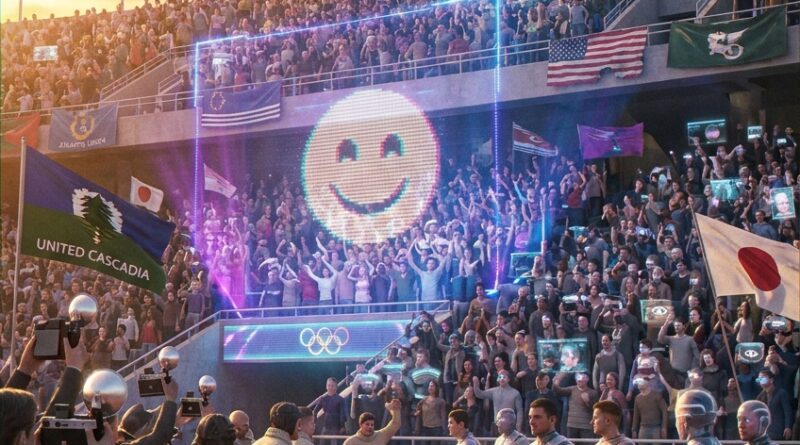
Inside TikTok’s ‘Alt Timeline Olympics’ Wave: How Fake Future Sports Clips Quietly Became Gen Z’s Favorite New Glitch in Reality
You are not imagining it. You scroll past a TikTok showing a gold medal match from the “2036 Paris Olympics,” or a dramatic podium reveal from a city that has never hosted the Games, and for half a second your brain hits the brakes. It looks fake. You know it is fake. But it is edited just well enough that you still wonder if you somehow missed a huge announcement. That little moment of confusion is exactly why the TikTok fake Olympics AI trend is catching on.
What makes this wave interesting is that most of it is not trying to pull off a full scam. It is more like internet improv. People are building alternate sports timelines, remixing highlight aesthetics, and playing with the look of “official” coverage from events that do not exist. Gen Z, especially, seems to enjoy that tiny glitch in reality. The trick now is knowing where playful fiction ends and misleading fake footage begins, because those are not the same thing, and the line matters more than it used to.
⚡ In a Hurry? Key Takeaways
- The TikTok fake Olympics AI trend is mostly a playful “alternate timeline” format, not always an attempt to trick people.
- Check the date, comments, caption wording, and weird visual details before assuming a clip shows a real event.
- Fun fictional edits are one thing. Fake footage presented as real news is where trust starts to break down.
What the “Alt Timeline Olympics” trend actually is
At its core, this trend mixes sports fandom, AI image tools, video editing, and the internet’s love of fake lore.
Creators are making clips that look like leaked broadcasts, highlight packages, medal ceremonies, venue tours, and athlete interviews from Olympic Games that have not happened yet. Sometimes the future year is plausible. Sometimes it is absurd. That is part of the joke.
You might see:
- “Breaking” clips from Olympics in cities that were never selected
- AI-generated podium shots with invented athletes or altered uniforms
- Edited crowd footage with future branding pasted over it
- Commentary tracks that sound official at first listen
- TikToks framed like lost satellite feeds or leaked rehearsal coverage
It is basically fan fiction wearing a broadcast graphics package.
Why your brain does a double take
This is the important part. These videos usually do not hold up under close inspection. But TikTok is not a close-inspection app. It is a speed app.
At scroll speed, your brain grabs a few signals:
- Olympic-style logos
- Stadium lighting
- Podium music
- Scorebug graphics
- Confident captions like “live from Paris 2036”
That is often enough to create a tiny burst of “maybe this is real.” By the time your rational brain catches up, the clip has already done its job.
This is not new in spirit. The internet has always loved mockumentary energy and fake news aesthetics. What is new is how easy it has become to make convincing sports visuals with consumer tools.
Why Gen Z seems to love it
There is a real appetite right now for content that feels half-real on purpose.
Not because people want to be lied to. Usually it is the opposite. A lot of younger users are pretty media-savvy. They understand the joke. The appeal is that the content briefly breaks reality without fully pretending to be journalism.
It feels like a shared bit
When everyone in the comments is playing along, the clip becomes less about truth and more about group storytelling. People start adding fake stats, invented host city lore, and dramatic “I was there” memories for events that never happened.
It borrows the language of official media
Sports coverage has a very specific visual grammar. Slow-motion replays, aerial shots, triumphant music, lower-third graphics. Once creators copy that language, even rough fakes feel oddly familiar.
It turns confusion into entertainment
That half-second of “wait, what?” is not a bug. It is the hook.
Where the trend stays fun, and where it starts getting sketchy
This is where the line matters.
A clearly playful alternate timeline video is one thing. A clip designed to be mistaken for a real event, especially during an actual news cycle, is different. One invites you into the joke. The other uses your trust against you.
Mostly harmless version
- The caption hints that it is fiction
- The comments are in on it
- The creator has a pattern of alternate-history or parody posts
- The details are exaggerated enough to signal the bit
More misleading version
- No disclosure at all
- Hashtags suggest breaking news
- Fake broadcaster branding is used to mimic a real network
- The clip is reposted outside its original context
- Viewers are encouraged to believe it is authentic footage
That reposted-out-of-context part is a big deal. A joke on one account can become misinformation on another in about ten minutes.
How to spot the TikTok fake Olympics AI trend quickly
You do not need forensic software. Most of the time, a few simple checks will do it.
1. Look at the caption language
Creators often tell on themselves. Words like “leaked,” “alternate timeline,” “what if,” “future games,” or “broadcast concept” are common clues.
2. Open the comments before you panic
Comments are often the fastest reality check. If half the replies are joking about impossible countries sweeping gymnastics, you are probably looking at a bit.
3. Watch the hands, flags, and text
AI video still struggles with small details. Medal ribbons melt together. Letters warp. Faces in the crowd blur into mush. Flags can look almost right, which is often worse than obviously wrong.
4. Ask one boring question
If this were real, where else would it be?
A genuine Olympic host announcement, venue reveal, or major highlight would not live only on one TikTok account with dramatic synth music.
5. Check the account itself
If the profile is full of fictional sports edits, weird future-history clips, or parody broadcasts, that gives you context fast.
Why this trend matters beyond TikTok
Because it is teaching people a new visual language.
That may sound abstract, but it is not. The more people get used to realistic fake event footage, the more we all need a stronger instinct for checking context. This trend is playful now. The skills it trains, both for creators and viewers, can be used for sillier stuff or more harmful stuff later.
That does not mean panic. It means practice.
The good news is that audiences are not helpless. People are getting better at reading visual weirdness. They know when something feels a little too clean, too dramatic, too perfectly framed for a random leak.
Advice for creators who want to try the format without being shady
If you are a small creator, this is actually a pretty adaptable format. But do it in a way that keeps the fun and drops the deception.
Be clear in the caption
You do not have to kill the joke. Just label it. “Alt timeline,” “fictional broadcast,” or “concept edit” is enough.
Make the fiction part of the charm
The best versions lean into the worldbuilding. Invent host city mascots. Fake opening ceremony themes. Ridiculous athlete rivalries. Give people something to play with.
Do not impersonate real news outlets too closely
That is where things get messy. Borrowing the style is one thing. Passing yourself off as a real broadcaster is another.
Expect your clip to travel
Even if your followers get the joke, repost accounts may strip away your caption and context. Watermarks, on-screen labels, or quick disclosures can help.
What viewers should do when they see one
You do not need to become the internet police. Just keep your footing.
- Pause before sharing
- Check the source
- Read the caption and comments
- Search for independent confirmation if the claim sounds major
- Enjoy the creativity without handing over your trust too easily
That last point is the whole game now. You can appreciate the bit and still keep your standards.
At a Glance: Comparison
| Feature/Aspect | Details | Verdict |
|---|---|---|
| Playful alt-timeline edit | Clearly fictional framing, comments in on the joke, creative worldbuilding | Usually harmless fun |
| Misleading fake event footage | No disclosure, fake urgency, copied news aesthetics, designed to be believed | Worth treating with caution |
| Best viewer response | Check caption, source, comments, and whether real outlets are covering it | Fastest way to avoid getting duped |
Conclusion
The TikTok fake Olympics AI trend works because it hits a very modern sweet spot. It is weird, polished, funny, and just believable enough to make your brain blink. Right now feeds are full of “future games” clips that can fool you for a second at scroll speed, and that makes this a good moment to learn the pattern before it gets even bigger. If you are a viewer, spotting the signs helps you keep the fun without losing your grip on what is real. If you are a creator, it is a flexible format you can use ethically by labeling the fiction and making the joke part of the art. That clear line matters. Playful unreality can be entertaining. Fake footage that chips away at basic trust is something else entirely.