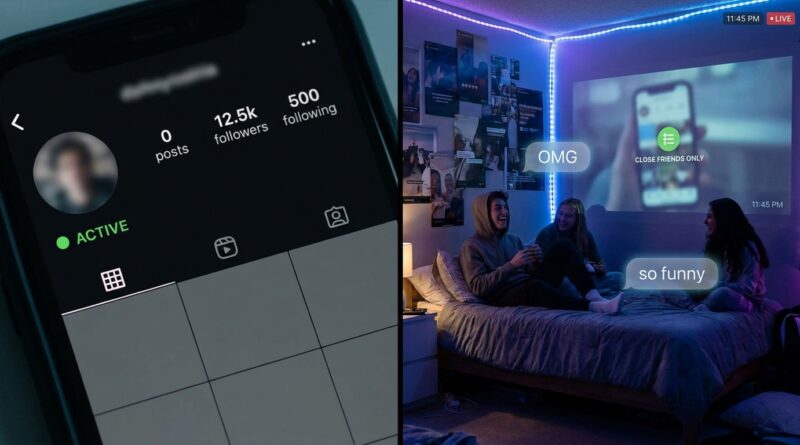
Inside TikTok’s ‘Soft Quit Social’ Wave: How Half‑Posted Lives Quietly Became Gen Z’s Boldest New Status Symbol
You open Instagram or TikTok and it feels weirdly empty, even though everyone is still technically there. Friends who used to post every meal, meltdown, and night out now have blank grids, one blurry photo from six months ago, or a random three-slide dump that says almost nothing. If you have felt that shift and struggled to explain it, you are not imagining things. This is what Gen Z soft quitting social media looks like. People are not logging off for good. They are keeping the account, keeping the username, keeping the social proof, but stepping back from the constant public performance. The action has moved somewhere quieter. Private stories. Group chats. DMs. Close Friends lists. That half-present, half-gone feeling across your feed is not laziness or burnout alone. It is becoming a status signal. For a lot of younger users, posting less now reads as more control, more privacy, and oddly enough, more confidence.
⚡ In a Hurry? Key Takeaways
- Gen Z soft quitting social media means staying on platforms while pulling back from public posting and moving real sharing into private spaces.
- If you are a creator or small brand, watch saves, DMs, story replies, and shares more closely than public likes because behavior is shifting fast.
- A wiped grid or zero-post account does not always mean someone is struggling or disappearing. Often it means they want more control over who gets access.
What “soft quitting” social actually means
Think of it like quiet quitting at work, but for your online life.
You do not delete the app. You do not make a big speech. You do not post a dramatic “taking a break from social media” note in Stories. You just slowly stop performing for the main feed.
That can look like:
- Zero-post profiles that still follow, watch, and message
- Archived or deleted old photos
- Rare, low-effort “proof of life” posts
- Heavy use of Close Friends, private stories, and alt accounts
- More conversation in DMs than comments
This is why feeds look active at a glance but hollow when you stare for more than a few seconds. The public layer is still there. The real social energy has moved underneath it.
Why this is happening now
Public posting feels like work
For a lot of Gen Z users, main-feed posting stopped feeling fun a while ago. It started to feel staged. Curated. Permanent. Every photo had to say something about your taste, your friendships, your appearance, your politics, or your lifestyle.
That is a lot of pressure for what used to be a casual app.
Privacy became cool
There was a time when posting constantly looked social and confident. Now, for many younger users, oversharing publicly can read as needy, try-hard, or just exhausting.
Being harder to access has become its own kind of status symbol. Not in a mean way, necessarily. More in a “I choose who gets the full version of me” way.
People are tired of the algorithm
Many users do not just dislike posting. They dislike what posting has become. Instead of sharing with friends, they feel like they are feeding a machine that rewards extremes, trends, and repetition.
That is part of why weirdly sticky formats keep taking over your feed. We covered one version of that in Inside TikTok’s ‘Hypnotized Scroll’ Trend: Why Looping Mantras Just Hijacked Your For You Page. When feeds start to feel engineered more than social, people naturally retreat to smaller spaces where they can talk like humans again.
The new social map: public shell, private core
The easiest way to understand Gen Z soft quitting social media is this.
The main profile is now the front desk. The real hangout is in the back room.
Your public feed might show almost nothing. But your Close Friends story might be active all day. Your main TikTok might look abandoned. But your DMs are full. Your grid might be blank. But your private account has all the actual updates.
This split lets users keep the benefits of being online without giving the whole internet a front-row seat.
Why a “dead” profile can still signal status
This is the part older users and many brands often miss.
On the surface, posting less looks like disengagement. But socially, it can mean the opposite.
A sparse profile can signal:
- I do not need constant attention to prove I exist
- I am selective about access
- I am online, but on my terms
- I am not trying to optimize myself for strangers
That is why half-posted lives have become strangely powerful. The blank space says something. It suggests control.
What this shift looks like in everyday behavior
The wiped grid
Users archive old posts, delete dated content, or keep only a few carefully chosen photos. Sometimes this is aesthetic. Sometimes it is emotional. Sometimes it is basic risk management because future employers, classmates, family, and random viewers all blend together online.
The proof-of-life dump
These are casual photo drops with little context. A coffee. A concert clip. A mirror pic. A dog. No grand caption. No attempt to tell a polished story.
The message is simple. I am here. That is enough.
The rise of private sharing
Close Friends, private stories, private TikTok accounts, locked finstas, Discord servers, and chat groups are where more authentic posting is happening now.
That does not mean people became antisocial. It means they got more selective.
What it means for creators and brands
If you make content, this shift matters a lot.
You may look at lower public engagement and assume your audience is less interested. But often they are just behaving differently. They might still be watching, saving, sharing privately, or talking in DMs.
Three signs you need to adjust
- Your likes are softer, but your story replies or shares stay steady
- Your audience engages more with casual posts than polished ones
- Your comment section is quiet, but direct messages are up
What to do next
Post like you are inviting people in, not auditioning for strangers. Stories, behind-the-scenes clips, low-pressure updates, and content that feels easy to reply to often work better in this climate than highly produced “main character” posts.
Also, do not panic every time someone’s grid goes quiet. Silent followers still matter.
What it means for regular users
If your feed feels emptier lately, it does not mean your friends vanished or suddenly hate social media. A lot of them are still around. They just moved to channels that feel safer and less performative.
And if you feel relieved by that idea, you are probably part of the shift too.
You do not have to fully delete to take control
There is a middle ground between oversharing and disappearing.
You can:
- Archive old posts without deleting your account
- Post less often on your main feed
- Use Close Friends for more personal updates
- Turn off the pressure to document everything
- Keep social for connection, not performance
That is really the heart of this trend. It is not anti-social. It is anti-exhaustion.
Is this healthy, or just another kind of pressure?
Honestly, both can be true.
Pulling back can be a healthy reset. More privacy is often good. Less public pressure is often good too.
But there is also a risk that “posting less is cooler” becomes its own weird status game. Even rebellion can turn into a performance if everyone starts treating distance as a brand.
So the real question is not whether you post a lot or a little. It is whether your online habits still feel like yours.
At a Glance: Comparison
| Feature/Aspect | Details | Verdict |
|---|---|---|
| Public feed activity | Fewer polished posts, archived grids, occasional low-effort dumps | Looks quiet, but does not mean people are gone |
| Private interaction | More DMs, Close Friends stories, private accounts, and group chats | This is where much of the real social life moved |
| Status signal | Selective posting now suggests control, privacy, and confidence | For many Gen Z users, less posting can actually read as higher status |
Conclusion
What looks like everyone disappearing is often something much more specific. Gen Z soft quitting social media is a quiet pullback, not a full exit. People are keeping their accounts but wiping grids, posting less, sharing “proof of life” instead of life stories, and saving the real stuff for DMs and private stories. That matters because it gives a name to the odd feeling many of us already have when feeds seem busy but somehow empty. It also helps creators avoid reading every dip in public engagement as failure. Most of all, it reminds everyday users that stepping back does not mean being out of touch. It can mean having better boundaries. In 2026, that may be the boldest online flex of all. Not disappearing. Just deciding who gets access to the full version of you.