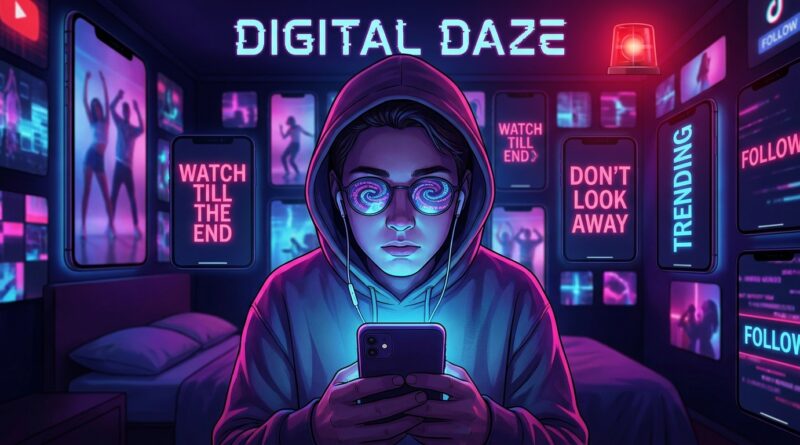
Inside TikTok’s ‘Hypnotized Scroll’ Trend: Why Looping Mantras Just Hijacked Your For You Page
You are not imagining it. One minute you are casually checking TikTok or Instagram, and the next you are staring at a face filling the screen while a soft voice repeats the same line over and over. “Keep watching.” “Don’t scroll.” “You’re getting sleepy.” It feels silly, but also weirdly hard to leave. That is the point. These hypnotism-style clips are built to catch your attention fast, lower your urge to swipe away, and nudge you into watching until the end. If you have found yourself saving one “just to send as a joke,” then realizing you watched three more, you are in very normal company. The TikTok hypnotism trend is less about real mind control and more about smart editing, repetition, and platform psychology. Once you see the tricks, the trance effect loses a lot of its power.
⚡ In a Hurry? Key Takeaways
- The TikTok hypnotism trend works mostly through repetition, eye contact, looping audio, and suspense, not actual hypnosis.
- If these videos keep pulling you in, turn off autoplay, use “Not Interested,” and set a short app timer before you start scrolling.
- Creators can copy the format’s focus and rhythm without using manipulative “don’t scroll” pressure tactics.
Why these videos suddenly feel like they are everywhere
The short answer is simple. They perform well.
Platforms reward videos that hold attention for a few extra seconds. If a clip gets people to pause, replay, or watch to the end, the algorithm gets a strong signal that it is “interesting.” The hypnotism format is almost custom-built for that.
It usually starts with a human face close to the camera. Then comes a command. “Look into my eyes.” “Follow the dot.” “Don’t break focus.” Add a slow zoom, a pulsing sound, and a phrase repeated just enough times to feel sticky. Your brain wants closure, so you stay a little longer than planned.
That extra watch time matters. On TikTok and Reels, a few extra seconds can be the difference between a clip dying quietly and a clip flooding your For You Page.
What the TikTok hypnotism trend is really doing to your brain
Despite the name, most of these clips are not hypnotizing you in the clinical sense. They are using a grab bag of attention tricks that work very well on tired, curious, distracted humans.
1. Repetition lowers resistance
When you hear the same phrase again and again, your brain starts predicting it. That predictability feels easy to process. Easy processing often feels good, or at least comfortable. That is one reason repeated audio can keep you from swiping away.
2. Direct eye contact feels personal
A face looking straight into the lens can feel like a person looking straight at you. That matters. Humans are wired to notice faces and eyes. A close-up face on a full-screen app is hard to ignore.
3. Loops create unfinished business
Many of these videos are designed to loop so smoothly you barely notice the restart. Your brain does notice, though. It gets nudged into watching again because the ending does not feel like a clean ending.
4. Sound does half the work
Soft whispers. Rhythmic tapping. Low drones. Slow counting. Audio is a huge part of the effect. Even when the visuals are simple, the sound can make the clip feel intimate, urgent, or oddly calming.
5. Commands trigger curiosity
“Don’t scroll” is effective because people immediately want to know why. The line itself creates tension. You may not obey the command, but you often pause long enough for the video to win.
Why smart people still fall for it
Because this is not about intelligence. It is about attention.
Most people watch TikTok when they are a little bored, a little tired, or looking for a quick mental break. That is exactly when these clips work best. They ask very little of you. No complex plot. No context. Just “focus here” and “stay for one more second.”
It is the same reason you can know a casino has no windows and still lose track of time inside. Understanding the trick does not always stop the trick in the moment.
The visual tricks doing the heavy lifting
If you want to spot the TikTok hypnotism trend quickly, look for these recurring choices.
Extreme close-ups
Eyes, lips, and hands fill the frame. The lack of background keeps your brain from wandering.
Slow zooms and tiny motion
Movement grabs attention. A slow zoom gives the illusion that something important is happening, even when almost nothing is changing.
High contrast and centered framing
Many clips put the main subject dead center with strong lighting or bold text. This makes the focal point obvious. Your eyes do not have to search.
Text that acts like a command
Short lines such as “watch until the end” or “if this works on you, comment” give viewers a tiny assignment. Tiny assignments keep people engaged.
How to protect your attention without deleting TikTok
You do not need to become a digital monk. A few small changes can make a real difference.
Use “Not Interested” aggressively
If one of these clips pops up and you do not want more, tell the app. On TikTok, long-press and hit “Not Interested.” Instagram gives similar controls. This will not fix everything overnight, but it does help steer your feed.
Turn down the sound by default
Because audio is such a big part of the hook, opening the app with your volume low can reduce the effect. If a video is truly worth your time, you can always turn it back up.
Set a timer before you open the app
This sounds boring. It works anyway. A 10- or 15-minute timer adds an external stop sign, which is helpful when the feed is designed to remove natural stopping points.
Pause before saving
Ask yourself one question. “Do I actually want this, or did the video make me feel like I should keep it?” That one-second check can break the autopilot feeling.
Watch for the command language
The moment you hear “don’t scroll,” treat it like a pop-up ad for your brain. That little mental relabel can make the whole thing feel less magical and more mechanical.
If you are a creator, you can borrow the good parts without being creepy
There is nothing wrong with learning from formats that hold attention. The issue is how you use them.
What is fair game
Clear framing. Good pacing. Strong audio. A solid opening line. These are just good storytelling tools.
What crosses the line
Using fake authority, manipulative fear, or pseudo-psychological claims to keep people stuck is where things get grimy. If your whole tactic is making people feel compelled rather than interested, that is a red flag.
An ethical version of this trend would use rhythm and repetition to teach, entertain, or calm, not to pressure people into staying against their better judgment.
Is any of this actually dangerous?
Usually, the biggest risk is not literal hypnosis. It is attention drain.
That said, some people are more sensitive to flashing visuals, intense audio patterns, or suggestive content than others. If a style of video leaves you feeling unsettled, anxious, or dissociated, trust that reaction. Scroll away. Mute the account. Take a break.
The bigger social issue is that these clips normalize a more manipulative kind of content design. Once creators see that “trance room” editing boosts retention, more of them copy it. Then your feed gets stranger, stickier, and harder to leave.
Why this trend took off right now
Because we are in a phase of social video where attention itself is the product. The battle is no longer just “can I make a good video?” It is “can I stop a thumb in half a second?”
The TikTok hypnotism trend answers that question very efficiently. It uses ancient human instincts, eye contact, rhythm, repetition, suspense, and packs them into a format the algorithm loves.
That does not make it unbeatable. It just means you are better off treating it like engineered persuasion, not harmless randomness.
At a Glance: Comparison
| Feature/Aspect | Details | Verdict |
|---|---|---|
| Attention hook | Close-up eye contact, commands like “don’t scroll,” and immediate tension in the first second. | Very effective, especially on tired or curious viewers. |
| Retention tactics | Looping audio, repeated phrases, slow zooms, and seamless endings that nudge replay. | Clever, but often more manipulative than informative. |
| Best user response | Use “Not Interested,” lower sound, set timers, and recognize command language for what it is. | Good protection without quitting social apps entirely. |
Conclusion
The useful thing about understanding the TikTok hypnotism trend is that it gives you your footing back. These videos are blowing up because they are good at farming attention, not because you are weak or gullible. Once you can spot the visual tricks, the sticky sound design, and the repetition pattern, you are much less likely to get pulled along without noticing. That helps right now, while this style is spreading across TikTok and Instagram in real time. It also helps creators who want to learn from the format without turning their audience into lab rats. You do not need to fear every looping mantra on your feed. You just need to recognize when a video is trying to steer your brain, then decide, on purpose, whether it gets another second of your time.