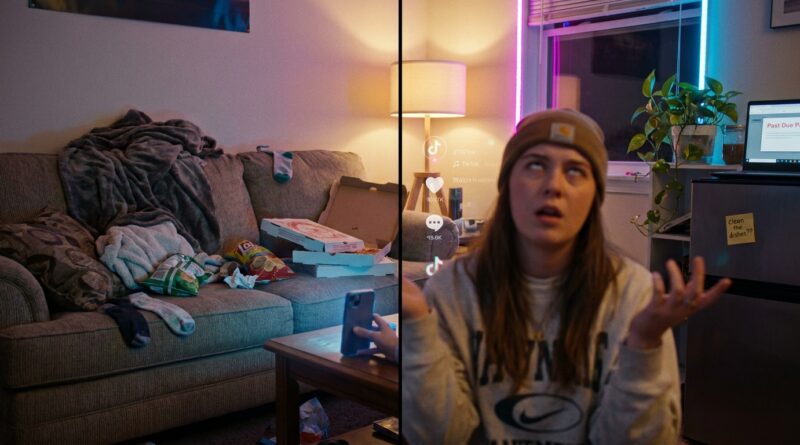
Inside TikTok’s ‘Rent-Free Roommate’ Clips: How POV Videos Turn Everyday Annoyances Into Viral Therapy
Your TikTok feed did not slowly drift into roommate drama. It got hijacked by it. One minute you are watching recipes or concert clips, the next you are knee-deep in POV videos about the roommate who steals eggs, the partner who says “we should leave at 7” while still in a towel at 7:12, or the flatmate who somehow hears your food delivery arrive before you do. It is funny because it is painfully specific. It is also a little eerie, because these clips feel less like skits and more like someone secretly reading your group chat. If you have been laughing and feeling mildly attacked at the same time, you are not alone. The tiktok rent free roommate pov trend has exploded because it turns tiny daily annoyances into low-stakes therapy, and it lets people vent without posting a full emotional confession or naming names.
⚡ In a Hurry? Key Takeaways
- The tiktok rent free roommate pov trend works because it turns familiar relationship friction into short, funny, highly shareable scenes.
- If you want to join in, use one very specific annoyance, keep it fictionalized, and focus on a feeling instead of exposing a real person.
- It is relatable fun, but creators should avoid revenge-posting, doxxing, or using real private conflict as content bait.
What the “rent-free roommate” POV trend actually is
At its core, this format is simple. A creator acts out a hyper-specific situation from a first-person point of view, usually with on-screen text that drops you right into the conflict.
Think: “POV: your roommate suddenly starts deep-cleaning only when you are trying to relax, so now you look like the lazy one.” Or: “POV: your partner says they are not hungry, then eats half your fries and acts shocked that you are annoyed.”
These are not big dramatic plots. That is the point. They are micro-irritations. The kind that are too small for a serious talk, but too repeated to ignore.
The phrase “rent-free” fits perfectly here. These habits live in your head without paying a cent. They bug you long after the moment is over.
Why it suddenly feels like everyone is making them
The algorithm loves instant recognition
TikTok rewards videos that people understand in seconds. These POV clips do that beautifully. You read one line, recognize the type of person being described, and stay to see the payoff.
That fast recognition matters. You do not need backstory. You do not need to know the creator. You just need to think, “Oh no, I know this exact person.”
They are conflict without the emotional homework
A lot of internet content is exhausting right now. Heavy confession videos, relationship callouts, long apology cycles. People still want honesty, but they do not always want a full crisis.
This trend gives them a middle option. It says, “Let’s laugh about the annoying stuff we all deal with,” without turning every clip into a therapy session.
Gen Z is fluent in hyper-specific humor
Broad jokes are fine. Tiny social observations spread faster. That is why these videos feel so sharp. They are not about “bad roommates” in general. They are about the roommate who starts a serious kitchen project exactly when you need the stove, then says, “This’ll only take a second.”
The more precise the setup, the more universal it strangely becomes.
Why these clips feel weirdly therapeutic
There is real relief in seeing a minor frustration named out loud. Not because it solves anything, but because it confirms you are not irrational for finding it annoying.
That is the sneaky power of the tiktok rent free roommate pov trend. It validates social friction that usually gets brushed off.
Most people are not ending friendships over borrowed hoodies, missing leftovers, or passive-aggressive “just checking in” texts. But those things pile up. A good POV clip lets viewers laugh at the pile instead of carrying it around.
It is social proof with better timing and captions.
Why creators love this format
It is cheap and fast to make
You do not need a set, a cast, or fancy editing. One room, one expression, one sentence, done.
It invites comments
The best comments on these videos are often better than the video itself. People pile on with their own examples. That turns a single post into a group venting session.
It feels personal without being too personal
This is the sweet spot. A creator can sound authentic while keeping enough distance to stay safe. That is a big reason the format is peaking.
How to join the trend without exposing your real life
If you want to make one of these videos, the trick is not to be meaner. It is to be more observant.
Start with one tiny behavior
Do not make the setup “my roommate is terrible.” That is too vague. Try one detail instead.
- The person who sets five alarms and sleeps through all of them.
- The partner who says “I’m easy” when choosing food, then vetoes every option.
- The roommate who buys oat milk for “the house” and then labels it with their initials.
Write from the pain point, not the biography
You do not need the entire story. You need the one feeling. Embarrassed. Trapped. Hungry. Guilty. Petty. Seen.
If viewers can feel the annoyance in under three seconds, you are there.
Fictionalize where needed
Mix details from different people. Change the setting. Make it a character, not a target. If the real person would instantly know it is about them and be hurt by it, that is your cue to rewrite.
Keep the tone observational
The funniest clips have a wink in them. The worst ones feel like evidence in a future argument.
What brands and businesses should learn from it
Brands are often tempted to copy whatever is trending with all the charm of a laminated menu. That usually goes badly.
What works here is not just the POV label. It is the emotional precision. If a brand wants in, it should focus on a real, low-stakes annoyance connected to its audience.
For example, a food delivery app could joke about the roommate who appears the second your order arrives. A home goods brand could play with the shared-bathroom shelf war. A budgeting app could tap the friend who says “split evenly” after ordering three cocktails and a dessert.
The lesson is simple. Do not copy the shell. Copy the honesty.
Where the trend can go wrong
It can turn into passive-aggressive posting
Sometimes a “relatable” video is just a public subtweet with better lighting. Viewers can tell.
It can flatten real issues into jokes
Every annoying habit is not harmless. Money problems, controlling behavior, and serious boundary issues are not skit material if the joke hides harm.
It can get stale fast
As with any TikTok trend, repetition is the enemy. Once everyone uses the same text, same audio, and same facial expression, the format stops feeling observant and starts feeling manufactured.
How to tell the good ones from the lazy ones
A strong POV clip makes you say, “That is exactly it.” A weak one just names a generic type of person and hopes the caption does the rest.
The better videos usually have three things:
- A very specific social scenario
- A recognizable emotional beat
- A punchline or expression that lands quickly
If it sounds like a real human annoyance and not a trend template, it will travel.
At a Glance: Comparison
| Feature/Aspect | Details | Verdict |
|---|---|---|
| Why it spreads | Instantly readable setups, fast emotional payoff, and strong comment potential. | Excellent for viral reach when the scenario is specific. |
| Best way to create one | Use one tiny habit, one clear feeling, and fictionalized details that protect real people. | Smart, safe, and more relatable than oversharing. |
| Biggest risk | Sliding from relatable humor into targeted callout content or repetitive copy-paste skits. | Funny until it feels cruel or lazy. |
Conclusion
The reason this trend feels so huge right now is that it meets people where they live, literally. The tiktok rent free roommate pov trend turns everyday friction into something funny, recognizable, and oddly comforting. That makes it more than just another TikTok phase. It is a quick cultural x-ray of how Gen Z talks about stress, boundaries, and shared living without making every post a confessional. For viewers, it explains why these clips hit so hard. For creators and brands, it offers a useful playbook. Be specific, be humane, and do not mine real relationships for cheap laughs. Done well, this format can turn social fatigue into smart content that actually connects, instead of another copy-paste skit that burns out by tomorrow.