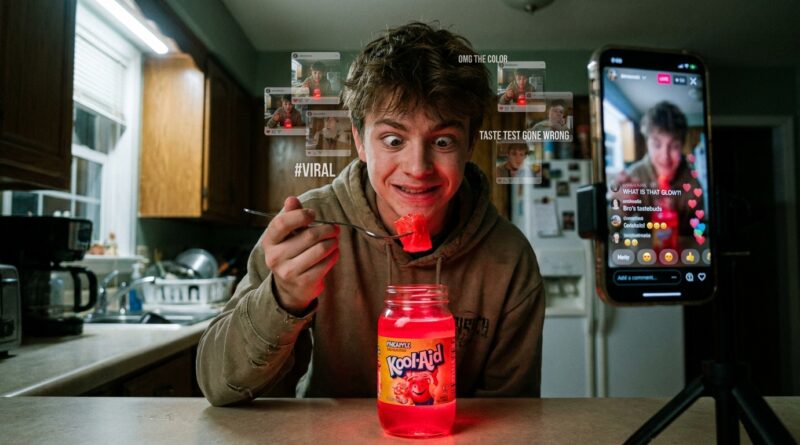
Inside the ‘Dat Bih Gah’ Explosion: How One Kid, One Jar and One Catchphrase Just Took Over Your Feed
You open TikTok, then X, then Instagram, and somehow the same clip is waiting for you every time. A wide-eyed kid. A Kool-Aid jar. That frantic little phrase, “dat bih gah.” If you feel like the internet started laughing five minutes before you arrived, you are not alone. This is one of those micro-memes that shows up fast, spreads faster, and somehow already has 20 layers of inside jokes before most people even know the source.
Here is the plain-English version. The “Dat Bih Gah” TikTok meme explained is basically a short, chaotic reaction clip that people grabbed because it sounds weird, looks even weirder, and can be dropped onto almost any situation. It is the kind of meme fuel social apps love. Short audio. Distinct face. Strange object. Endless remix potential. Once you see how those pieces fit together, the whole thing makes a lot more sense, and you can stop feeling like your feed is speaking a different language.
⚡ In a Hurry? Key Takeaways
- The “Dat Bih Gah” meme blew up because it combines a memorable kid reaction, a weird prop, and an audio clip people can reuse in dozens of joke formats.
- If you want to join in, use it as a reaction to something absurd, overpriced, cursed, or unexpectedly huge. That is where the joke lands best.
- Like most micro-memes, it will likely burn bright and fade quickly, so do not overthink it or build your whole content plan around one sound.
What actually is the “Dat Bih Gah” meme?
At its core, this is a clip-driven meme. People are reacting to one short video featuring a kid, a jar that many users identify as a Kool-Aid container, and a line that sounds like “dat bih gah.” The exact wording matters less than the feeling. It hits your ear in a funny, slightly confusing way, which is perfect for the internet.
That confusion is a feature, not a bug. Good meme audio often works because it is a little hard to parse the first time. Your brain leans in. Then the clip repeats. Then someone puts it over a joke about a rent increase, a cursed recipe, or a giant truck payment, and suddenly the sound has a job.
So if you were searching for the Dat Bih Gah TikTok meme explained in one sentence, here it is. It is a viral reaction format built from an odd, sticky clip that people are using to point at things that feel ridiculous, too much, or visually unhinged.
Why this one blew up so fast
1. The audio is instantly recognizable
Most viral sounds are not clean or polished. They are punchy. Strange. Easy to identify within half a second. “Dat bih gah” has that quality. You hear it once and your brain files it away.
2. The visual is already a reaction meme
The kid’s expression is doing a lot of work here. Wide-eyed reactions have always played well online because they communicate shock, confusion, awe, and panic all at once. Add the jar and you have an image that feels random enough to become a blank template.
3. It is flexible
This is the big one. A meme survives only if people can bend it. This one works for food jokes, money jokes, relationship jokes, workplace jokes, and pure nonsense. If your post is about seeing something too large, too expensive, too cursed, or too chaotic, the audio fits.
4. It arrived at the right speed
Micro-memes spread when platforms are hungry for repetition. TikTok pushes reuse. X turns strange clips into quote-post bait. Group chats strip away context and keep only the funniest part. By the time a normal person asks, “Where is this from?” the meme has already gone through three evolution stages.
How people are using it
This is where the trend gets more interesting. The original clip is only the seed. The real meme is what people are building on top of it.
Cursed food posts
Think giant pickles, overstuffed burgers, mystery casseroles, or fluorescent drinks. The sound gets used like a verbal finger-point. It says, “Look at this thing. Explain yourself.”
Late-stage capitalism jokes
People are using the audio on luxury basics, absurd grocery prices, tiny apartments with huge rent, and products that feel one step away from parody. The joke is not just that something is big or weird. It is that the modern world keeps producing things that feel accidentally satirical.
Reaction edits
Some creators use the clip as a punchline after a reveal. You see a normal setup first. Then the camera pans, the price appears, the object gets unveiled, or the text lands. Cue the audio.
Group chat humor
This kind of meme thrives in private spaces because nobody needs the whole backstory. Once your friends understand the vibe, the sound turns into shorthand. One person posts a huge cocktail or a ridiculous shopping cart total, and everyone else already knows the response.
Why weird little memes often hit harder than polished ones
People tend to assume the biggest trends are carefully engineered. Usually they are not. They just feel loose enough for everyone to play with. That is the trick.
Polished brand humor can feel finished. A raw clip feels open. Users can caption it, crop it, speed it up, mash it with other sounds, or attach it to a completely different joke. That openness is what gives a meme legs.
Also, short-form platforms reward things that make you stop for one extra second. Confusion does that. So does a face you cannot ignore. So does audio that sounds like it was overheard in a dream.
If you want to post about it, here is the smart way
Use the meme for a situation, not just the meme itself
The weakest posts simply repeat the clip. The better posts apply it to something new. Pick a target. Weird menu item. Surprise bill. Giant decoration. Strange online listing. That gives the joke a purpose.
Move quickly
Micro-trends have short shelf lives. If you wait for a perfect idea, the crowd may already be onto the next thing. Good enough posted today usually beats perfect posted next week.
Do not explain the joke too hard
If your caption sounds like a museum placard, it is over. Keep it simple. Let the visual and audio do the heavy lifting.
Match the tone of your audience
If your followers like absurd humor, lean into cursed objects and giant snacks. If they are more into social commentary, pair the sound with prices, tech products, or trends that feel a little dystopian.
When will it burn out?
Probably soon. That is not an insult. It is the normal life cycle.
Micro-memes often peak in a burst, then split in two directions. One path is total burnout. People get sick of hearing the same sound. The other path is absorption. The original clip fades, but its tone survives in new jokes and remixes.
“Dat Bih Gah” feels like the second type. Even when the exact audio cools off, the style of joke may stick around for a bit. The internet loves reaction formats for oversized, overpriced, and slightly cursed objects. That part is evergreen.
How to read viral weather without losing your mind
If you are tired of feeling behind every time a meme pops off, here is the useful lesson. Do not obsess over every origin story first. Look for the pattern.
Ask three questions
What is the reusable part? In this case, the audio and face.
What emotional job is it doing? Here, it signals shock, mockery, and fascination.
What kinds of posts does it attach to? Mostly absurd reveals and “look at this monstrosity” content.
Once you can answer those three questions, you understand the meme well enough to use it or ignore it confidently. That is a lot better than doom-scrolling until the joke expires.
Should brands or creators jump on it?
Maybe, but carefully.
If you are a solo creator with a casual voice, yes, this kind of trend can be useful. It shows you are paying attention, and it can give your post a little lift while the sound is hot.
If you are a brand, be careful not to arrive late and stiff. Nothing dies faster than a micro-meme once five corporate accounts start using it three days after the peak. If your team cannot post fast and naturally, skip it.
The best use case is simple. You already have a post about something visually absurd, and the sound fits cleanly. Great. Use it. If you are trying to force the meme into a message that does not want it, people will feel that immediately.
At a Glance: Comparison
| Feature/Aspect | Details | Verdict |
|---|---|---|
| Why it went viral | Distinct audio, funny facial reaction, weird prop, and easy remix value across TikTok and X | Strong meme formula |
| Best way to use it | Pair it with absurd reveals, cursed food, outrageous prices, or visually oversized things | Works best as a reaction, not a standalone repost |
| How long it may last | Likely a short peak with some leftover influence in reaction-joke culture | Use it now or let it pass |
Conclusion
If “Dat Bih Gah” looked like random internet noise, that is fair. Most fast meme cycles look that way at first. But once you break it down, the appeal is pretty simple. A memorable kid reaction, a strange visual, a sticky audio clip, and a format people can slap onto everything from cursed snacks to late-stage capitalism jokes. That mix is exactly why it took over so fast. The bigger value here is not just understanding one clip. It is learning how to spot the next one while it is still rising. That helps creators post smarter, helps casual users stop feeling out of the loop, and makes the whole feed a little less confusing while the culture is still paying attention.