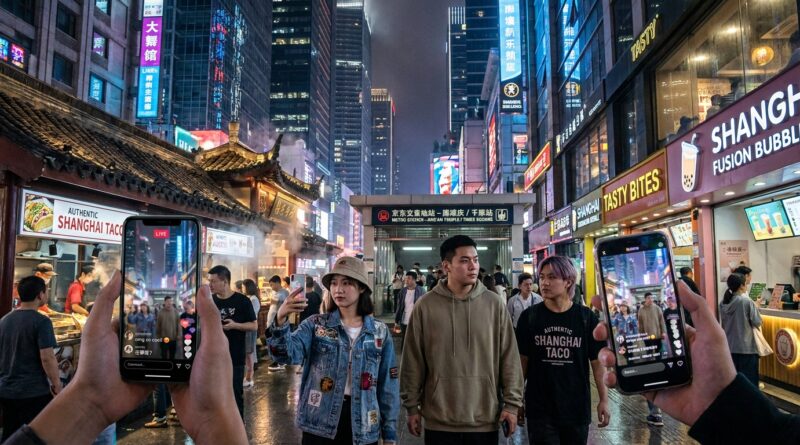
Inside TikTok’s ‘Becoming Chinese’ Fixation: How Everyday China Clips Turned Into a Global Identity Game
If your TikTok feed suddenly looks like a soft-focus scrapbook of late-night convenience stores, spotless subways, bubble tea runs and street food in Chengdu, you are not imagining it. A lot of people feel a little weird watching the Becoming Chinese TikTok trend because it looks playful on the surface, but also deeper than a joke. It is not just travel content. It is people trying on a whole mood, routine and identity that feels more organized, more aesthetic and maybe more hopeful than their own daily life. That can be fascinating, and a little uncomfortable. The key is to see it for what it is. This trend says as much about Western boredom, economic anxiety and platform power as it does about China itself. Once you spot that, the videos make a lot more sense, and you can watch them with your eyes open instead of just getting swept along.
⚡ In a Hurry? Key Takeaways
- The Becoming Chinese TikTok trend is less about literally becoming Chinese and more about borrowing a lifestyle image that feels modern, calm, efficient and culturally cool.
- If you want to join in, focus on curiosity and credit. Show what you are learning, avoid costume-style imitation, and be specific about what you actually appreciate.
- These videos can shape how people think about countries and power, so it is smart to enjoy the aesthetic while remembering that no viral montage shows the whole picture.
What the Becoming Chinese TikTok trend actually is
The easiest way to describe it is this. People are posting as if they are stepping into an imagined everyday Chinese life, even when they are not Chinese and often not living in China.
That can mean outfit choices, filming styles, grocery hauls, food clips, transit videos, study routines, apartment tours, language snippets or a very specific city vibe pulled from places like Shanghai, Chongqing or Chengdu.
Sometimes it is admiration. Sometimes irony. Sometimes straight-up aspiration. Often it is all three at once.
That is why the trend feels slippery. It is not one clean meme. It is a mix of lifestyle envy, internet role-play and cultural shorthand.
Why this showed up now
1. Lifestyle content is stronger than political content
Most people do not change their views because they watched a policy debate. They change because they watched a hundred tiny clips of normal life that made a place feel familiar.
A woman paying with her phone at a food stall. A student riding a clean train. A couple buying fruit at night. None of that looks like propaganda to the average viewer. It looks like ordinary life. That is exactly why it lands.
Small, repeatable scenes are powerful. They lower your guard.
2. A lot of viewers are tired of their own reality
This part matters. The Becoming Chinese TikTok trend is also about dissatisfaction at home.
When your own city feels expensive, chaotic, lonely or run-down, clips of smooth transit, lively streets and cheap meals hit harder. People are not only saying, “China looks cool.” They are also quietly saying, “My life feels stuck, and this looks like an escape hatch.”
That is one reason the trend keeps spreading. It gives people a visual answer to a feeling they already had.
3. Chinese-built platforms shape taste, not just tech
TikTok is not a neutral pipe. It is a taste machine. It decides what style feels current, what city looks exciting, what foods become aspirational and what visual language gets copied next.
So when people ask why non-Chinese creators suddenly want to post like they live in Shanghai, part of the answer is simple. The platform keeps rewarding that style.
Internet culture follows what gets seen. What gets seen starts to feel normal. Then it starts to feel desirable.
Why people call it an “identity game”
Because this is not just tourism fandom. People are borrowing signals of belonging.
They are not saying, “I visited China.” They are saying, “I know this rhythm. I can perform this vibe. I understand this world.”
That is where things get touchy. Identity online is often built from fragments. Music, clothes, food, editing, language, slang, camera angles. Put enough of those pieces together and you get a mini-persona.
The Becoming Chinese TikTok trend turns those pieces into a social costume. Not always in a malicious way. Sometimes people are genuinely curious. Sometimes they are connecting with diaspora experiences. But it is still a kind of performance, and viewers can feel that.
Why it feels awkward, even when it looks harmless
Because imitation and appreciation are close cousins, but they are not the same person.
If someone shares what they learned from Chinese cooking, city design, language study or daily routines, that can feel respectful. If someone grabs a few aesthetic markers and treats them like a costume set, people notice fast.
The awkwardness usually comes from flattening a huge, varied culture into a content pack. China becomes neon signs, soup dumplings, subway shots and lo-fi editing. Nice visuals, sure. But still a shortcut.
If you have seen the trend and thought, “I cannot tell if this is admiration or cosplay,” that reaction is fair.
What this says about who runs internet culture
This is the bigger story hiding underneath the meme.
For years, a lot of Western users assumed internet culture mostly flowed one way. Out of the US, across the world. But the Becoming Chinese TikTok trend complicates that idea. It shows cultural influence moving through a Chinese-built platform, through visual habits shaped by Chinese urban life, into the identities of global users.
That does not mean one side has fully “won” culture. It means the pipeline is more mixed than people admit.
And that matters because soft influence often arrives dressed as entertainment.
If you want a practical companion piece on this shift, Why Everyone Is Suddenly ‘Becoming Chinese’ Online (And How To Join In Without Being Cringe) does a good job of showing how fast this aesthetic moved from niche joke to mainstream feed takeover.
How to watch the trend without being naive
Enjoy the clips, but ask three basic questions
What is being shown repeatedly?
If every video highlights cleanliness, convenience, beauty and abundance, that tells you what the algorithm likes.
What is missing?
No country can be understood through food runs and transit edits alone. Viral content is selective by design.
Why does this appeal to me?
Sometimes the smartest reading starts with your own reaction. Are you seeing novelty, relief, envy, status, comfort, fantasy?
That little self-check helps keep the trend in perspective.
If you want to participate, do it without being cringe
Start with specifics, not stereotypes
Say what you actually like. Maybe it is late-night food culture, mobile payment convenience, a fashion silhouette, or the way daily life is filmed. Specific praise feels real. Generic “I am becoming Chinese” posting can get weird fast.
Credit the source
If you were inspired by Chinese creators, cities or traditions, say so. Tag creators when possible. Link back. Name the dish correctly. Name the place correctly. Tiny acts of accuracy go a long way.
Do not turn culture into a costume
This is the line many people trip over. There is a difference between trying a routine or appreciating a design style and treating a whole identity like dress-up.
Be open to correction
If Chinese viewers or diaspora viewers tell you something feels off, do not get defensive right away. Listen first. Online trends move fast. Respect usually moves slower.
Why this trend is bigger than TikTok
Because it shows how lifestyle media can quietly shape geopolitics in people’s heads.
That might sound dramatic, but think about how opinion forms now. Not from formal speeches. From vibes. From repeated images of where life looks easy, modern, safe, delicious or efficient.
Countries now compete in the imagination as much as in headlines. The Becoming Chinese TikTok trend is one example of that. A viewer may never read a long article about urban planning, consumer tech or global power. But they will remember who seemed to have the better train, better snacks and better nightlife.
That memory sticks.
At a Glance: Comparison
| Feature/Aspect | Details | Verdict |
|---|---|---|
| What the trend means | Aesthetic and lifestyle borrowing more than literal identity change. It mixes admiration, aspiration and performance. | Interesting, but easy to oversimplify |
| Why it spreads | TikTok rewards visually satisfying daily-life clips, and viewers project their own frustrations onto what looks like a smoother life. | Very powerful cultural engine |
| How to engage well | Be specific, give credit, avoid stereotypes, and treat culture as something to learn from, not wear for views. | Best path if you want to join in respectfully |
Conclusion
The Becoming Chinese TikTok trend is easy to laugh off as another odd internet phase, but that misses the real story. What looks like harmless bubble tea montages and subway clips is also a live test of who shapes taste online, how people build identity from borrowed signals, and how lifestyle content can make one country feel closer than another without ever arguing a case out loud. That is why this matters right now. It gives readers a grounded way to decode a meme that has become a cultural mirror. You do not have to panic about it, and you do not have to sneer at everyone posting it either. Just watch with a little more context. If you join in, do it with curiosity and care. If you critique it, do it with enough nuance to explain what is actually happening. That is how you stay culturally literate instead of clueless.