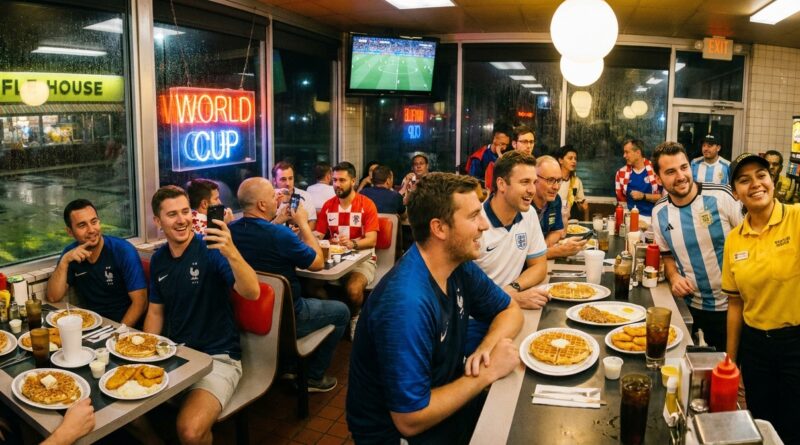
Inside TikTok’s ‘World Cup Fan Shock’ Trend: How Visiting Fans Turned Culture-Clash Reactions Into Viral Gold
Your feed probably feels a little exhausting right now. One minute it is football clips, the next it is visiting fans staring at a Waffle House menu like they have landed on another planet, trying ranch dressing for the first time, or laughing at how every soda cup in America looks bucket-sized. It can seem silly and loud. But that is also why this trend matters. The wave of World Cup fans TikTok reactions to American culture is not just cheap viral bait. It is a real-time look at how culture now travels, gets translated, and turns into entertainment within hours. These posts work because they mix honest surprise with familiar situations. Food, roads, stores, hotel breakfasts, late-night diners. The format is simple, but the reaction is bigger than the joke. You are watching people process another country in public, while millions of viewers instantly remix that moment into memes, commentary, and identity debates.
⚡ In a Hurry? Key Takeaways
- World Cup fan reaction videos go viral because they turn everyday American stuff into relatable culture-shock moments.
- If you want to spot or make the next version of this trend, look for genuine first-time experiences in places viewers instantly recognize.
- The best clips feel curious, not mocking. That keeps them shareable across countries and platforms.
Why these clips are suddenly everywhere
Big sports events do not just move fans anymore. They move cameras, jokes, habits, and expectations.
When thousands of international visitors land in the same country at the same time, social apps get a perfect test case. Everyone is filming. Everyone is comparing. Everyone wants to post the thing that feels most surprising, funniest, or most “wait, is this normal here?”
That is why the World Cup fans TikTok reactions to American culture trend feels so sticky. It is built around tiny moments that need almost no setup. A tourist tries ranch. A group walks into Buc-ee’s. Someone sees a 24-hour diner full of strangers at 2 a.m. Someone else films six-lane roads and says, “Why is everything so huge?”
You do not need to know the teams. You do not even need to care about football. The hook is culture shock, not sport.
Why Waffle House, ranch, and giant stores hit so hard
These places and products are perfect internet objects. They are specific enough to feel very American, but common enough that local viewers instantly get the reference.
They are easy to understand in one second
A person taking their first bite of ranch dressing needs no explanation. Same for a stunned reaction to a Waffle House at midnight. The visual tells the story fast.
They feel ordinary to one group and wild to another
That gap is where the views come from. Americans see these clips and think, “Wait, this is just Tuesday.” International viewers think, “No, this is amazing.” That contrast creates comments, stitches, duets, and reaction videos.
They turn daily life into spectacle
The internet loves when normal things are reintroduced as if they are exotic. It is the same reason people love “trying British snacks,” “first time on a Japanese train,” or “American in a European grocery store” videos. Mundane stuff becomes interesting when someone else experiences it as new.
The deeper story is not food. It is real-time cultural translation
This is the part people often miss.
These clips are not only about tourists being surprised. They are about platforms like TikTok and X turning first impressions into a shared global event. A fan from Germany can post a reaction in Atlanta, an American creator can stitch it in ten minutes, a British user can argue in the replies, and a Brazilian fan can turn the whole thing into a joke format by dinner.
That is modern culture flow. Fast, emotional, and heavily visual.
Old travel TV used to package another country into polished episodes. Social media does the opposite. It breaks the country into moments. One sauce cup. One gas station. One diner booth. One hotel waffle maker. That fragmented view can feel shallow, yes. But it is also why it spreads so well.
What makes this kind of cross-cultural content work
If you are a creator, marketer, or just someone trying to understand what lands online, there is a useful pattern here.
1. Unfamiliar but relatable settings
The place has to feel new to the person filming, but familiar to the audience watching. Airports, convenience stores, chain restaurants, supermarkets, fast food counters. These are ideal because they are easy to read.
2. Genuine surprise
People can usually tell when someone is forcing a reaction. The clips that travel best feel unscripted. A real laugh. A real double-take. A real “you put this on salad?” moment.
3. A built-in identity conversation
These posts are magnets for comments because viewers do not just react to the person. They react to what the moment says about their own country. Americans defend it, mock it, explain it, or proudly claim it.
4. Fast remix potential
The best clips are easy to quote, stitch, meme, or parody. If a reaction can be summed up in one sentence, it has a much better shot at jumping platforms.
Why the trend feels louder than it really is
Part of the frustration is that social platforms over-reward extremes.
You are not seeing every World Cup visitor quietly enjoying a normal lunch. You are seeing the people who gasp at giant cups, rank gas station snacks like museum exhibits, or act like Waffle House is a contact sport. Algorithms push what gets a response, and culture-clash content gets a response almost every time.
That can make America look like one endless strip mall fever dream. It can also make visitors look more clueless than they really are.
So yes, the trend is surface level in some ways. But underneath the noise is a useful signal. Platforms are showing us exactly which kinds of cross-border moments get turned into mass entertainment now.
What creators should learn from it
If you make content, this trend gives you a very clear playbook.
Start small, not grand
Do not chase “my full opinion of America.” That is too big and too vague. Film one object, one meal, one store, one local habit.
Keep the reaction honest
The internet is very good at detecting fake wonder. If you are surprised, say why. If you are confused, explain what you expected instead.
Give viewers something to compare
The strongest posts often include a simple contrast. “Back home our portions are half this size.” “Our diners close at 10.” “We do not have ranch with everything.” That gives the audience a frame.
Invite explanation, not just outrage
Curiosity performs better over time than mockery. If the tone is too sneering, the clip may go viral once, but it becomes harder to build on.
What viewers should keep in mind
These clips are fun, but they are also selective.
One first-time ranch reaction does not explain a whole country. One chaotic diner trip does not capture everyday life. Social video compresses places into symbols. That is useful for virality, not accuracy.
Still, there is value in watching how these symbols get chosen. The things that rise to the top are usually the things that feel easiest to translate across borders. Food. Scale. Convenience. Excess. Hospitality. Weirdness. Those are the categories people reach for first when they meet a place through their phone.
What comes after this trend
This will not stop with World Cup visitors.
The same pattern will show up when K-pop fans document Los Angeles, when gamers post their first Tokyo convenience store runs, or when international concert crowds descend on small American cities and react to local life like they have found a side quest.
The formula is portable because the internet now rewards cultural first-contact moments. Especially when they happen in public and can be clipped into a joke.
So if you want to spot the next wave early, watch for three things. A big event that moves lots of people. A platform full of creators filming first impressions. And a host culture with strong visual symbols people can instantly recognize.
At a Glance: Comparison
| Feature/Aspect | Details | Verdict |
|---|---|---|
| Why it goes viral | Simple, visual culture-shock moments like first-time food, stores, or late-night diners are easy to understand and share. | Very strong for TikTok and X. |
| What makes it work | Real surprise, familiar settings, and clear comparisons between home and host culture. | Best when it feels curious, not staged. |
| What to watch out for | Algorithms amplify the loudest reactions, which can flatten a country into a few exaggerated stereotypes. | Fun to watch, but not the full picture. |
Conclusion
These reaction clips matter because they show more than tourists being surprised by ranch or Waffle House. They show how global culture now moves. Fast, visual, and through moments that are easy to remix. That is why this trend hits so hard. It gives people unfamiliar-but-relatable settings, genuine surprise, and instant room for jokes, pride, confusion, and commentary. For creators, that is a practical framework. For viewers, it is a better way to read what seems like random internet noise. World Cup reaction videos are not just another meme cycle. They are a live stress test for how places, identities, and everyday habits get packaged online. Once you see that pattern, you can spot the next wave much sooner, whether it is K-pop fans in LA, gamers in Tokyo, or sports crowds discovering small-town America one baffling diner visit at a time.