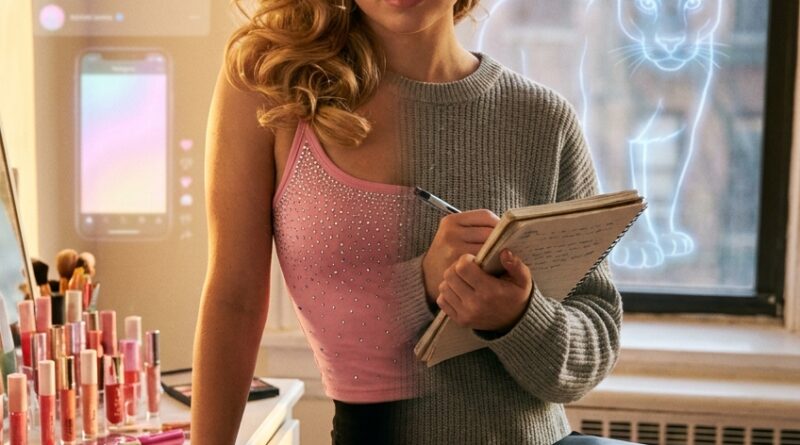
Inside TikTok’s ‘Bimbo Stoicism’ Wave: How Twin-Animal Beauty Took Over Your FYP Overnight
If your TikTok feed suddenly feels like it went from glazed-donut skincare to “I’m a mountain lion with otter energy,” you are not imagining it. Beauty TikTok has shifted fast, and it can feel oddly annoying when everyone else seems to understand the joke except you. The bimbo stoicism tiktok trend is basically what happens when hyper-feminine beauty culture, self-help language, internet irony and animal archetypes all get tossed into the same pink blender. The result is a vibe that looks silly on the surface, but underneath it is surprisingly strategic. Girls are using exaggerated femininity, chaotic confidence and low-stakes philosophy to talk about identity, attractiveness and emotional survival online. It is playful, a little absurd, and very aware of itself. If it seems like a meme and a manifesto at the same time, that’s because it kind of is. TikTok did not just invent a new aesthetic here. It exposed where beauty culture is heading next.
⚡ In a Hurry? Key Takeaways
- The bimbo stoicism tiktok trend mixes hyper-girly beauty, ironic self-labeling and calm, detached “don’t stress it” advice.
- If you want to understand it, focus less on the makeup and more on the language. “Mountain lion,” “otter,” and similar labels are identity shortcuts, not actual beauty rules.
- It is fun, but it can still shape self-image. Treat it as internet performance, not a serious system you need to fit into.
What is “Bimbo Stoicism” on TikTok?
At its core, bimbo stoicism is a mash-up. You take the “bimbo” aesthetic, meaning overt femininity, beauty labor, flirtiness, camp and a kind of knowingly exaggerated glamour. Then you mix in stoicism, or at least TikTok’s version of it, which means emotional detachment, calm acceptance, and saying “it is what it is” with lip liner on.
That sounds ridiculous. It also makes perfect sense on the internet.
The whole thing works because it lets creators be both unserious and oddly insightful. A girl can joke about being “just a little otter-faced mountain lion diva” and then immediately drop advice about not texting your ex, not obsessing over what people think, or building a personal style that actually matches your energy.
So no, this is not classical philosophy in a push-up bra. It is more like vibe-based emotional management wrapped in beauty language.
Why are people calling themselves animals now?
This is the part that makes most casual viewers stop scrolling and think, “Wait, what memo did I miss?”
The animal labels are doing a few jobs at once. First, they simplify beauty categories. Instead of talking in older terms like “ingenue,” “bombshell,” or “clean girl,” people are using animal archetypes to describe facial features, body language and overall aura in a faster, funnier way.
“Mountain lion” might suggest sharpness, confidence, predatory glam or a heavier, more dramatic beauty look. “Otter” might suggest softer features, playful energy, cuteness and quick movement. The exact definitions are slippery, which is part of the appeal. Everyone can riff on them.
Second, the labels make beauty talk feel less clinical. Saying “I have close-set eyes and angular cheekbones” sounds like a makeup consultation. Saying “I’m serving fox who tried to become a panther” sounds like TikTok.
Third, it gives people a way to talk about identity without sounding too earnest. Gen Z in particular loves a joke that also tells the truth.
Why this trend blew up overnight
It did not really appear out of nowhere. It just reached critical mass.
Beauty TikTok was ready for a new language
The clean-girl era got repetitive. Beige backgrounds, slick buns, expensive serums, “effortless” makeup that clearly took effort. People got bored. Bimbo stoicism feels louder, messier and more alive. It gives beauty TikTok its personality back.
It rewards self-awareness
Older beauty trends often asked you to fully commit. This one lets you wink at the audience. You can be glamorous while also making fun of the whole idea of categorizing women into ideal types.
It fits the current mood
There is a lot of burnout online. A trend that says, in effect, “be hot, be strange, stop over-explaining yourself” lands well when everyone is tired of optimizing every inch of their life.
What “stoicism” means here, and what it does not
This is where the name can throw people off. Real stoicism is a full philosophical tradition about virtue, control, acceptance and how to live well. TikTok stoicism is much looser.
In this trend, “stoicism” usually means:
- Do not panic over every social setback
- Stop chasing validation from people who are not worth it
- Accept your type and make it work for you
- Stay calm, even if your aesthetic is chaotic
That is not nothing. It is actually a pretty understandable response to online life, where every trend pushes constant comparison. Bimbo stoicism says you can be highly feminine without being fragile, needy or desperate to be universally approved.
That is a big reason it is resonating.
What makes it different from past “hot girl” trends?
Older online beauty identities often aimed for polish. Think “that girl,” “clean girl,” “old money,” or even “mob wife.” Those trends usually came with a visual checklist. Hair like this. Jewelry like that. Skin, nails, apartment, coffee order. Everything had to match.
The bimbo stoicism tiktok trend is less about strict visual rules and more about energy. It asks: what are you exaggerating on purpose? What kind of femininity are you performing? Are you the composed siren, the chaotic woodland flirt, the glossy predator, the sleepy water creature in platform heels?
It sounds silly, but it is more flexible than older trends. That flexibility is why it spreads fast.
Why younger users love it
Gen Z and Gen Alpha are very good at turning identity into shorthand. They grew up online, where you often have seconds to signal your whole deal. Animal archetypes and ironic labels do that quickly.
They also tend to reject the idea that femininity has to be respectable to be meaningful. This trend embraces camp, excess and contradiction. You can be smart and silly. Shallow-looking and self-aware. Pretty and weird. Calm and theatrical.
That mix is not a bug. It is the whole point.
Is there a downside?
Yes, a couple.
It can still turn into another ranking system
Even when a trend starts as playful, people can use it to sort faces and bodies into “better” and “worse” categories. That is old beauty culture wearing a new animal costume.
It can make irony hard to read
Some creators are clearly joking. Others are half-joking. Others are building real identity frameworks out of it. If you are not steeped in TikTok language, that can get confusing fast.
Brands will flatten it
This is almost guaranteed. Once marketers notice the trend, expect vague campaigns about “finding your wild side” or products pitched to your “inner lioness.” Usually six weeks too late, exactly as internet law requires.
How to watch the trend without getting sucked into it
You do not need to pick an animal and reorganize your entire personality by Friday.
Here is the healthy way to approach it:
Use it as a language tool, not a diagnosis
If an archetype helps you understand your style, great. If it starts feeling limiting, drop it.
Notice the performance layer
Most of this is theater. Fun theater, yes, but still theater. People are crafting characters, not revealing some hidden biological truth about blush placement.
Keep the useful part
The best takeaway is not “I am an otter.” It is “I do not need to chase one universal beauty ideal.” That part is worth keeping.
What this trend says about where beauty culture is going
It says beauty is becoming less about perfection and more about narrative. People do not just want products. They want a persona, a joke, a point of view and a little philosophy to go with the eyeliner.
It also shows that femininity online is getting more layered. Not simpler. Not cleaner. More mixed. More referential. More playful. People are combining self-help, meme culture, niche aesthetics and old-school glamour into one package that changes by the week.
That can look chaotic from the outside. But it is actually a sign that younger users are building their own language instead of accepting the one beauty brands handed them.
At a Glance: Comparison
| Feature/Aspect | Details | Verdict |
|---|---|---|
| Main idea | Hyper-feminine beauty mixed with ironic self-help and animal-based identity labels | Strange on first look, but culturally revealing |
| Why it spread | People were bored of polished minimalism and wanted a looser, funnier beauty language | Very likely to keep evolving into new sub-trends |
| Risk factor | Can become another way to rank appearances or pressure people into fitting a “type” | Best enjoyed as creative shorthand, not a rulebook |
Conclusion
Bimbo stoicism is not just another weird week on TikTok. It is a live snapshot of how Gen Z and Gen Alpha are rewriting beauty in real time, using self-help language, animal archetypes and hyper-feminine camp to build new identities on the fly. If you understand that, the trend stops looking random. It starts looking like an early signal. Beauty culture is moving away from one neat ideal and toward personality-driven, semi-ironic, highly shareable roles. That matters, because this is the stuff brands, influencers and the wider internet will try to copy next. Seeing the shift now gives you a clearer read on where femininity, identity and “hot girl” culture are actually headed, before the marketing machine catches up and pretends it invented the whole thing.