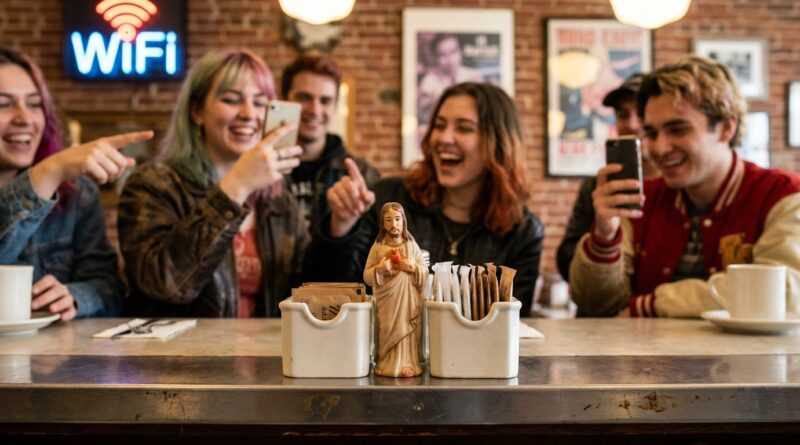
Inside TikTok’s ‘Tiny Jesus Hunt’: How Mini Statues Quietly Became 2026’s Weirdest Feel‑Good Game
Your feed is not imagining this. TikTok really has become a parade of tiny Jesus statues tucked into airport charging stations, balanced on coffee shop napkin holders, and peeking out from stadium cupholders. If your first reaction was, “Why is everyone doing this, and did I miss a memo?” you are in very good company. A lot of people are tired of rage-bait, tired of brands pretending to be their friend, and tired of trends that feel like homework. This one landed because it is oddly simple. Find a miniature Jesus. Hide a miniature Jesus. Film the discovery. Pass the smile along. That is the whole thing, and somehow that is exactly why it works. If you want the Tiny Jesus TikTok trend explained without the eye-roll or the sermon, here is what happened, why people like it, and how to join in without making it weird.
⚡ In a Hurry? Key Takeaways
- The Tiny Jesus TikTok trend is a mini scavenger hunt where people hide and spot one-inch Jesus figurines in public places, then share the moment online.
- If you want to join, keep it light, clean, and respectful. Place figures where they are safe, easy to notice, and easy to remove.
- The real appeal is not religion-first for most users. It is low-stakes surprise, community in-joke energy, and a break from angry algorithm sludge.
What exactly is the Tiny Jesus TikTok trend?
The short version is this. People are buying tiny rubber or plastic Jesus figurines, usually around an inch tall, and hiding them in everyday places for strangers to find. Then they post the hiding spot, the reaction, or the discovery on TikTok.
That is why you keep seeing the same little figure in wildly different settings. Airport gates. Grocery shelves. Office desks. Gym lockers. Park benches. The repeat image is part of the joke. Once you know what it is, you start spotting it everywhere.
For anyone searching “Tiny Jesus TikTok trend explained,” the easiest way to understand it is to think of it as a cross between a scavenger hunt, a kindness prank, and an internet inside joke. It is less about the object itself and more about the tiny burst of surprise.
Why did this random little statue blow up?
Because it hits several internet sweet spots at once.
1. It is instantly recognizable
You do not need lore, backstory, or a ten-part explainer. You see a mini Jesus tucked beside a ketchup bottle and your brain gets it in half a second. That matters on TikTok, where trends live or die on visual speed.
2. It feels harmless in a very online world
A lot of social feeds feel tense right now. Every scroll can turn into an argument, a scam, or somebody filming a public meltdown. Tiny Jesus clips are the opposite. They are small, goofy, and low stakes. You are not being asked to pick a side. You are just being invited to notice something silly.
3. It lets people feel “in on it”
Good internet trends often work like a wink. Once you know the symbol, you start seeing it like a secret handshake. That gives the trend a club-like feel without much barrier to entry.
4. It is cheap and easy to copy
You do not need editing skills, a dance routine, or a sponsored package from a brand. You need a tiny figurine and a place to put it. That kind of low cost helps trends spread fast.
Is this actually religious, or is it just a meme?
Honestly, it is both, depending on who is participating.
For some people, the figure has clear faith meaning. For others, it is mostly a playful symbol that has escaped its original lane and become a public hide-and-seek object. That mix is part of why the trend feels a little confusing from the outside.
The social rule here is simple. Do not assume everyone posting it is making a deep religious statement. Also do not assume the faith angle means nothing. Most viral trends flatten meaning. This one stretches in two directions at once.
That is also why tone matters. If you join in, aim for playful and respectful. Not preachy. Not mocking. The people doing this best understand that the joke is the surprise, not the belief system.
How to participate without annoying people
This is where many nice trends go off the rails. A cute idea can turn into littering, disruption, or forced participation if people get careless.
Pick smart locations
Good spots are visible, low-risk, and easy to clean up. Think a bookstore community table, your friend’s desk, a family gathering snack area, or a coffee shop bulletin ledge if the shop is clearly okay with little knickknacks.
Bad spots are anywhere that creates work, safety issues, or stress. Do not hide them in food, inside products for sale, in security-sensitive places, or anywhere a worker now has to stop and deal with your bit.
Do not make staff your unwilling audience
If your prank ends with a barista, gate agent, or janitor having to throw away 40 tiny statues, you missed the point. The best version of this trend leaves behind a smile, not a task.
Skip places where religion is likely to be used as provocation
A public school classroom, a workplace HR area, a government counter, or someone else’s event can be touchy. Context matters. If the placement feels more like bait than fun, do not do it.
Keep the video tasteful
Do not secretly film strangers in ways that make them uncomfortable. A quick reveal shot is one thing. Turning an unsuspecting person into content is another.
The unwritten rules of Tiny Jesus culture
Every viral trend has rules nobody writes down. This one is no different.
The object should feel discovered, not forced
The fun is in stumbling on it. If you hand it directly to someone while narrating the bit, it loses some of its magic.
The joke should stay gentle
People respond to this trend because it feels sweetly absurd. The mood is “well that made my day,” not “gotcha.”
One is charming. Fifty is clutter
A single tiny statue in an unexpected spot feels special. Carpet-bombing a location with mini figures feels like content farming.
Local flavor helps
The trend gets better when people adapt it to their own spaces. A hometown landmark. A sports rivalry. A neighborhood café. That is where it stops being copy-paste TikTok and starts feeling alive.
Why brands and creators are paying attention
This trend teaches a useful lesson. People still love playful discovery. They just do not want it to feel manufactured.
That is a big deal for creators, event organizers, streetwear shops, local businesses, and community groups. The “tiny object scavenger hunt” format is portable. It can become mini sneakers hidden around a block party, tiny mascots tucked into a record store, or little city symbols placed near local landmarks.
The trick is to keep the same ingredients that made Tiny Jesus work.
- Small enough to feel funny
- Recognizable enough to read on camera
- Easy enough for anyone to join
- Unexpected enough to feel like a reward
That is the template. The object can change. The social feeling should not.
How to adapt the trend for your own community
If you are the sort of person who likes spotting trends early, this is the useful part. You do not need to clone the exact figurine forever. You can borrow the format.
For local city culture
Create a tiny version of something your town already knows. A mini skyline token. A toy pigeon. A little transit icon. Hide them near landmarks and let people post their finds.
For streetwear or sneaker circles
Use tiny shoe charms, miniature branded lace tags, or micro collectible figures. Turn drops into hunts instead of plain announcements.
For schools, clubs, or fandoms
Use mascot minis, tiny props from the fandom, or symbolic trinkets that people immediately understand. The key is shared recognition.
For friend groups
You do not even need TikTok. A private group chat with “I found him” photos works just as well. Sometimes the best trend is the one that never becomes public content at all.
What could kill the trend?
Overdoing it. That is usually what kills wholesome internet ideas.
If too many people turn it into trash, spam, or fake “random” marketing, the charm disappears fast. The moment every coffee chain starts seeding branded mini saints with promo codes, people will run for the hills.
The healthiest version stays small, a little weird, and mostly person-to-person.
Should you buy a pack of tiny Jesuses?
If you think the idea is funny and you can do it respectfully, sure. It is a cheap, cheerful way to take part in a trend before it burns out.
If the religious angle makes you uneasy, you do not need to force it. Just enjoy watching the clips, or use the same scavenger-hunt idea with an object that fits your crowd better.
The point is not blind imitation. It is understanding why people are responding to this in the first place. They want surprise. They want kindness. They want a shared joke that does not ask too much from them.
At a Glance: Comparison
| Feature/Aspect | Details | Verdict |
|---|---|---|
| Why it spread | Simple visual joke, cheap to join, easy to film, surprisingly wholesome | Strong viral formula |
| How to join well | Hide figures in safe, respectful places and keep the tone playful | Worth trying if you use common sense |
| Long-term value | The real takeaway is the format: tiny collectible object plus public discovery | More useful than the specific meme itself |
Conclusion
The Tiny Jesus TikTok trend is weird, yes. But it is weird in a refreshing way. It gives people a tiny pocket of delight in feeds that often feel too loud, too angry, and too polished. If you understand the social rules, keep it respectful, and focus on surprise over spectacle, you can join the trend while it still feels fun instead of late and forced. Better yet, you can borrow the idea and remix it for your own corner of culture, whether that is streetwear, local lore, fandom life, or just your friend group. That is the real advantage of catching a trend like this early. You are not just copying the current joke. You are learning the pattern well enough to start the next one.