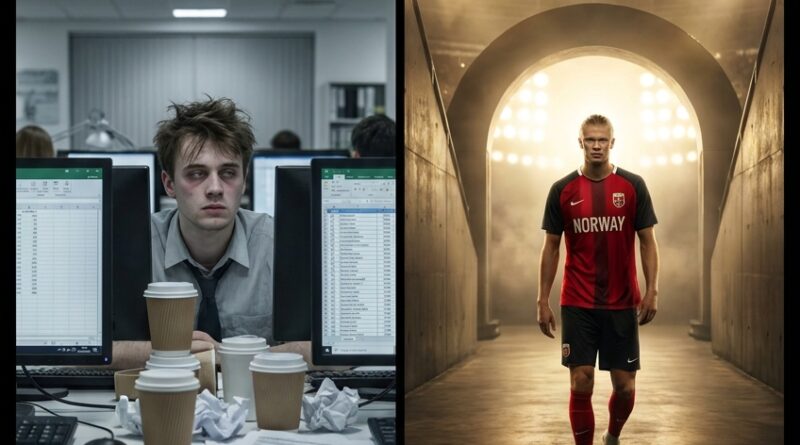
Inside TikTok’s ‘Office Again’ Obsession: How One Deadpan Haaland Quote Became Every Burnt‑Out Worker’s New Coping Meme
If your TikTok feed suddenly feels like one long shift clocked by the internet, you are not imagining it. That clipped, deadpan Erling Haaland line, “just another day in the office,” is everywhere. People are slapping it over exam all-nighters, restaurant rushes, warehouse chaos, creator burnout, and truly cursed commute videos. It lands because it says the quiet part out loud. We are all being asked to treat ridiculous levels of stress like routine admin. The joke is funny for about two seconds, then it stings a little. That is exactly why this meme is spreading so fast. It is not just a football clip gone viral. It is a neat little pressure valve for people who are tired, underpaid, overbooked, or simply done with being told that constant grind is normal. TikTok did not just find a sound. It found a shared facial expression for burnout.
⚡ In a Hurry? Key Takeaways
- The Haaland just another day in the office TikTok trend works because it turns burnout, stress, and absurd workloads into one very dry joke.
- If you want to spot the next version early, watch for short quote clips that are easy to reuse across jobs, school, and daily life, especially in non-English meme circles first.
- For brands and creators, the value is in the shared feeling, not the football reference. Force it too hard and people will smell the marketing instantly.
What is the Haaland “just another day in the office” TikTok trend?
At the basic level, it is simple. A clip of Erling Haaland delivering a flat, almost bored-sounding line gets reused as the soundtrack or punchline for videos showing stress, chaos, or impossible workloads. The format is the joke. Something dramatic happens on screen. The caption or audio shrugs and says, in effect, this is normal. Back to work.
That contrast is what makes it hit. You see a student buried under revision notes, a barista on their fifth disaster shift, or a freelancer staring at 38 unread client messages. Then comes the line. “Just another day in the office.”
It is not really about football anymore. It has escaped its original setting and become work-culture shorthand.
Why this one took off so hard
It captures burnout without sounding preachy
Most people do not open TikTok hoping to watch a lecture about toxic productivity. They will, however, watch a seven-second clip that nails exactly how absurd modern work and study life feels. This meme does that with almost no setup.
The best memes work because they compress a big feeling into a tiny package. This one compresses exhaustion, irony, and resignation into a single line.
It travels well across languages
One reason the trend is growing so quickly is that it does not need much explanation. Even when captions are in Spanish, Turkish, Arabic, Portuguese, or Polish, the structure still makes sense. You show the pain. You add the deadpan quote. Everyone gets it.
That makes it perfect TikTok material. Short. Repeatable. Easy to localize. Easy to remix.
It mocks hustle culture without sounding self-important
This is the real engine under the hood. The trend quietly makes fun of the idea that every impossible demand is just part of being productive. That is why it resonates with students, service workers, office staff, healthcare workers, delivery drivers, and creators all at once.
It is satire with a straight face. No rant needed.
Why people feel “a little too seen” by it
Because the joke is not exaggerated enough to feel fictional.
That is the uncomfortable bit. A lot of TikTok humor works by making everyday life look absurd. But with the Haaland clip, everyday life already is absurd. The meme barely has to stretch reality. It just points at it.
If you laughed, then felt a little attacked, that is normal. You probably recognized your own schedule in it. Or your workplace. Or your group chat during finals week.
Who is using it, and how
Students
Students are using the format for exam season, deadline pileups, broken sleep schedules, and the general nonsense of acting like three essays, two presentations, and a part-time job are somehow manageable. The joke says what many of them already feel. This should not be normal, yet here we are.
Service workers
This is one of the strongest lanes for the trend. Restaurant staff, retail workers, hotel crews, and baristas are using it to frame the kind of public-facing chaos that would sound made up if you wrote it down. A screaming customer. A broken machine. A missing coworker. “Just another day in the office.” Perfect fit.
Creators and freelancers
Creators love a format that lets them mock the always-on internet work cycle. Posting through burnout, answering messages at midnight, filming while sick, editing on no sleep. The clip gives them a quick way to say, yes, this is ridiculous, and yes, I am still doing it.
Office workers
Of course, the classic office crowd is in on it too. Spreadsheet disasters. Last-minute meetings. “Quick” requests at 4:58 p.m. The trend works especially well here because the quote literally references the office, even when the modern office is a laptop on a kitchen table.
Why English-language coverage is behind on this one
A lot of English-language writeups still treat this as a random sports meme. That misses the bigger story. By the time many English outlets notice a trend, it has already been tested, translated, and emotionally validated in other corners of TikTok.
That is what is happening here. The Haaland just another day in the office TikTok trend is moving through non-English feeds and crossing into broader global use because the feeling is universal. The football origin helps it start. The work joke is what keeps it alive.
What marketers and trend-watchers should pay attention to
The quote matters less than the emotional template
If you are trying to understand why this is spreading, do not get stuck on Haaland. The real pattern is this:
Short clip. Flat delivery. Captionable phrase. Big mismatch between calm tone and visible chaos.
That recipe is gold for TikTok.
“Office brainrot” is becoming its own genre
You can think of this as part of a larger family of memes about work normalizing the absurd. They usually share a few traits:
- They are easy to apply to lots of different jobs and life stages.
- They make exhaustion feel communal, not private.
- They are sarcastic, but not so niche that only one group gets the joke.
- They can be understood with or without the original source material.
That last point is important. The best meme formats survive after people forget where they came from.
A simple framework to spot the next one early
If you want to catch the next “office again” trend before it fully breaks into mainstream TikTok, look for these signs:
1. One reusable quote
It needs a line that can fit school, work, relationships, and everyday disasters. Short is better.
2. A deadpan or emotionally flat delivery
The joke gets stronger when the tone is calm and the situation is not.
3. Cross-language adaptability
If the format still works when the caption changes languages, it has a much bigger runway.
4. Emotional honesty hidden inside humor
People share these clips because they feel true, not just because they are funny.
5. Broad job and class appeal
If students, desk workers, gig workers, and service staff can all use it, it has breakout potential.
Should brands join in?
Maybe, but carefully.
This is one of those trends where people are venting real frustration under the joke. If a brand barges in with “Our interns after coffee lol,” it will feel cheap. Fast.
Brands that can use it well usually do one of two things. They either keep it light and self-aware, or they tie it to a genuinely relatable moment in their own operations. Even then, the safest move is subtlety.
If your team has to ask whether it sounds try-hard, it probably does.
What this trend says about TikTok right now
TikTok is still one of the fastest places online for turning private stress into public shorthand. That is what this meme really is. A shorthand. It lets people say, “This is too much,” without making a formal statement about labor politics, burnout culture, or impossible expectations.
And that is part of why it spreads better than a serious explainer. People do not always want analysis first. Sometimes they want a joke that lets them breathe.
At a Glance: Comparison
| Feature/Aspect | Details | Verdict |
|---|---|---|
| Core appeal | A dry quote used against obviously stressful situations | Highly shareable because the joke is immediate |
| Who it resonates with | Students, service workers, creators, freelancers, and office staff | Very broad audience, which helps it travel fast |
| Trend durability | Strong while burnout jokes and work satire stay culturally relevant | Likely to inspire copycat formats even after this exact clip cools off |
Conclusion
The Haaland “office again” meme matters because it is doing more than recycling a sports clip. It is giving exhausted people a clean, funny way to push back on the idea that every impossible workload is normal. That is why this helps the community right now. The trend is peaking across non-English feeds and slipping into global TikTok, while plenty of English-language coverage still shrugs it off as disposable internet noise. If you understand why it is clicking now, you are already ahead of the curve. You can see how work-culture satire is shifting, why students and workers keep remixing the same joke, and what signs point to the next office brainrot format before it breaks wide. Sometimes a meme is just a meme. Sometimes it is the internet’s most efficient way of saying, “We are tired, and we know this is ridiculous.”