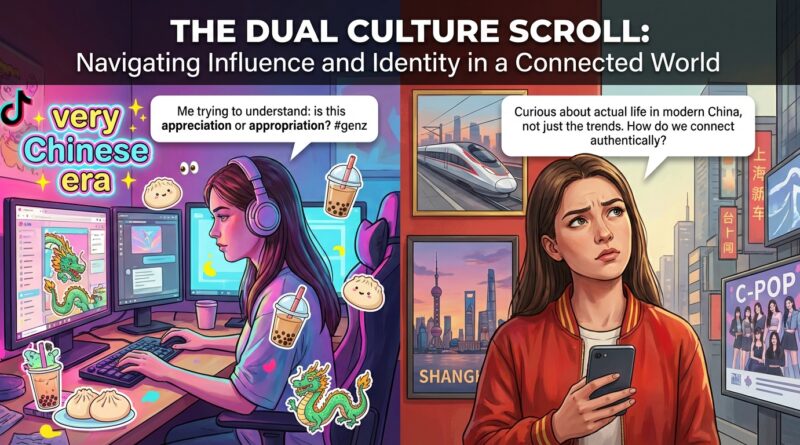
Why Everyone Is Suddenly ‘Becoming Chinese’ Online (And How To Join In Without Being Cringe)
Your feed changed fast. One day it was outfit dumps and recession jokes. The next, people were posting hotpot clips, street market edits, Chinese language app streaks, and saying they were in their “very Chinese era.” If you feel a little lost, that’s fair. The becoming chinese tiktok trend explained badly can sound like irony piled on top of politics piled on top of aesthetic cosplay. And if you want to join in, there’s a real fear of sounding weird, shallow, or like you discovered 5,000 years of culture through one algorithmic mood board. The good news is that this trend is not impossible to read. It’s a mix of meme humor, admiration, global anxiety, and online identity play. Once you see the layers, it gets much easier to tell what’s playful, what’s thoughtful, and what crosses the line into stereotype.
⚡ In a Hurry? Key Takeaways
- The “becoming Chinese” meme is a Gen Z internet trend mixing absurd humor, admiration for Chinese culture, and anxiety about where global culture is headed.
- If you want to join in, post from real interest and specific experiences, like food, language learning, media, design, or travel, not vague stereotypes.
- The safest rule is simple. Appreciate, don’t perform. If your post turns Chinese identity into a costume or punchline, don’t hit publish.
So what is the “becoming Chinese” trend, exactly?
At its simplest, it’s a meme format. People say they are “becoming Chinese,” “entering their Chinese era,” or “Chinamaxxing” because they’ve started adopting things they associate with contemporary Chinese life or culture.
That might mean watching Chinese dramas, obsessing over Chinese street fashion, using Chinese apps, learning Mandarin, cooking Chinese food beyond the usual takeout menu, or posting envy about public transit, urban infrastructure, e-commerce speed, or nightlife in cities like Shanghai, Chengdu, Shenzhen, and Chongqing.
But it is not just fandom. That’s why it feels confusing.
The joke often comes wrapped in irony. Someone posts a sleek apartment tour in Hangzhou, a robot delivery clip, a train station that looks futuristic, then writes, “Sorry, I fear I am becoming Chinese.” It sounds unserious. At the same time, many people posting it are reacting to something real. They feel disappointed with life at home, curious about another model of modernity, or tired of the same Western internet references looping forever.
Why this blew up in 2026
1. People are bored with the same old internet center of gravity
For years, online culture was heavily filtered through American platforms, American slang, and American trends. Younger users are now more comfortable looking elsewhere. Chinese fashion, beauty, tech, food, music, and city life no longer feel distant or niche to them. They are in the feed now.
2. It doubles as a joke about soft power
A lot of posts are basically saying, “Wait, why does this look cooler than what I’ve been sold?” That’s where the geopolitical undertone comes in. Some creators are half-joking about being “won over” by everyday Chinese life content, especially clips that show convenience, style, safety, affordability, or social energy.
It’s not always a deep political statement. Sometimes it’s just envy with subtitles.
3. TikTok rewards identity mashups
TikTok loves short, sticky phrases that let people try on an identity in public. “Coastal grandmother.” “Tomato girl.” “Gym bro.” “Tradwife.” “Becoming Chinese” slots into that same machine, except with much higher cultural stakes.
That is why some versions feel playful and others feel very off. A fashion microtrend is one thing. A national or ethnic identity is another.
4. There is genuine curiosity underneath the joke
Not everyone posting is farming engagement. Some people really are learning Mandarin, getting into Chinese films and pop culture, reading Chinese authors, or traveling with fresh eyes. The meme took off because it gave them a fast, funny way to describe a real shift in interest.
Why people are calling it “Chinamaxxing”
The “maxxing” part comes from internet slang. It usually means optimizing or going all-in on something. Looksmaxxing. Sleepmaxxing. Careermaxxing. So “Chinamaxxing” is the exaggerated meme version of saying, “I am fully committing to this interest now.”
That exaggeration is part of the humor. It signals that the person knows they’re being dramatic.
Still, words matter. “Chinamaxxing” can sound funny in meme circles, but it can also flatten a huge, diverse culture into an optimization hack. If you use it, know that some people will read it as satire and others will read it as a red flag.
What the trend gets right
At its best, this meme does something useful. It breaks the old habit of treating Chinese culture as either mysterious, monolithic, or permanently foreign. It lets younger users say, very plainly, “I am curious. I like this. I want to know more.”
It also reflects a broader online shift. People are building identities from multiple cultural reference points now. Not just the ones they grew up with. That part is real, and honestly, healthy.
What the trend gets very wrong
The internet is not good at nuance. So the same trend can turn ugly fast.
Common ways it goes sideways
It turns culture into a costume. Wearing one cheongsam-inspired outfit, using chopsticks on camera, and making “I’m basically Chinese now” jokes is not appreciation. It’s performance.
It reduces China to aesthetics and efficiency porn. Neon skylines, bullet trains, skincare, tea sets, and convenience stores are all real parts of life. They are not the whole story.
It treats Chinese identity like a collectible vibe. A culture is not a skin you equip for the week.
It ignores actual Chinese voices. If all your references come from other non-Chinese creators translating a trend badly, you are playing telephone with someone else’s identity.
How to join in without being cringe
This is the part most people actually need. You do not have to avoid the trend completely. You just need to post like a person, not like a stereotype generator.
1. Be specific, not vague
Bad: “I’m becoming Chinese because I like the vibe.”
Better: “I started learning Mandarin and now I’m three weeks deep into practicing tones and watching food vlogs from Chengdu.”
Specificity shows respect. It tells people what you actually mean.
2. Talk about your interest, not your identity swap
You can say you’re in your “Chinese media era” or “Mandarin learning era.” That is much cleaner than implying you are taking on an ethnicity.
The less your post sounds like “look at my new persona,” the better it will land.
3. Credit creators from China and the Chinese diaspora
If a trend, recipe, show, song, or style got you interested, mention where it came from. Follow and share people who actually live the culture you’re referencing.
This is the easiest way to move from extraction to appreciation.
4. Don’t make accents, name jokes, or “Asian parent” bits
This should be obvious, but online trends lower people’s IQ in groups. If your joke depends on imitation, flattening, or old stereotypes, it’s not edgy. It’s stale.
5. Understand that China is not one thing
Regional food differences, language differences, class differences, city and rural differences, diaspora differences, political differences. They all matter. The more you learn, the less likely you are to post nonsense.
6. Let curiosity show
“I’m learning.” “I’m new to this.” “I’m trying to understand why this resonates with me.” Those phrases make you sound normal. Because they are normal.
Good post ideas if you want to participate thoughtfully
If you want in on the conversation but don’t want to look like you are doing culture cosplay, these are safer lanes.
Post your learning process
Share the Chinese drama that got you hooked. The recipe you tried. The artist you found. The language app milestone you hit. The history rabbit hole you fell into.
Compare systems, not people
It’s fine to say, “This train network is making my local commute look prehistoric.” That is commentary on infrastructure. It is much better than saying one culture is magically superior.
Share recommendations
“If this trend made you curious, start with these films, creators, podcasts, or cookbooks.” Recommendation posts are useful and far less likely to read as shallow.
Admit the meme is messy
You can even say that part out loud. Something like, “This meme is chaotic, but it pushed me to actually learn more about Chinese media and everyday life.” That honesty goes a long way.
Should you use the phrase “becoming Chinese” at all?
Honestly, maybe sparingly.
If you’re clearly quoting the meme while also showing self-awareness, people may read it as harmless internet shorthand. But if your entire post hangs on the phrase, with no detail and no real substance, it will probably feel shallow.
A better rule is this. Use the meme as an entry point, not the whole point.
Say what you’re actually becoming interested in. Chinese fashion. Chinese cinema. Chinese cooking. Mandarin study. Chinese tech ecosystems. Urban design. Contemporary art. That lands better and ages better.
Why this trend resonates so hard right now
Because a lot of young people feel culturally unmoored. They are skeptical of old national stories. They are tired of algorithmic sameness. They are curious about how other societies live, build, eat, move, and imagine the future.
The “becoming Chinese” meme compresses all of that into one weird little phrase.
That is why it feels bigger than a joke. It’s partly about admiration. Partly about dissatisfaction. Partly about trying on a more global self online. And partly about the fact that internet culture now moves across borders faster than people’s understanding does.
Quick gut-check before you post
Ask yourself:
- Am I talking about a real interest, or just borrowing a trend label?
- Would a Chinese viewer feel seen, or flattened?
- Am I citing actual media, creators, food, places, or ideas?
- Is the joke on me and my algorithm, or on Chinese people?
If you can answer those well, you’re probably fine.
At a Glance: Comparison
| Feature/Aspect | Details | Verdict |
|---|---|---|
| Using the meme phrase | Can be funny and timely, but may sound reductive if used without context or specifics. | Okay in moderation. Better with self-awareness. |
| Posting about real interests | Sharing actual media, food, language study, travel, design, or tech interests reads as grounded and respectful. | Best option. |
| Playing up stereotypes | Accent jokes, vague “Asian” references, costume-like posting, or identity roleplay will likely backfire. | Avoid completely. |
Conclusion
The “becoming Chinese” meme is blowing up because it bundles absurd humor, global curiosity, and a real sense that culture online is shifting under everyone’s feet. That makes it interesting. It also makes it easy to mishandle. If you treat it as a doorway instead of a costume, you can take part without embarrassing yourself or flattening someone else’s culture. The smart move is to post with detail, humility, and actual interest. That way you are not just chasing a chaotic TikTok phase. You are learning how to take part in global identity conversations with more care than the algorithm usually asks for. And that is the kind of internet skill that still matters after the meme burns out.