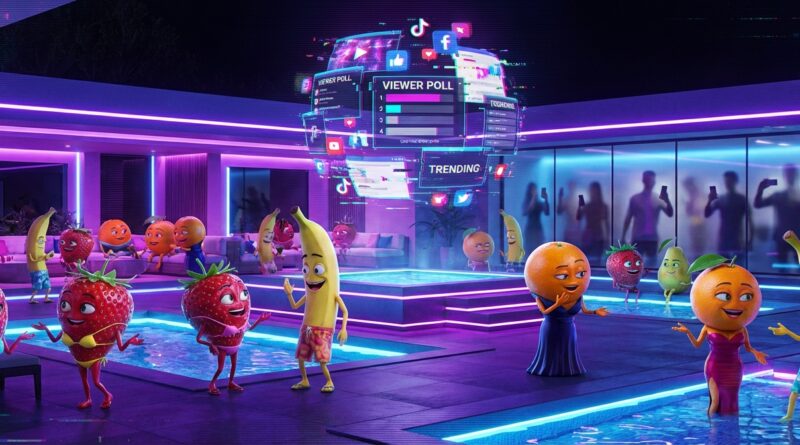
Inside TikTok’s Fruit Love Island: How AI Slop Is Quietly Rewriting What ‘Viral’ Looks Like
If your TikTok feed suddenly looks like a dating show for strawberries, pineapples, and sulking bananas, you are not imagining things. A lot of people, especially creators, are waking up to the same weird mess. Fake reality shows made with AI. Endless alphabet videos. Kids’ clips that feel noisy, fast, and strangely empty. It is frustrating because the old idea of “viral” used to mean clever, funny, surprising, or at least human. Now it often means cheap, fast, and engineered to hold attention for a few seconds at a time. The TikTok AI slop fruit love island trend is not just a goofy side quest of the internet. It is a sign that the feed itself is changing. And if you make videos, sell products, or just want your work seen by actual people, you need to understand what is happening, what not to copy, and how to make your content feel unmistakably human.
⚡ In a Hurry? Key Takeaways
- The TikTok AI slop fruit love island trend shows that platforms are rewarding fast, synthetic, low effort content because it grabs quick attention, not because viewers truly love it.
- If you are a creator, do not copy the slop format. Use real voice, visible process, specific opinions, and human imperfections to stand out.
- This matters beyond memes. Kids’ feeds and mainstream attention habits are being shaped by content that is cheap to make and hard to trust.
What is “Fruit Love Island,” and why is it everywhere?
At the surface level, it is ridiculous. You get AI-generated fruit characters with faces, voices, and reality-show style drama. One apple is jealous. A mango is “dumped.” A watermelon enters the villa. The visuals are bright, weirdly glossy, and just convincing enough to stop your thumb for a second.
That second is the whole game.
These clips are built to trigger curiosity, confusion, and repetition. They do not need strong jokes, a point of view, or even a real creator behind them. They just need enough novelty to make people watch a few beats longer. Then the platform reads that as a success signal.
So when people say the vibe of viral has changed, this is what they mean. We are seeing more content that is not memorable in the old sense. It is just sticky enough to get pushed.
Why platforms keep serving this stuff
TikTok and YouTube do not sit there asking, “Is this meaningful?” They ask, in effect, “Did people stop scrolling?” That is a very different question.
AI slop works well in that system for a few simple reasons.
It is cheap to make
A human-made sketch, commentary video, or mini-doc takes time. AI fruit soap opera clips can be pumped out in batches. If one out of fifty lands, the numbers still work for the person posting them.
It is visually loud
Bright colors, faces, exaggerated emotions, and weird premises all help on autoplay feeds. Especially with kids’ content, chaos itself can become a hook.
It is infinitely remixable
If banana dating show works, someone can make kiwi courtroom, avocado breakup, or alphabet family meltdown by dinner. That means the trend spreads faster than human creativity usually does.
It confuses attention with affection
This is the big one. People may not actually like these videos. They may hate-watch them, stare at them, send them as jokes, or let them run because they are too baffled to click away. The algorithm often treats all of that as useful engagement.
Why this matters more than one silly trend
It would be easy to laugh this off as another strange internet moment. But the bigger shift is serious. A growing chunk of what gets pushed, especially to younger viewers, is low-cost synthetic media designed for reaction, not connection.
That changes audience expectations.
It teaches viewers to expect everything fast. Loud. Frictionless. Disposable. It also trains creators to think they need to post more often, simplify more aggressively, and flatten their own voice just to compete.
That is the trap.
If you are a real creator, small business, educator, or expert, you cannot win by becoming a worse version of machine-made content. The people making Fruit Love Island clones can out-volume you all day. You need a different lane.
What “viral” used to mean, and what it means now
Old-school viral content usually had one or more of these things: a distinct person, a quotable idea, a strong feeling, or a cultural moment people wanted to share.
Now a lot of feed-native viral content works more like digital junk food. It is optimized to be consumed, not remembered.
That does not mean human-made work is doomed. It means the scoreboard is messier. A clip can rack up views without building trust, loyalty, or recognition. That is why some creators see decent reach and still feel invisible. The views are there. The relationship is not.
How to tell if a trend is helping your brand or hollowing it out
Before you jump on any format, ask three simple questions.
1. Would people remember this came from me?
If the answer is no, you are borrowing a trend but giving away your identity.
2. Does this make someone trust me more?
If the clip gets a laugh but leaves no sense of who you are, what you know, or why you matter, it may not be worth it.
3. Could an AI account do this faster and cheaper?
If yes, that format is dangerous territory. Competing there becomes a race to the bottom.
What creators should do instead
This is the practical part. If the feed is filling up with synthetic noise, your job is to send stronger human signals.
Show your face, hands, voice, or process
You do not need to be on camera all the time. But some proof of real authorship helps. A natural voiceover. A hand sketching an idea. A messy desk. A quick “here’s why I made this” intro. These details matter more now.
Use specifics, not generic hooks
“You won’t believe this trick” is slop language. “I tested three budget mics in my echo-filled kitchen” is human language. Specificity signals reality.
Keep a few imperfections
Not every pause, breath, or rough edge needs sanding off. A little texture can actually build trust. People are getting better at spotting over-smoothed content.
Build recurring human formats
Try series people can connect to you. “What I got wrong this week.” “One tool I actually use.” “A client problem I solved in 60 seconds.” Formats like that create familiarity, and familiarity is hard for slop to fake well.
Say something only you would say
This is probably the strongest defense. Real taste is harder to clone than polished visuals. Opinions, judgment, humor, lived experience, and niche knowledge still travel.
Formats worth avoiding right now
Not every trend is toxic. But some are so easy for AI accounts to flood that joining them can make your work feel cheap by association.
Generic animated talking objects
If your concept can be replaced by a toaster, orange, or letter of the alphabet with a synthetic voice, it is probably too thin.
Rapid-fire nonsense for its own sake
Fast cuts and surreal jokes can be great when a real creator is driving them. But random chaos with no viewpoint gets lost in the slop pile.
Over-automated “content systems”
If your workflow is basically “prompt, export, post, repeat,” you may get output, but not audience loyalty.
How to signal “this was made by a real person”
You do not need a badge that says HUMAN. You need clues.
- Reference something that happened in your day or week.
- Include a quick personal reason for the post.
- Use your own voice instead of a stock AI narrator.
- Respond to comments in follow-up videos.
- Show drafts, mistakes, before-and-after versions, or behind-the-scenes clips.
- Use captions that sound like a person, not a prompt.
That last one matters. A lot of AI slop has that oddly polished, empty style. Real people usually sound a little more direct, a little more uneven, and a lot more memorable.
What this means for parents and regular viewers
If you have kids on TikTok, YouTube Shorts, or YouTube Kids, this trend is not just silly background noise. It is part of a wider flood of content designed to hold attention with repetition and sensory overload. That does not mean every weird cartoon is harmful. But it does mean adults should pay closer attention to what “kid-friendly” now looks like in algorithmic feeds.
A good rule of thumb is simple. Ask whether the video seems made to entertain, teach, or comfort a child, or whether it just seems built to keep the next clip rolling.
The real opportunity for creators
Here is the upside. As the feed gets more synthetic, human work becomes easier to recognize when it is presented clearly. Not all audiences will care. But the right audience will care more.
That means there is real value now in being legible as a person. Clear voice. Real expertise. Consistent taste. A reason people would come back for you, not just for another hit of weirdness.
The TikTok AI slop fruit love island trend is a warning, but it is also a filter. It is showing us what machines can mass-produce at scale. Your job is to make the stuff they cannot fake well yet.
At a Glance: Comparison
| Feature/Aspect | Details | Verdict |
|---|---|---|
| AI slop trend content | Cheap, fast, colorful, confusing, and built for quick retention rather than loyalty or trust. | Good for short-term spikes, bad model for serious creators. |
| Human-made creator content | Slower to make, more specific, more personal, and easier to connect to over time. | Best path for trust, repeat viewers, and long-term audience growth. |
| Best strategy right now | Use strong hooks, but pair them with real voice, visible authorship, and clear opinions or expertise. | Stand out by being more human, not more synthetic. |
Conclusion
The weird fruit dating shows are funny for about five seconds, then the bigger point lands. A huge share of what TikTok and YouTube are pushing, especially to younger viewers, is low effort AI slop. Anthropomorphic fruit drama. Chaotic alphabet videos. Glitchy clips that feel mass-produced because they are. That is reshaping attention norms in real time, and creators can feel it even if they do not have the perfect words for it yet. The good news is that you do not need to copy this stuff to survive. In fact, you probably should not. The better move is to make your work easier to recognize as human. Be specific. Show your process. Keep your voice. Let people feel there is an actual person on the other side of the screen. As the feed fills with synthetic noise, that becomes your advantage, not your weakness.