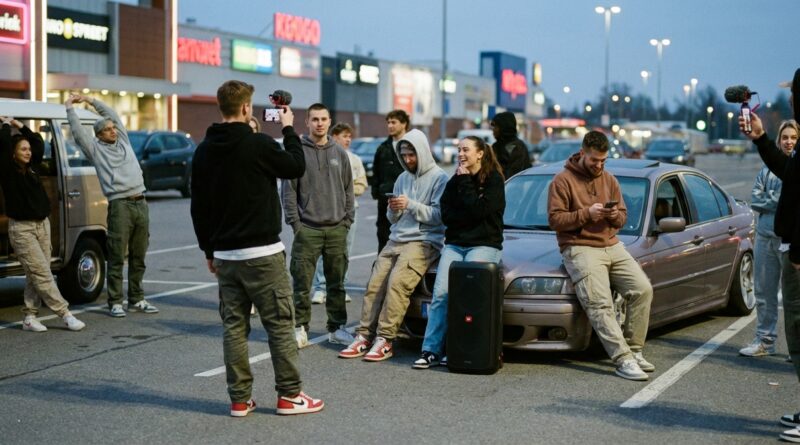
From ‘Hot Girl Walk’ To ‘Parking Lot Pimping’: How Viral IRL Meetups Are Quietly Rewiring Youth Culture
It is getting harder to read youth culture by staring at your phone. That is the frustrating part. The feed keeps serving the same recycled jokes, the same outfit formulas, the same fake spontaneity. Meanwhile, the real signal is happening off-screen. People are walking together before work. They are turning random parking lots into social stages. They are building tiny local scenes that feel more alive than anything the algorithm can push. If you want to understand 2026 viral IRL youth culture trends, stop asking what sound is trending and start asking where people are showing up in person. That is where taste is forming now. That is where trust is getting built. And that is where the next wave of brands, creators and communities will either click or completely miss the moment. The smartest move in 2026 is not chasing attention online first. It is creating reasons for people to leave the house.
⚡ In a Hurry? Key Takeaways
- What matters most in youth culture right now is not just what goes viral online, but which real-world meetups people actually attend.
- If you want to build something that feels current, start small with local, low-pressure events people can join without feeling sold to.
- The best IRL trends feel casual and community-led, but safety, consent and clear boundaries still need to be built in from the start.
The shift is simple. Young people want somewhere to be
For years, internet culture trained everyone to think attention lived on screens. If a trend had views, it mattered. If it did not, it disappeared.
That logic is breaking down. Not fully, but enough to notice. The hottest thing now is often a place, not a post. A walking club. A basketball court meetup. A late-night food pop-up. A parking lot scene with music, cars, outfits and a very specific local vibe.
That does not mean TikTok is irrelevant. It still works as the flyer, the proof and the memory bank. But it is no longer the whole event. More often, it is just the invitation.
That is why 2026 viral IRL youth culture trends matter. They show that culture is moving from pure content consumption back toward participation.
From “Hot Girl Walk” to “parking lot pimping”
The names sound funny. A little chaotic too. But the pattern underneath them is serious.
Walking clubs are not just about fitness
Walking trends took off because they are low-cost, low-skill and easy to join. You do not need special gear. You do not need to be cool enough. You just show up and move.
That makes them socially powerful. They give people a script when they are tired of awkward small talk. Walking side by side is easier than sitting face to face. It lowers pressure. It gives structure. It lets strangers become regulars.
For young adults especially, that matters. A lot of people want friends, community and routine, but hate the formality of networking events and the expense of nightlife. Walking clubs solve that in a way that feels natural.
Parking lot culture is about visibility and freedom
Parking lot hangouts, car meet spillovers and local takeover-style scenes scratch a different itch. These spaces feel unscripted. A little rough around the edges. More democratic than the polished event world.
People can show up, show off, people-watch, flirt, trade ideas, test music, sell small things and build status in a way that feels immediate. It is social media energy, but with engines, sneakers, folding chairs and real faces.
For some groups, this is also about reclaiming public space. Malls are dead or expensive. Third places are disappearing. Renting a venue costs too much. A parking lot is imperfect, but it is available. That counts for a lot.
Why this is happening now
There are a few forces all hitting at once.
People are exhausted by passive scrolling
The internet is still entertaining. It is also tiring. A lot of young people are sick of performing online all the time. They want to be seen, but not endlessly branded. IRL meetups offer a softer kind of visibility.
Loneliness is no longer abstract
Everyone talks about loneliness like it is a statistic. For younger people, it is logistical. Where do you go? Who is there? How do you join without feeling weird?
The best meetups answer that with a simple format. Walk here at 7. Pull up to this lot at 9. Bring a friend or come alone. That clarity matters.
Local identity is becoming cool again
For a while, internet culture flattened everything. Trends looked the same in every city. Now local flavor is back. People want scenes that feel tied to their neighborhood, their slang, their style and their people.
That is a big clue for anyone trying to make something relevant. Generic does not travel as well as it used to. Hyper-local does.
What this means for creators, founders and brands
If you are asking, “What do I make next?” the answer may not be more content. It may be better context.
The win is no longer just posting the perfect clip. The win is giving people a reason to gather, then making that gathering easy to understand and worth repeating.
Creators should think like hosts
A creator who can gather 50 people in a park may have more real cultural power than someone with 500,000 passive followers. Hosting is becoming a stronger signal than posting.
That means your next smart move could be a recurring walk, a monthly night market, a neighborhood listening party or a themed pull-up spot. Start with something light. Let the audience shape it with you.
Founders should design for rituals, not stunts
One-off events can get attention. Rituals build culture. If people know where to go, when to go and what kind of energy to expect, they come back. Then they bring others.
The strongest micro-events have three things in common. They are easy to explain. They are affordable. They make attendees feel like insiders without excluding newcomers.
Brands need to stop trying so hard to look native
This is where a lot of companies become cringe fast. They see a local trend, copy the look, throw in neon signage and call it community. People can feel that from a mile away.
If a brand wants to belong, it should support the scene instead of swallowing it. Pay for water, seating, lights, cleanup, permits or safety staff. Make the event better. Do not make yourself the main character.
How to plug in without being cringe
This is the part everyone worries about, and for good reason.
Read the room before you post
Not every meetup wants to become “content.” Some scenes are happy to be filmed. Others want a little breathing room. Ask first. Watch how regulars behave. If the culture is loose and in-the-moment, overproducing it can kill the vibe.
Keep the barrier to entry low
The magic of these events is that they feel open. If people need to download an app, buy a package, RSVP through six steps or dress to a strict code, you are probably overthinking it.
The best invite usually sounds like this. We are meeting here. At this time. Bring water. Bring a friend if you want.
Let the community create the identity
You can name the thing. You can set the time. You cannot force the culture. The jokes, rituals, photos and social meaning need room to grow naturally. If you script every detail, people feel managed instead of welcomed.
How to design a micro-event that actually feels 2026
If you want to start your own, think less like a marketer and more like a good neighbor.
Start with one strong reason to show up
Do not pile on too much. A sunset walk. A sneaker swap in a lot. A coffee meet before class. A late-night ramen run every Thursday. Simple wins.
Build around place, not just theme
Place matters more than people think. A route with a good view. A lot near food. A spot that is easy by train. A place where people can linger after the “official” thing ends. The afterglow is where the community usually forms.
Use the internet as support, not the whole product
Post the details. Share photos after. Use group chats to coordinate. But remember the online layer is there to help the real-life layer, not replace it.
Think about safety early
This part is boring until it is not. If you are organizing anything public, think about lighting, exits, weather, hydration, transport, age mix and who attendees can talk to if something goes wrong. Casual does not mean careless.
The risk side nobody should ignore
IRL scenes can be energizing. They can also get messy fast.
Popularity changes the vibe
A meetup that feels intimate at 40 people can feel chaotic at 400. Growth is not always a pure win. Sometimes the culture weakens once outsiders chase the aesthetics without understanding the norms.
Public space comes with friction
Parking lots, sidewalks and open areas seem free, but they come with neighbors, property owners, police attention and safety issues. If you are building something regular, it is smart to think ahead instead of pretending none of that exists.
Not every scene is for everyone
That is okay. The goal is not mass appeal. The goal is resonance. Smaller, clearer communities often hit harder than giant vague ones.
So where is youth culture really headed?
Toward smaller circles. More local identity. More repeatable hangouts. Less obsession with being first online. More interest in being there in person.
That does not mean the internet is over. It means its job is changing. Online platforms still amplify culture. They just do not fully create it anymore. More often, they reveal where the energy already is.
That is the hidden signal creators and culture watchers should pay attention to. If people keep showing up somewhere, something important is forming there.
At a Glance: Comparison
| Feature/Aspect | Details | Verdict |
|---|---|---|
| Online trend vs IRL meetup | Online trends spread fast, but IRL meetups build stronger loyalty, identity and repeat behavior. | IRL has more long-term cultural weight. |
| Walking clubs vs nightlife events | Walking clubs are cheaper, easier to join and more welcoming for people who want community without heavy spending. | Walking clubs are more sustainable for regular attendance. |
| Brand-led event vs community-led hangout | Brand-led events can bring resources, but community-led hangouts feel more authentic when the audience shapes the vibe. | Support the community. Do not overpower it. |
Conclusion
The big lesson here is simple. If you want to know what is next, watch where people gather when nobody is forcing them to. This helps the community today because creators, founders and culture nerds are all stuck asking, “What do I make next?” while the algorithm keeps recycling old memes. By showing how today’s viral cultural energy is shifting back to physical spaces like walking clubs and parking lots, readers get a real-time map of where attention is moving, how to plug into it without being cringe and how to design their own micro-events that actually feel 2026 instead of another tired nostalgia post. Start small. Make it easy. Give people somewhere real to belong.