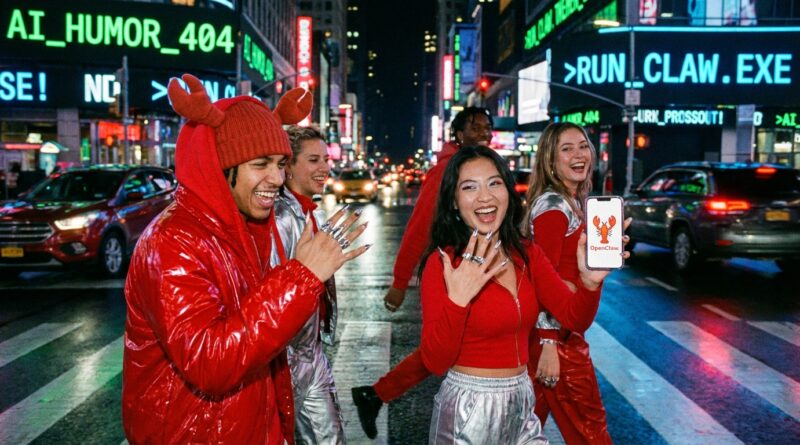
Inside the OpenClaw Aesthetic: How Lobster Hats and Claw Hands Became 2026’s Weirdest Flex
You are not imagining it. One week your feed is normal, and the next it is full of lobster hats, red hoodies, claw-hand selfies, and people acting like this all means something obvious. Then you click an explainer and get five paragraphs of startup-speak about agents, ecosystems, and innovation. Annoying. What most people actually want to know is much simpler. Why are smart, online people suddenly dressing like a meme seafood mascot, and why does it seem to signal tech credibility? The short answer is that the OpenClaw lobster hat trend turned software branding into a social uniform. What started around an open-source AI agent became a shared joke, then a badge, then a whole aesthetic. Once that happened, the look escaped coding circles and spread into TikTok outfits, fan art, party photos, and internet in-jokes. If you want the no-jargon version, here it is. This is less about lobsters and more about belonging.
⚡ In a Hurry? Key Takeaways
- The OpenClaw lobster hat trend is a tech in-joke that became a fashion signal. It tells people you know the culture, not just the software.
- If you want to join in, start small. A red hoodie, claw-hand pose, or fan-art remix reads better than buying a full costume.
- Be careful with brand-washed versions. The fun part is community creativity, and that usually gets flattened when marketing teams copy it too literally.
What is the OpenClaw lobster hat trend, really?
At the simplest level, it is the visual culture that formed around OpenClaw, an open-source AI agent project. The code matters to developers. The look matters to everyone else.
That look has a few repeat symbols. Bright red hoodies. Lobster hats. Claw-hand poses in selfies. Cartoon crustacean art. Slightly chaotic, playful energy. If you spend time on GitHub, Discord, X, TikTok, or late-night hack event photos, you have probably seen all of it blend together.
What makes it a trend is repetition. Once enough people wear the same visual joke, it stops being random and starts functioning like a wink. It says, “I get the reference.” In internet culture, that kind of shared signal spreads fast.
Why a lobster? Why not something normal?
Because normal does not travel online as well.
The best internet symbols are easy to draw, easy to recognize, and a little bit absurd. A lobster checks every box. It is bright, funny, slightly aggressive, and instantly readable even in low-effort memes. You can turn it into a hat, sticker, profile picture, plushie, emoji remix, or doodle on a whiteboard.
There is also a practical reason weird symbols win. Tech culture has always loved mascots and coded uniforms. Hoodies, insider jokes, conference tees, ironic accessories. The lobster just updates that formula for a more image-first internet where screenshots and outfit posts spread faster than product docs.
How OpenClaw turned from software into a social signal
This is the part many explainers skip. People do not just adopt a look because a project exists. They adopt it because the look helps them sort people into “in the room” and “not in the room.”
With OpenClaw, the aesthetic became a kind of shortcut. If someone posts in a red hoodie with claw hands, they may be saying any of the following:
- I follow open-source AI culture closely.
- I am part of the Discord, meme circle, or event scene.
- I like the project’s playful tone more than polished corporate AI branding.
- I understand this joke before the mainstream got hold of it.
That last one matters. A lot. Online trends get status from timing. Catching something early feels cool. Wearing the symbols before they hit mass-market merch feels even cooler.
Why the red hoodie and claw-hand pose matter
The red hoodie
The red hoodie works because it is simple and easy to copy. Most people already own one, or can find one cheaply. It gives the trend a uniform without making it feel too official. That balance is key. If it looked too polished, it would feel like a company campaign. If it looked too random, it would not stick.
The claw-hand pose
The claw hands are the meme version of a handshake. They are silly on purpose. That silliness lowers the stakes. You do not have to be a serious engineer giving a serious speech. You can just throw up claw hands in a group photo and instantly show you know the bit.
That is part of why the trend spread beyond coding spaces. A pose is easier to copy than code.
Why this escaped GitHub and Discord
Because visual culture always leaks.
First, a niche community makes a joke for itself. Then screenshots escape. Then fan artists improve the look. Then short-form video turns it into a template. Then nightlife and fashion people borrow it because it already has built-in meaning.
OpenClaw is in that middle stage where it still feels semi-insider, but not so insider that nobody else can join. That is the sweet spot for a trend. It feels exclusive enough to be interesting and open enough to be copied.
Once that happens, the original software almost becomes secondary. Plenty of people now recognize the vibe before they could explain the product. That is not unusual. It is how internet aesthetics work. The symbol often outruns the thing it started from.
Is this just another tech fad?
Yes and no.
Yes, in the sense that internet culture moves fast and every visual code has a shelf life. At some point, brands will overdo it, merch will get corny, and the joke will lose some of its edge.
No, in the sense that even short-lived trends leave behind habits, references, and community bonds. OpenClaw has already shown how fast an open-source project can become a style language. That part is bigger than one lobster hat.
It also says something about where tech culture is now. People are tired of sterile AI branding. They want weirdness, humor, and symbols that feel made by actual humans. A goofy crustacean beats another glossy blue gradient any day.
How to tell if someone is using the trend sincerely or just chasing clout
You cannot know for sure, but there are clues.
Usually sincere
- The look is mixed with personal style instead of copied head-to-toe.
- They engage with the community, art, jokes, or events around it.
- The posts feel playful, not overly polished.
Usually forced
- It looks like a campaign deck turned into an outfit.
- The lobster appears, but none of the humor does.
- Everything is tagged, monetized, and explained to death.
A good rule is simple. Real internet culture usually looks a little messy. Once it gets too clean, the life starts draining out of it.
Should you join in?
If you like it, sure. But you do not need to go full cartoon shellfish.
Easy ways to try it
- Wear a red hoodie and keep the rest of your outfit normal.
- Use the claw-hand pose in a group pic.
- Share or make fan art instead of buying obvious merch.
- Use the aesthetic in your own community’s way, not as a costume.
What not to do
- Do not pretend you have deep project knowledge if you do not.
- Do not copy every visual cue at once. That reads like cosplay, not participation.
- Do not assume everyone wearing it is a developer. The scene is wider now.
The best way in is to treat it like a joke you respect, not a uniform you have to earn.
Why people are reacting so strongly to it
Because it hits three internet desires at once.
- Belonging. People want symbols that show they are part of a scene.
- Play. Tech has felt overly serious lately. This gives people a way to be unserious again.
- Visibility. In crowded feeds, a bright red lobster hat is hard to ignore.
That is why the OpenClaw lobster hat trend feels bigger than a normal meme. It works as branding, community glue, and outfit shorthand all at once.
What happens next?
Probably the usual cycle. More fan remixes. More event photos. More people borrowing the look with no clue where it came from. Then the inevitable arrival of brands trying to “activate” the crustacean vibe, which is exactly the moment the original crowd starts moving on.
But right now, the trend is still interesting because it has not been fully flattened yet. It still carries a sense of community authorship. People are making the meaning together in real time. That is the fun part.
At a Glance: Comparison
| Feature/Aspect | Details | Verdict |
|---|---|---|
| Core meaning | A visual in-joke tied to OpenClaw that signals community awareness more than technical skill. | Mostly cultural, not just product-related. |
| Easy way to join | Red hoodie, claw-hand pose, or a small remix of the look works better than a full costume. | Low effort is often cooler here. |
| Risk of getting it wrong | Overly polished or corporate versions can feel fake fast and strip away the joke. | Best enjoyed with humor and light touch. |
Conclusion
So yes, the lobster hats are real, and no, you are not missing some giant technical secret. The OpenClaw lobster hat trend is really about how internet communities make identity visible. Right now OpenClaw is more than just an open-source AI agent. It is a visual language leaking out of GitHub and Discord into TikTok fits, fan art, and nightlife. Once you see that, the whole thing makes more sense. You can spot the signals, decide whether you want in, and maybe even remix the vibe for your own corner of the internet before brands and VC-funded trend reports turn it into one more tired lobster emoji campaign.