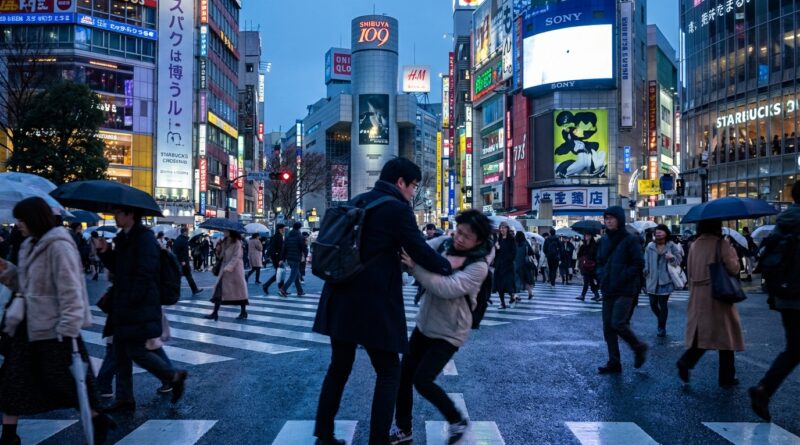
Inside Japan’s ‘Bumping’ Backlash: How One Viral Video Turned Public Space Etiquette Into a Global Culture War
You have probably seen the same clip on your feed over and over. A man in a crowded part of Tokyo appears to slam into women near Shibuya Crossing, and the comments instantly split into camps. One side treats it like proof that city life is broken. The other shrugs it off as just crowd chaos. That whiplash is frustrating, especially if you are trying to figure out what actually happened instead of being recruited into somebody else’s outrage machine. The basic issue is this. In Japan, “bumping” has become shorthand for a kind of street harassment where a person, usually a man, deliberately crashes into women in busy public spaces while pretending it was accidental. The viral Shibuya video did not invent the problem, but it shoved a local safety concern onto the global internet, where nuance usually gets trampled faster than facts.
⚡ In a Hurry? Key Takeaways
- “Bumping” in this context means deliberate shoulder-checking or body-checking in crowds, not ordinary accidental contact.
- If you share clips about it, add context and avoid treating unclear footage as a full court case. The useful question is patterns, not pile-ons.
- This matters because crowded public spaces feel very different depending on your size, gender and how safe you expect to be while simply walking.
What the Japan bumping trend viral Shibuya crossing story is really about
The phrase sounds almost silly until you understand the behavior behind it. In Japanese discussion, this issue has often been described as men intentionally colliding with women in stations, sidewalks, crossings and other packed areas. The crowd gives cover. The person doing it can act like it was an accident. The target is left startled, hurt or shaken, with very little room to challenge it in the moment.
That is why the Shibuya clip landed so hard. Shibuya Crossing is one of the most recognizable crowded intersections on Earth. If something ugly is happening there, in a place designed around mass pedestrian flow, it instantly taps into a bigger fear. If you cannot trust the basics of walking through a crowd, what exactly counts as safe public space?
Why this has hit such a nerve in Japan
Japan has a strong public etiquette culture. People queue neatly. Trains run with intense precision. There is a general expectation that shared spaces work because most people follow the script. So when a behavior looks like someone weaponizing that orderliness, it feels especially unsettling.
This is not just about one rude person. It touches a deeper anxiety. Crowded cities depend on a quiet social contract. I will not invade your space on purpose. You will not invade mine. We all keep moving. “Bumping” breaks that contract while hiding inside it.
It also connects to older harassment fears
Japan has long had public conversations around forms of harassment in transit, especially groping on trains. That history matters here. Even when “bumping” is not sexual in the narrow legal sense, many people read it through the same lens of intimidation, gendered targeting and plausible deniability.
That is a big reason local reactions have been strong. For many women, the viral clip did not reveal a shocking new phenomenon. It looked like a familiar kind of menace finally getting a name people outside Japan might understand.
What we actually know, and what we do not
This is where the internet usually gets sloppy. A short viral clip can show conduct that looks deliberate. It can also strip out everything around it. We should be careful not to confuse “this appears disturbing” with “every fact is settled.”
Still, a few things can be true at once. A single clip may not prove every claim made about it. But the broader pattern can still be real, documented and familiar to locals. That is the part worth paying attention to. Viral footage is often best treated as a window into a known concern, not as the entire case file.
How to read these clips without getting manipulated
Ask simple questions. Is the person changing direction to hit someone? Does it happen repeatedly? Are targets mostly smaller people or women? Is there a crowd pattern that makes “accidents” less believable? Those details matter more than a dramatic caption.
Also watch for commentary that turns a local safety issue into a culture-war toy. Once that happens, people stop talking about harassment and start scoring points about race, feminism, immigration, masculinity or “decline.” The original victims vanish from the story.
Why the rest of the world recognized it so fast
Even if you had never heard the Japanese term before, the behavior felt familiar because every dense city has its version of weaponized public contact. Sometimes it is aggressive shoulder-checking. Sometimes it is men forcing women off sidewalks. Sometimes it is people using crowd pressure to intimidate, touch or “accidentally” hit someone and then move on.
The details vary by country. The logic is the same. The crowd becomes camouflage. The victim is made to doubt their own read of the situation. Bystanders assume it was random because cities are messy anyway.
That is why this story traveled. The setting was Japan. The feeling was global.
Why “just a crowded city” is not a satisfying answer
Yes, crowded places involve accidental contact. Of course they do. But the whole point of the backlash is that many people believe this is not random contact. It is targeted contact using randomness as cover.
Think of it like spam calls versus a real wrong number. Both use the phone. One is normal friction. The other uses normal friction to get away with something. Public space works the same way. A crowded crossing creates accidental bumps all the time. That does not mean every bump is accidental.
Intent is hard to prove, patterns are easier to see
This is often where public debates get stuck. People demand mind-reading. But most street-safety conversations are not really about proving intent in one frame. They are about spotting repeat behavior, vulnerable targets and systems that let harmful conduct hide in plain sight.
If dozens of women say a pattern is real, and the pattern fits what the footage seems to show, it is worth taking seriously even while staying precise about what any one video can prove.
How locals in Japan are reacting
Reaction in Japan has not been one-note. Some people are angry that the issue is being sensationalized abroad. Some are relieved it is finally being discussed openly. Some worry the viral framing makes Japan look uniquely strange when the behavior is hardly unique to Japan.
That last point is fair. Japan is not the only place where public harassment gets hidden inside crowd movement. But it is also fair to say the viral moment gave a specific local problem a level of attention it rarely gets. Both things can be true.
For locals, the most practical concern is not national image. It is whether people can move through major stations and crossings without being targeted and then dismissed because “it was probably nothing.”
What this says about city life now
The bigger lesson is not “Japan is falling apart” or “the internet found another thing to panic about.” It is that crowded urban life puts a huge amount of trust into micro-behaviors we barely notice until they go wrong.
Walking in a city is a constant negotiation. Tiny course corrections. Eye contact or no eye contact. Who yields. Who takes up space. Who gets read as threatening. Who is expected to absorb contact quietly. Once you notice that, the Shibuya video stops being just a clip. It becomes a stress test for how public life works.
And yes, gender matters here
A lot of online commentary tries to flatten this into generic rudeness. But many of the reports around “bumping” focus on women being targeted. That changes the story. It is not only about manners. It is about power. Who can make physical contact and disappear into the crowd. Who is expected to keep walking. Who gets doubted afterward.
That does not mean every incident has the same motive. It means safety in public is not distributed evenly, and that has been obvious to many people long before the algorithm noticed.
How to talk about it online without making things worse
If you are posting about the Japan bumping trend viral Shibuya crossing, resist the urge to turn a local issue into a civilization-level hot take. Share what the term means. Note that it refers to alleged deliberate collisions in crowded public spaces. Mention that locals have been discussing the problem before this clip. That already makes your post more useful than most.
It also helps to separate three different claims. First, what this specific video appears to show. Second, whether a broader pattern exists. Third, what public response should look like. People often mash all three together, then start fighting shadows.
A good rule of thumb
Less performance, more clarity. If your comment would make a targeted person feel less ridiculous for trusting their own experience, you are probably helping. If it mainly turns the incident into content, you are probably not.
So what should readers take from it?
Take the clip seriously without treating it like a complete documentary. Understand that “bumping” is being talked about as a form of deliberate harassment, not simple pedestrian chaos. Notice why Japan reacted strongly, given its emphasis on public order and existing concerns about harassment in transit.
Then zoom out. Similar behavior exists in London, New York, Paris, Los Angeles and pretty much any city where crowds let people hide in motion. The viral angle may be Japanese. The social question is universal. Who gets to feel at ease in public, and who has to stay alert the whole time?
At a Glance: Comparison
| Feature/Aspect | Details | Verdict |
|---|---|---|
| What “bumping” means | Deliberate collisions or shoulder-checks in crowded spaces, often described as targeting women while posing as an accident. | Not the same as normal crowd contact. |
| Why Shibuya matters | Shibuya Crossing is iconic, dense and globally recognizable, so one clip there turns a local issue into an international flashpoint. | High visibility amplified a real concern. |
| Global relevance | Western cities see similar behavior under different names, from aggressive shouldering to crowd-based intimidation. | This is bigger than Japan. |
Conclusion
The useful takeaway here is not just “that video was awful.” It is understanding why it struck such a nerve and why so many people recognized the pattern right away. The Shibuya bumping clip is moving from TikTok shock-fodder into a much bigger conversation about harassment, public space and who feels safe on the street. Once you have the context, you can stop doom-scrolling the same 10-second loop and actually talk about the real issue. That is good for the community because it turns a flash of viral anger into a more grounded discussion about power, gender and personal space, in Japan and far beyond. And honestly, that kind of clear-eyed culture literacy is a lot more useful than one more performative comment thread.