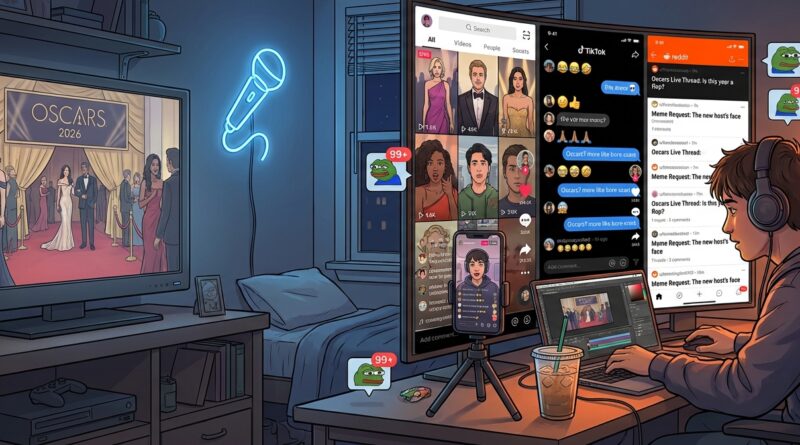
From Red Carpets to Reaction Videos: How Oscars 2026 Turned Into the Year of Second‑Screen Snark
You post your Oscars take at 11:47 p.m., feel pretty good about it, then open your feed and realize the internet has already moved on twice. First came the red carpet jokes. Then the acceptance speech clips. Then the “am I the only one who thought that was weird?” reaction wave. That is the frustrating part of Oscars 2026 viral social media reactions. The attention is real, but it burns fast, and most creators are left chasing a joke that already peaked ten minutes ago. This year’s Academy Awards made that problem impossible to ignore. For a lot of people, the show was not the show. The show was the running group chat, the TikTok stitches, the meme edits, the fan-cam threads, and the instant backlash cycles. If you make content around pop culture, that sounds exciting. It is. But it also means random hot takes are not enough anymore. You need a format people recognize, expect, and come back for.
⚡ In a Hurry? Key Takeaways
- Oscars 2026 was won online by fast, recognizable reaction formats, not by one-off hot takes.
- Pick 2 or 3 repeatable post types now, like “best line,” “most awkward moment,” or “who actually won the internet,” and reuse them for every live event.
- Do not build your whole strategy around outrage. Memes travel fast, but trust and consistency are what turn attention into followers.
Why the Oscars felt bigger on your phone than on your TV
That shift has been coming for years, but 2026 made it obvious. The Oscars still had prestige. They still had glamour. They still had the old Hollywood signals that say, “this matters.” But the audience experience has changed.
People were not just watching the ceremony. They were watching everyone else watch it. That second screen became the main screen.
For many viewers, the most memorable part of the night was not necessarily who won Best Picture. It was the flood of reaction content wrapped around every moment. A facial expression became a meme. A speech pause became a stitched joke. A camera cut turned into ten competing theories in under five minutes.
That is what makes Oscars 2026 viral social media reactions worth studying. They show how prestige events now live or die in public timelines. The award is one story. The internet’s remix is the bigger one.
What actually spread on Oscars night
Not every post had the same shelf life. Some formats clearly traveled better than others.
1. Instant pattern-recognition posts
These are the “here we go again” reactions. Users love content that quickly places a new moment into an old pattern. Think, “the Academy still loves this type of winner,” or “every year there is one speech the room loves and the internet side-eyes.”
Why it works: it helps people feel smart fast. They are not just reacting. They are placing the moment inside a bigger story.
2. Stitches and duets with a strong point of view
Plain reposting is weak now. Adding a face and saying “wow” is not enough. The clips that moved had a clear angle. Funny, skeptical, niche, or deeply informed. Usually all in under 30 seconds.
Why it works: the audience already saw the original clip. What they want is your filter.
3. Community-specific reactions
Film Twitter had one conversation. Beauty creators had another about red carpet styling. Media critics had one about ratings and relevance. Fandom accounts found tiny moments and blew them up inside their own circles.
Why it works: broad commentary is crowded. Niche commentary feels personal.
4. “Did we all watch the same show?” posts
This was the mood of the night. The internet loves disagreement when it is playful enough to join and clear enough to understand in one glance.
Why it works: people do not just consume these posts. They reply to defend themselves.
Why so many creators got attention but not growth
This is the part that stings. Plenty of creators got a spike. Fewer turned it into anything lasting.
There are three big reasons.
The post was fast, but not memorable
A hot take can get likes and still leave no trace. If your post looks like everyone else’s post, the audience may agree with you and still never follow you.
The content had no repeatable shape
If one Oscars tweet pops off and the next ten posts are unrelated, the audience has no reason to stick around. Viral moments reward familiarity. People follow when they know what they will keep getting.
The creator reacted to the event, but did not frame the event
This is the difference between “that was awkward” and “here are the three kinds of awkward Oscars moments the internet always turns into memes.” One is a reaction. The other is a lens.
How to build a repeatable format around live pop-culture moments
You do not need a media company. You need a small system.
Start with three content buckets
Pick formats that fit your voice and can work for the Oscars, the Grammys, a finale episode, or even a product launch stream.
For example:
- The Fast Take: one sentence, one opinion, posted in real time
- The Morning After: what actually mattered once the noise settled
- The Internet Winner: who got the trophy versus who got the meme crown
That mix gives you speed, reflection, and personality.
Prepare your templates before the event starts
This sounds boring. It helps a lot.
Set up draft captions. Make thumbnail styles. Create a notes page with likely categories like “best reaction shot,” “most divisive win,” “speech people will quote,” and “moment brands will try too hard to join.” Then, when the show starts, you are not inventing from scratch. You are filling in blanks.
Use your niche as the filter
If you cover creators, talk about creator behavior. If you cover editing, break down why a clip spread. If you cover internet culture, focus on meme mechanics, not celebrity gossip alone.
Small creators usually lose when they try to sound like giant entertainment accounts. They win when they make the moment useful for a specific audience.
What Oscars 2026 teaches us about the new attention economy
The old version of celebrity culture was top-down. Studios, magazines, TV hosts, and red carpet interviews told you what mattered.
Now the internet votes in public, in real time, with screenshots and jokes.
That does not mean Hollywood is irrelevant. It means Hollywood no longer controls the afterlife of its own moments. Social platforms do. More accurately, users do.
The trophy still matters. The clip loop matters more for cultural memory.
That is why a creator with a sharp format can sometimes end up more visible than a formal entertainment outlet. They are not recapping the event after the fact. They are helping shape what the event means while it is still happening.
Three practical ways to turn chaos into actual growth
Make your account recognizable in one scroll
If someone lands on your profile after one viral Oscars post, they should instantly see what you do. Not your entire personality. Your format.
Ask yourself: if a new visitor looks at my last nine posts, can they tell why I am worth following?
Post in layers, not as a single shot
One post during the ceremony is rarely enough. Better structure:
- Live reaction during the moment
- Follow-up with context 30 to 60 minutes later
- Next-day summary with your strongest angle
That gives the same idea three chances to reach different audiences at different speeds.
Track saves, follows, and replies, not just views
Views are noisy on big event nights. Better signals are whether people saved your post, argued in the comments, or followed for more. Those are the signs your format did more than hitch a ride on a trending tag.
What to avoid when everyone is posting at once
First, do not confuse speed with value. Fast is useful only if the post says something clear.
Second, do not post every thought. A crowded timeline rewards precision.
Third, be careful with borrowed outrage. It is easy to pile onto the loudest backlash of the night. Sometimes that works for reach. It often weakens trust if your audience can tell you are just chasing the mood.
And finally, do not ignore the next-day window. Plenty of creators miss their best chance by assuming the conversation is dead once the ceremony ends. Often the opposite is true. The strongest takes appear after people compare clips, calm down, and decide what actually stuck.
The simple framework small creators can use next time
Here is a plain-English system you can keep.
- Before the event: choose your three post formats
- During the event: publish only when you have a clear angle
- After the event: turn reactions into patterns and lessons
That last step is where growth lives.
Anybody can say, “that moment was wild.” Fewer people can say, “here is why moments like this always dominate the feed, and here is what it tells us about how people watch live events now.” That is the jump from participant to guide.
At a Glance: Comparison
| Feature/Aspect | Details | Verdict |
|---|---|---|
| One-off hot takes | Can get quick likes during big moments, but often blend into the crowd and fade fast. | Good for reach, weak for long-term growth. |
| Repeatable reaction formats | Recognizable series like “internet winner,” “most awkward moment,” or “next-day reality check” help audiences know what to expect. | Best option for turning event traffic into followers. |
| Niche community commentary | Posts aimed at a specific audience, like film fans, editors, stylists, or fandom groups, often get stronger engagement than broad reactions. | Smaller audience, better loyalty. |
Conclusion
Oscars night is no longer just a fancy broadcast with a social media sidecar. It is a real-time culture lab. You can watch, almost minute by minute, how people actually experience prestige events now. Not quietly on the couch, but through feeds packed with memes, backlash, jokes, fandom clips, and tiny community debates. That is useful if you are a creator. It means the real opportunity is not simply reacting faster. It is building a format that helps people process the noise. Once you break down how Oscars 2026 played out online, the lesson is pretty clear. Small creators do not need Hollywood access to matter. They need consistency, a point of view, and a repeatable way to turn chaotic live moments into something people want to come back for. That is how you move from watching viral discourse happen to helping shape it. And right now, that is where the real power sits.