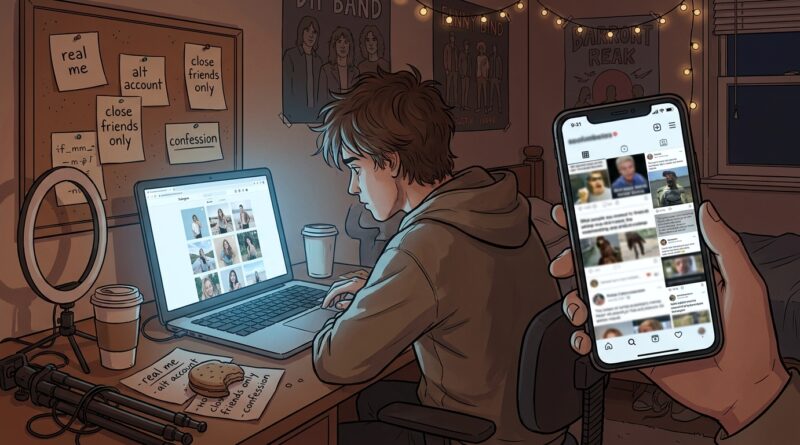
Inside TikTok’s ‘Second Account Confessional’ Wave: How Throwaway Alt Profiles Quietly Became Gen Z’s Realest New Safe Space
You know the feeling. You post something honest on your main TikTok, stare at it for ten minutes, then archive it because your coworkers, classmates, cousins and random mutuals do not all need front-row seats to your mini spiral. So when people say “just be authentic online,” it can sound a little ridiculous. Authentic for who, exactly? That tension is a big reason the TikTok second account trend has taken off. Gen Z is not giving up on sharing. They are just moving the real stuff to quieter corners. These second accounts, alt profiles and burner handles have turned into low-pressure confession booths where people can be funnier, sadder, weirder and more honest than they would ever dare on their polished main. If you want to understand where internet culture is actually forming in 2026, this is one of the clearest places to look. The real signal is often hiding in the side account, not the spotlight.
⚡ In a Hurry? Key Takeaways
- The TikTok second account trend is where many users post their most honest, low-stakes and culturally revealing content.
- Track alts by watching for phrases like “real acc,” “spam,” “dump,” “priv,” and looser editing styles that feel more like a group chat than a content strategy.
- These spaces matter because trends often appear here first, but they only stay useful if people join without turning them into performance zones.
What the TikTok second account trend actually is
A second TikTok account is exactly what it sounds like. It is a side profile separate from someone’s polished main account. But culturally, it does a lot more work than that.
For some people, it is a private-ish dump account for close mutuals. For others, it is a semi-anonymous confessional where they post bad outfits, half-formed thoughts, voiceovers recorded while crying, niche jokes, ugly selfies, relationship updates and tiny life observations that would feel too exposed on the main feed.
The point is not perfect privacy. Most of these accounts are still discoverable. The point is reduced pressure.
That change in pressure changes the content. A lot.
Why people feel safer on alts than on their main
Your main account usually carries baggage. It has your face, your name, your old posts, your school friends, your ex, your aunt and maybe even strangers who only know you through one version of yourself. That creates an audience collapse problem. Too many people, too many expectations, one tiny upload button.
A second account shrinks that feeling, even if the follower count is not tiny. It signals a different social contract. People expect less polish. Less consistency. Less brand management.
Less personal branding, more emotional breathing room
On a main account, every post can feel like it has to fit the story of who you are. Funny girl. Fashion guy. Clean-girl routine person. Smart political explainer. Once that identity hardens, posting anything off-script starts to feel risky.
On an alt, contradiction is allowed. You can be glamorous one day and unhinged the next. You can post a serious thought right next to a blurry meme and a badly lit room tour. That flexibility is the appeal.
The audience feels smaller, even when it is not
People often talk about alts as if they are private diaries. Usually, they are not. But they feel more intimate because they are framed that way. The bio might say “real account” or “spam.” The profile picture may be random. The editing is rough. The captions are short, ironic or weirdly sincere.
Those cues tell viewers, “This is not the showroom. This is the back room.”
Why this trend matters more than it first appears
If you only watch what creators officially publish on their main accounts, you are often seeing the final draft. The TikTok second account trend is where you catch the sketchbook.
That matters if you care about internet culture, because early versions of new aesthetics, jokes and emotional tones often show up in these lower-pressure spaces first. You see people testing language before it gets copied to death. You see editing styles before brands flatten them. You see moods before they become named trends.
That is one reason this moment connects with the burnout people feel around over-optimized feeds. Users are tired of content that looks like it passed through six rounds of approval. They want posts that feel alive.
You can see a similar hunger for emotional reset in Inside TikTok’s ‘Bring Back 2016’ Wave: How Retro Feeds Quietly Became Gen Z’s Easiest New Personality Reset, where the appeal is also about stepping away from polished sameness and back toward looser, more personal posting habits.
The telltale signs you are looking at second account culture
Not every second account looks the same, but there are patterns.
1. Language that signals intimacy
Watch for labels like “spam,” “priv,” “dump,” “alt,” “real acc,” “for the girls,” “if you found this no you didn’t,” or “talking to the wall again.” These phrases lower the stakes and suggest the account is a semi-contained space.
2. Messier visual style
Main accounts often have cleaner hooks, stronger lighting, trend-aware pacing and more obvious attempts to hold attention. Alt posts are usually rougher. Front camera. Bedroom lighting. Little or no edit. Awkward pauses left in.
That roughness is not a bug. It is part of the trust signal.
3. Contradictory posting
A second account may bounce between jokes, confessions, outfit checks, niche fandom references and genuine sadness in the span of five posts. That tonal whiplash is often a clue that the user is not trying to maintain one neat identity.
4. Smaller but louder comment sections
The comments on these accounts often read like mutual aid, group chat banter or collective processing. Less “slay.” More “wait this is exactly how I feel.” That emotional recognition is a big part of why people come back.
What trend-watchers should pay attention to
If you want to spot what is rising early, second accounts are useful. But you have to watch differently.
Track tone before format
A lot of people hunt for trends by asking, “What sound is everyone using?” That still matters, but in alt spaces, the stronger clue is often tone. Are people getting more deadpan? More diary-like? More anti-aesthetic? More casually vulnerable? Tone shifts usually come before the polished trend package.
Notice repeated micro-phrases
The TikTok second account trend produces tiny bits of language that spread fast. Caption structures. Apology jokes. Dry confession formats. Strange one-liners. When a phrase keeps showing up in side-account videos, it is often a sign of a bigger mood forming.
Watch what people stop trying to hide
Sometimes the trend is not a new visual at all. It is a new comfort level. People become more willing to post bad skin days, awkward rooms, confused opinions, average outfits and unclear life plans. That willingness can signal a broader cultural turn away from image control.
How to participate without ruining the vibe
This part matters. Every intimate internet space risks getting flattened the second people treat it like a content mine.
Do not barge in like a reporter with a flashlight
If you find an alt account culture pocket, resist the urge to announce it, over-explain it or copy it too aggressively. Nothing kills a soft, human corner faster than turning it into an obvious strategy.
Match the energy
If the space feels like a group chat, act like you are in a group chat. Comment like a person, not a brand intern. Keep it light. Keep it respectful. Read the room.
Do not mistake vulnerability for access
Just because someone posts something raw does not mean they want interrogation. A confessional tone is not an invitation to cross boundaries. The best participants understand that intimacy online is often partial, not total.
Why brands and bigger creators struggle here
Second account culture is attractive because it feels real. That also makes it hard to fake.
Once a brand tries to bottle the look, the whole thing usually stiffens. Forced “casual” posting is easy to spot. So is strategic messiness. The same goes for creators who suddenly invent a “real side” because authenticity is performing well.
That does not mean bigger accounts cannot join the mood. They can. But they need to relax their grip. Less presentation. More observation. Less self-mythology. More actual personality.
Safety, privacy and the illusion of invisibility
One reality check. A second account can feel hidden without being hidden at all.
If someone follows your alt, screenshots your post or shares your handle, that content can travel. TikTok’s design does not magically make vulnerability safe. It just makes it feel less public in the moment.
Good habits for users
Use a different username if you want distance from your main. Check follower settings. Be careful with location clues, school details and workplace references. Think twice before posting during emotional peaks if you know you tend to regret it later.
The best alt accounts are honest, not reckless.
So, is this just a phase?
Parts of it will fade. The exact slang will change. The account labels will shift. Some alts will turn into mains, and some will disappear overnight. But the need behind the TikTok second account trend is not going anywhere.
People want room to be unfinished in public. They want online spaces where not every post has to support a polished identity. They want to test thoughts before turning them into declarations. That need is bigger than one app and bigger than one cycle.
As long as the main feed feels like a stage, people will keep building side doors.
At a Glance: Comparison
| Feature/Aspect | Details | Verdict |
|---|---|---|
| Main account posting | More polished, broader audience, heavier identity pressure, stronger personal brand concerns. | Good for reach, bad for low-stakes honesty. |
| Second account posting | Looser editing, narrower social contract, more confessional tone, more experimentation with mood and language. | Best place to spot real-time cultural shifts early. |
| Trend-watching value | Reveals emerging aesthetics, meme formats and emotional styles before they hit mainstream creator feeds. | High value, if you observe without overexposing the space. |
Conclusion
The biggest stories on TikTok are not always the loudest ones. More and more, they are hiding in side profiles, burner handles and “this is my real account” alts where people feel safe enough to be inconsistent, unfinished and actually interesting. That is why understanding the TikTok second account trend matters right now. It gives the Its The Trend community a sharper read on where culture is heading before it gets polished into something easier to package. You start seeing new micro-languages, meme formats and aesthetics at the sketch stage instead of the final draft. Just as important, you get a clearer feel for the 2026 mood. People are tired of feeds that feel like brand decks. They want spaces that feel like group chats. If you know how to read these alt spaces, and how to join them without flattening their intimacy, you are not just chasing trends after the fact. You are seeing how they begin.