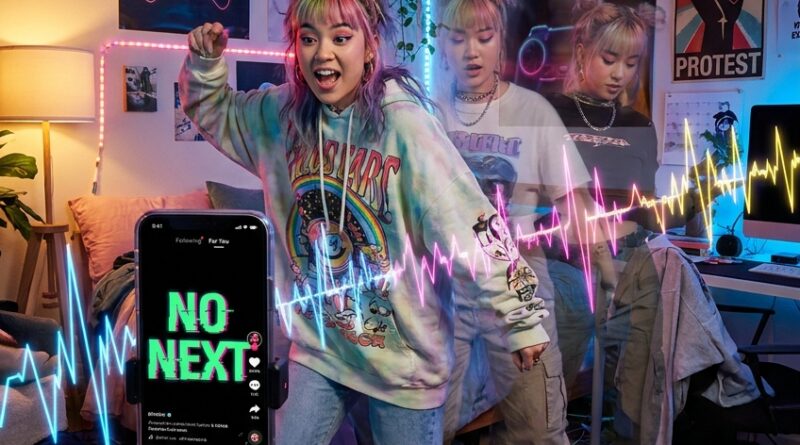
Inside TikTok’s ‘No Next’ Wave: How One Chaotic Sound Quietly Became Gen Z’s New Pass‑Or‑Play Culture Test
You are not behind. The “No Next” posts look messy on purpose, and that is exactly why so many people feel like they missed the joke. One second a creator is showing outfits, opinions, dates, friends, or aesthetic phases. The next they are shouting “No next!” over a blown-out electronic sound and hard-cutting to the next option like they are judging a talent show at warp speed. If you have been wondering whether this is a roast, a ranking game, or just another TikTok bit with invisible rules, you are not alone. The short answer is this: the no next tiktok trend explained in plain English is a public pass-or-play test. Creators use the sound to say what gets skipped, what earns another chance, and what part of culture is officially tired, at least in their corner of the app. Once you see that, the whole thing makes a lot more sense.
⚡ In a Hurry? Key Takeaways
- The “No Next” TikTok trend is a fast yes-or-no culture game where creators publicly reject or approve styles, opinions, people, or habits.
- If you want to join in, keep your video simple. Pick a clear category, make your cuts obvious, and decide whether your tone is playful, shady, or serious before you post.
- Be careful using it on real friends, dating situations, or political identity. What looks funny in draft form can come off mean or exclusionary once it goes live.
What the “No Next” trend actually means
At its core, “No Next” is a sorting tool disguised as a joke.
The audio creates the feel of a live audition. Something appears on screen. The creator reacts. If it fails the vibe check, it gets hit with “No next!” and the clip moves on fast. If it passes, the creator may linger, nod, point, smile, or save the strongest reaction for what deserves another look.
That is why the trend spreads so easily. It does not need a dance. It does not need fancy editing. It only needs judgment.
And on TikTok, judgment travels fast.
Why this trend feels bigger than a normal meme
Most trends ask you to copy a format. This one asks you to reveal your taste.
That is a big difference. A dance trend says, “Can you do this too?” A “No Next” post says, “Here is what I accept, reject, or find embarrassing in 2026.” That turns a silly sound into a social filter.
People are using it for:
- Outfits and beauty looks
- Dating types and red flags
- Friend group behavior
- Microtrends and aesthetics
- Hot takes about music, politics, and internet culture
So yes, it is funny. But it is also a public ranking system. That is why it can feel weirdly intense for a clip that lasts seconds.
The hidden rules people are following
1. Speed matters
The cuts are quick because the point is instinct. You are not meant to sound careful and balanced. You are meant to look immediate, almost impulsive.
2. Confidence matters more than fairness
The trend rewards clear calls. Even if people disagree, strong opinions perform better than soft maybes.
3. The category has to be obvious
Good examples are “first date outfits,” “things men say on podcasts,” “friend behaviors after a breakup,” or “2024 trends we are still dragging into 2026.” If viewers have to guess the topic, the joke falls flat.
4. Mean can spread faster than clever
This is where people get in trouble. The format naturally pushes creators toward sharper, harsher judgments. A fun ranking video can turn into a pile-on very quickly.
Why Gen Z is using this sound as a culture test
Because it is efficient.
A single “No next” can say, “This trend is over.” It can also say, “I do not trust this type of person,” or “This opinion should not move forward.” That makes it a kind of social shortcut. People do not need a full essay. They can post a 12-second clip and let everyone know where they stand.
That is also why older viewers or casual users can feel lost. The format looks random, but it is really a compact status update on taste, identity, and belonging.
We have seen this happen before on TikTok, where entertainment formats slowly become ways to test social behavior. If you noticed that shift in live roleplay and comment-driven performance, you will probably recognize the same pattern in Inside TikTok’s ‘NPC Story Stream’ Wave: How Live Roleplay Characters Quietly Turned Comment Sections Into 24/7 Interactive TV. Different format, same basic idea. TikTok loves turning participation into social sorting.
How to tell whether a “No Next” video is playful, serious, or risky
Not all versions of the trend are doing the same job.
Playful versions
These are usually about low-stakes things. Shoes. Hair eras. Cringey captions. Favorite snacks. Reality show contestants. The creator is inviting debate, not trying to exile someone from society.
Serious versions
These move into dating standards, friendship expectations, class signals, politics, or gender behavior. Here the sound stops being just funny and starts acting like a public line in the sand.
Risky versions
If the creator is judging specific people, mocking someone’s appearance, or reducing real-world issues to rapid-fire rejection, the format can turn ugly fast. This is where viewers start arguing in the comments about bullying, coded language, or fake inclusivity.
How to use the trend without looking like you misunderstood it
If you want to post, keep it clean and intentional.
Pick one lane
Do not mix “funny outfit ranking” with “deep moral judgment” in the same video. Choose a lane so viewers know how to read your tone.
Use labels on screen
Add short text for each item you are judging. It helps people follow the cuts, especially if they are watching without sound at first.
Make your reaction readable
The point is the verdict. If your face and cuts do not clearly show pass, reject, or hesitation, the format loses its punch.
Avoid targeting one real person
This trend works best on categories, not personal callouts. “Men who still text ‘wyd’ at midnight” is safer than dragging your actual ex by name.
Know your audience
Your close mutuals may read the joke one way. A wider audience may read it very differently. TikTok tends to strip context out of everything.
If you are using “No Next” for brands, creators, or commentary
This trend is surprisingly useful if you use it carefully.
Creators can use it to show changing audience taste. Small businesses can use it to compare product styles. Commentators can use it to explain which trends are fading and which ones still have energy.
The trick is not to sound like an ad. “No next” works because it feels blunt and social, not polished and corporate. If a brand tries too hard, people can smell it immediately.
What this trend says about internet culture right now
People are tired of pretending everything deserves equal enthusiasm.
That is the real story here. The “No Next” wave gives users a tiny, dramatic way to decide what moves forward and what gets left behind. It is a reaction to overload. Too many trends. Too many aesthetics. Too many opinions. The sound lets people cut through the mess and say, “Nope, not carrying that into the next cycle.”
It also shows how online identity keeps getting more public. Instead of quietly liking or ignoring something, people are now expected to announce their standards in a shareable format.
How to read your own feed through the trend
Here is the useful part. Do not just ask whether the trend is funny. Ask what your feed keeps rejecting.
Are creators saying “no next” to polished influencer style and returning to messy personal taste? Are they rejecting hookup culture and reviving old-school romance talk? Are they mocking performative activism while rewarding more direct honesty?
Those patterns matter. They tell you what your corner of the internet is trying to keep, cancel, or bring back.
That is why this trend is more than background noise. It is a quick map of shifting group values.
At a Glance: Comparison
| Feature/Aspect | Details | Verdict |
|---|---|---|
| What the trend does | Turns quick reactions into a public pass-or-play decision about trends, people, habits, or opinions. | More social test than simple meme |
| Best way to post it | Use one clear category, obvious text labels, fast cuts, and a tone that matches the topic. | Works best when focused and easy to read |
| Main risk | Can slide from funny ranking into public shaming, coded exclusion, or unnecessary friend drama. | Use with care, especially with real people |
Conclusion
The no next tiktok trend explained simply is this: it is a tiny sorting game that lets people decide what still deserves a “next” in 2026. That sounds small, but it is not. This chaotic audio clip has become a fast pass-or-play button for taste, identity, friendships, and even politics. Once you understand the format, you can do more than watch it. You can read what your feed is trying to protect, reject, or revive. And if you want to post your own version, you do not need to be early. You just need to be clear about what you are really judging, and whether your video is inviting conversation or just starting a pile-on. That is the real value of this trend. It is not only a meme recap. It is a surprisingly useful way to map what your corner of the internet plans to keep, cancel, or resurrect next.