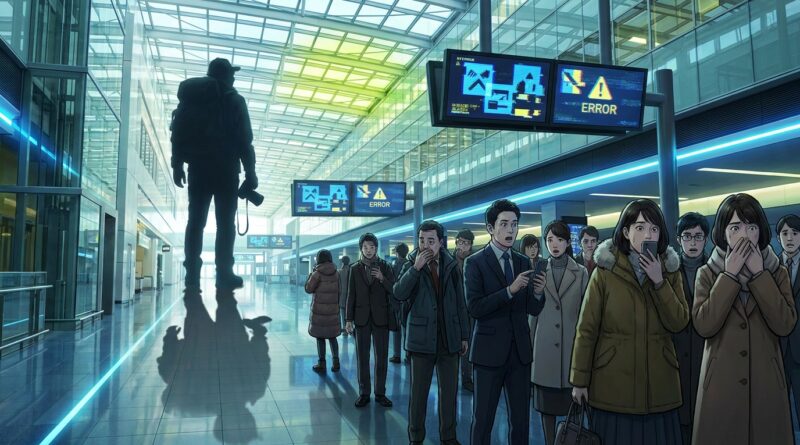
Inside TikTok’s ‘Just Arrived In Japan’ Wave: How AI Travel Nightmares Quietly Became Gen Z’s New Way To Roast Main Character Tourism
You open TikTok, see the same cursed airport image again, and immediately feel behind. Is the just arrived in japan meme making fun of tourists, AI slop, racism, influencer culture, or all four at once? That confusion is the point. The format spread because it looks instantly familiar. A smug arrival post. An exaggerated “main character” traveler. A chaotic image that feels just real enough to pass in a fast scroll. Then people started remixing it into a roast of obnoxious travel content, performative culture shock, and the kind of tourist behavior that treats a country like a theme park. The problem is that these jokes can turn fast. What starts as critique can slide into lazy mockery of real bodies, accents, and places. If you want to understand the meme without becoming tomorrow’s cringe screenshot, you need to know what it is actually doing, why it spread so fast, and how to post about it without missing the whole point.
⚡ In a Hurry? Key Takeaways
- The just arrived in japan meme is less about Japan itself and more about roasting AI-made travel brag posts and “main character tourist” behavior.
- If you remix it, aim your joke at the performance, the caption style, or the fake AI setup. Not at real people’s bodies, ethnicity, or disability.
- This meme is a good warning sign for future trends. Fast viral AI images can shift from satire to bullying in hours, so context matters before you repost.
What the “Just Arrived in Japan” meme actually is
At its core, the just arrived in japan meme is an AI-image joke format built around fake travel arrival posts.
Usually the image shows an airport or transit setting, a tourist-like figure, and some detail that feels off. Maybe it is too exaggerated. Maybe the pose screams influencer. Maybe the image is visibly AI-generated in that uncanny, greasy, slightly broken way that makes your brain go, “Hang on.”
The caption does most of the work. “Just arrived in Japan” sounds innocent, but online it quickly became shorthand for a very specific type of person. Someone announcing their presence like they are the star of the country they just landed in.
That is why the meme took off. It is not really about travel advice or Japan. It is about mocking a style of online self-presentation.
Why people latched onto it so fast
This meme hit three internet nerves at once.
1. AI images are now good enough to spread before anyone checks them
The image does not need to be perfect. It just needs to survive a two-second scroll. That is enough for people to screenshot it, caption it, repost it, and add their own meaning.
Once that happens, the original source almost stops mattering. The format becomes the story.
2. Gen Z loves calling out “main character tourism”
There is already a huge appetite online for making fun of tourists who act like local people are background actors in their personal movie.
Think loud public filming, fake cultural awe, weirdly proud ignorance, or those captions that act like arriving somewhere is a spiritual gift to the destination.
The meme gave people a quick visual way to dunk on that behavior.
3. The internet loves turning one weird image into a universal reaction format
This is how modern memes move now. One post lands. People identify the emotional template. Then it escapes the original context and starts doing other jobs.
Within a day, “just arrived in japan” can become “just arrived in corporate training,” “just arrived in the group chat,” or “just arrived in my flop era.”
That speed is why people feel lost so quickly. You are not imagining it. The rules changed mid-scroll.
Why Japan became the setting, and why that matters
Japan already carries a lot of internet baggage. For years, it has been treated online as a fantasy destination, a content backdrop, and a shortcut for “look how cultured and quirky I am.”
That makes it perfect meme fuel, but also risky.
When people use Japan as a prop for a joke, they are often not joking about Japan itself. They are joking about tourists projecting weird fantasies onto it. The problem is that this can get muddy fast. Viewers who miss that layer can slide into cheap stereotypes, anti-Asian jokes, or “foreign place = weird place” posting.
So yes, the just arrived in japan meme can be sharp satire. It can also get ugly in a hurry if the joke stops being about the performance and starts being about the place or the people.
How the format jumped from one TikTok to everywhere
The spread pattern was classic 2020s internet.
Step one: A visually strange post grabs attention
AI images are perfect for this because they feel both specific and disposable. Nobody needs a lot of setup to react.
Step two: Commenters write the joke for everyone else
Most meme formats are born in the comments before they are born in reposts. Someone identifies the vibe. Someone else names the type of person being mocked. Suddenly everyone sees the same thing.
Step three: Screenshots leave the platform
TikTok sends it to X. X sends it to Instagram. Instagram sends it to group chats. Group chats create the cleanest version of the joke. Then creators bring that polished version back to TikTok as if it was always obvious.
Step four: The meme becomes a template
Once people can swap in a different location, character, or caption and still get a laugh, the original image no longer matters. Now it is a machine.
That is when brands usually show up late and ruin the room.
What the meme is really roasting
If you strip away the AI weirdness, this meme is mocking three things.
Performative travel
Not travel itself. The performance of travel as status. The kind where the trip matters less than announcing you are the kind of person who takes that trip.
Fake cultural intimacy
The meme also pokes at people who arrive somewhere and instantly talk like experts, trend forecasters, or honorary locals.
Influencer framing
A lot of these jokes work because the image looks like content before it looks like an experience. It is a post first, a moment second.
That is why the meme resonates even with people who have never been to Japan and do not care about travel content. They recognize the personality type.
Where it crosses the line
This is the part people skip when a meme is still hot.
The just arrived in japan meme can move from critique to cruelty with almost no warning. Especially when users start piling on a person instead of a format.
Watch for these red flags:
Body-based mockery
If the laugh depends on how someone looks rather than what the post is saying, the meme has probably curdled.
Racialized jokes
If the “Japan” part becomes an excuse for lazy Asian stereotypes, the satire is gone.
Dogpiling on a real person
If there is an identifiable original poster, thousands of quote-posts can turn a format joke into mass humiliation fast.
Mocking disability, language, or neurodivergence by accident
Internet crowds are bad at nuance. A pose, expression, or writing style can become meme fodder before anyone stops to ask what they are actually targeting.
If your joke needs a vulnerable trait to land, it is not clever. It is just easier.
How to post about it without becoming the problem
If you are a creator, social manager, or just Very Online, here is the simple playbook.
Aim up, not down
Mock the behavior, the caption voice, the influencer script, or the AI fakery. Leave ordinary people and random physical traits out of it.
Make the target obvious
Good satire tells the audience what it is criticizing. If your post is vague, people will supply their own worst reading.
For example, “POV: you booked a trip so you can cosplay spiritual enlightenment in 4K” is clearer than “Just arrived in Japan 😍” slapped on a random image.
Use the meme to say something new
The strongest remixes do not simply repeat the cursed image. They turn it toward a sharper point. Travel bragging. AI fakery. Late capitalism. Brand voice. Pick one.
Do not pretend the image is real if it is AI
You do not need a huge disclaimer speech, but do not intentionally frame AI slop as authentic documentary evidence. That is how culture-war nonsense starts.
If the pile-on has already started, maybe do not add your brick
Sometimes the smartest post is no post. Especially if the original person is already being swarmed.
How to tell whether a viral AI meme is still satire or already sludge
Here is a quick gut check.
- If the joke still works without a real person attached, it is probably satire.
- If people are mostly remixing the structure, it is still a meme.
- If replies are focused on the subject’s body or identity, it has turned into bullying.
- If brands are posting it with no idea what is being criticized, the format is entering its dead phase.
That last one sounds silly, but it is often true. Once a meme gets flattened into “haha weird travel pic,” all the original bite drains out.
Why this meme matters beyond one weird day online
The just arrived in japan meme is useful because it shows how internet literacy works now.
You are no longer just reading captions. You are reading image realism, platform migration, irony level, audience intent, and whether the joke is still punching in the right direction.
That sounds like a lot, but most people do it instinctively. The problem is that fast-moving AI memes punish hesitation. If you are five hours late, you can already be using the format wrong.
That is why it helps to slow down for one minute and ask, “What exactly are people laughing at?” Not what they are posting. What they are laughing at.
If you want to join in, here are safer angles that still work
You do not need to avoid the meme entirely. You just need to steer it.
Roast the travel caption voice
Make fun of “healing journey” captions, fake authenticity, or over-scripted arrival posts.
Roast AI image logic
Point out the warped luggage, nonsense signs, impossible limbs, or dead-eyed airport glamour. That keeps the target on the fake image itself.
Roast content culture
Use the format to joke about turning every human experience into branding, self-mythology, or a carousel post.
Roast yourself
Self-own versions are often the safest and funniest. “Just arrived in Japan” over a picture of you opening Duolingo for three minutes has a very different energy from posting a random stranger for ridicule.
At a Glance: Comparison
| Feature/Aspect | Details | Verdict |
|---|---|---|
| What the meme targets | Performative travel posts, influencer self-importance, and AI-generated fake culture clash vibes | Fair game when the joke stays focused on behavior |
| Why it spread so fast | Instantly legible image, easy caption template, and cross-platform screenshot culture | A textbook fast-cycle meme |
| Biggest risk | Sliding from satire into body-shaming, racial stereotypes, or dogpiling on real people | Post carefully or sit it out |
Conclusion
The just arrived in japan meme is funny because it exposes something real. How quickly AI can fake a whole social situation. How ready people are to clown on obnoxious tourist behavior. And how fast the internet can turn a human image into a public punching bag. If you understand those three pressures, you can read the meme properly instead of just copying the surface. That matters. The next viral AI image is probably already loading into someone’s feed right now. If you can spot who the joke is really about, remix it without punching down, and avoid helping a dogpile, you are ahead of most of the internet. That is the actual win here. Not being first to post, but being smart enough to keep the joke sharp before brands, boomers, and bad-faith accounts flatten it into something ugly.