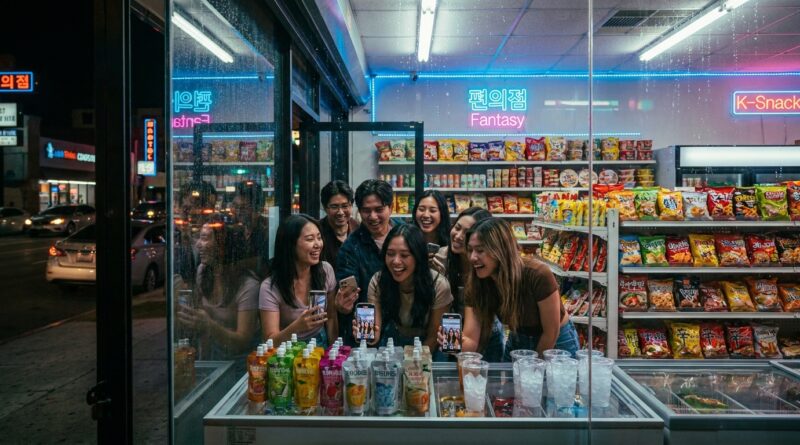
Inside TikTok’s ‘K‑Convenience Store Fantasy’ Wave: How Korean Snack Runs Quietly Became Gen Z’s New Third Place Online
You are not imagining it. One minute your feed is regular food videos, and the next it is glowing shelves, perfect triangle kimbap, cup ice packed to the top, and someone mixing a peach soda pouch like it is the most soothing thing on earth. It can feel oddly hard to explain why the korean convenience store TikTok trend suddenly seems so big. On the surface, it looks like snack content. But the real draw is bigger. These clips are selling a mood. They turn a cheap store run into a tiny ritual, a safe hangout, and a lifestyle you can step into for five dollars and a phone camera. That is why Gen Z keeps coming back. Korean convenience stores on TikTok are not just about what people eat. They are about where people wish they could be. Cozy, casual, bright, low-pressure, open late, and full of small choices that feel fun instead of stressful.
⚡ In a Hurry? Key Takeaways
- The korean convenience store TikTok trend is really about Gen Z craving a cheap, cozy, low-stress “third place,” not just viral snacks.
- If you want to read the trend early, watch for repeat visual cues like DIY drink stations, late-night snack runs, and creators treating stores like hangout spots.
- Not every copycat store will feel the same. The real value is convenience plus comfort, not just neon signs and imported candy at marked-up prices.
Why this suddenly feels like it is everywhere
Short answer. The format is perfect for short-form video.
Korean convenience store clips are built for TikTok and Instagram. They have bright packaging, satisfying routines, tiny decisions, and a beginning-middle-end story in under a minute. Walk in. Pick snacks. Make a pouch drink. Heat up ramen. Sit down. Done. That is a complete little narrative, which is exactly what performs well on a For You Page.
It also helps that chains like CU and GS25 already look camera-ready. The lighting is clean. The shelves are dense with color. The products often feel hyper-specific and collectible. Even the ordinary stuff looks a bit cinematic when filmed well.
So yes, it is food content. But it is food content that behaves like comfort content.
What people are actually watching
1. DIY pouch drinks and ice-cup mixing
This is one of the biggest hooks. A creator grabs a cup of ice, pours in a juice pouch or canned drink, maybe adds jelly or another flavor, then takes that first sip. It is simple, cheap, and oddly calming to watch. It gives viewers a tiny sense of participation. You can imagine making it yourself.
2. Snack hauls that feel like treasure hunts
These videos are less about hunger and more about discovery. New chips. Limited-edition ice cream. Fancy convenience-store desserts. Instant noodles that look restaurant-level on camera. Viewers are not just seeing products. They are seeing a mini adventure with a low price of entry.
3. The store as a setting, not just a shop
This part matters most. In a lot of these clips, the store is framed like a place to breathe. Bright, clean, open late, socially easy. No reservation needed. No pressure to spend big. No dress code. No big plan. Just show up, browse, sit, snack, talk.
That is a very powerful fantasy in 2026.
Why Gen Z connects with it so strongly
Because a lot of social spaces now feel expensive, crowded, awkward, or over-curated.
Cafes can be pricey. Bars are not for everyone. Malls are weaker than they used to be. Public spaces can feel limited, heavily watched, or simply not built for hanging out without spending much money.
The korean convenience store TikTok trend offers the opposite picture. It says you can still have a social ritual that is casual and affordable. You can have a place that feels safe enough to linger in, but not demanding enough to drain your energy.
That is why this trend hits deeper than “look at this cool candy.” It taps into a real hunger for third places. Places that are not home and not work or school, where you can just exist for a while.
Why this works so well online
There is a neat loop happening.
The store is already designed around convenience and impulse discovery. TikTok is also built around convenience and impulse discovery. So the logic of the space matches the logic of the app.
You scroll. You spot something interesting. You want to try it. You share your own version. Someone else copies it. The trend grows.
That is how a local retail format can become a global script very fast. Not because everyone suddenly became experts in Korean retail culture, but because the format is easy to understand visually. Bright store. Cheap treat. Tiny ritual. Good vibe. Repeat.
Why it feels bigger than food porn
Because it is selling emotional infrastructure.
That sounds fancy, but the idea is simple. These videos show viewers a place where everyday life seems smoother. You can grab a late-night snack without a hassle. You can sit down without being rushed. You can make something small feel special. For a generation that lives a lot of life through screens, that image is powerful.
It also gives people a way to perform taste without looking too try-hard. A Korean convenience store haul says, “I know what is cool, but I am also casual about it.” That balance is catnip for social media.
What changed this week in the US
The crossover is getting more obvious. LA’s Mokja has been styled in a way that clearly speaks the language of the viral Korean convenience store look. That matters because it shows the trend is moving from screen culture into physical retail in the US.
Brands and store owners are not just noticing the videos. They are trying to bottle the feeling. The neon. The imported snacks. The self-serve drink energy. The late-night coziness. The idea that a store can be a vibe first and a transaction second.
That is usually how you know an internet trend has legs. It stops being just content and starts shaping real spaces.
But is this an accurate picture of real Korean convenience store culture?
Partly yes, partly no.
Korean convenience stores really are a meaningful part of everyday life for many people. They are practical, accessible, and often more woven into daily routines than many non-Korean viewers realize. But TikTok always edits reality. It amplifies the cutest products, the prettiest lighting, the calmest moments, and the most photogenic rituals.
So what viewers get is a polished version. Not fake, exactly. Just selective.
That is worth remembering if copycat stores start charging premium prices for what is supposed to feel casual and democratic.
What brands are learning from this
Low-cost luxury wins
People still want treats. They just want treats that feel reachable. A pouch drink, novelty ice cream, or dressed-up instant ramen is much easier to justify than a full expensive night out.
Ritual beats product
The item alone is not the whole story. The act of choosing it, opening it, mixing it, heating it, and eating it in a specific place is what makes it memorable.
Aesthetic convenience matters
Convenience used to mean speed only. Now it also means a space that photographs well, feels calm, and signals belonging.
How to tell if this trend still has room to grow
If you want to spot where this goes next, watch for three things.
1. More local versions
If more US cities start opening Korean-inspired snack marts or convenience spaces with seating and DIY drink stations, that is a sign the trend is becoming a business model.
2. More creator rituals
When viewers can predict the format and still want to watch, that means the ritual is strong. Think “my go-to combo,” “late-night run,” or “build a drink with me.”
3. More mainstream brand copycats
If non-Korean chains start borrowing the visual language, the self-mix format, or the “mini adventure” feel, then the aesthetic has escaped its original niche.
What this says about the future of third places
This is the part most trend recaps miss.
Gen Z is not only looking for places to buy things. They are looking for places that feel emotionally usable. Somewhere low-stakes. Somewhere that can be solo or social. Somewhere that gives a tiny sense of order and pleasure in a pretty chaotic media environment.
That is why the korean convenience store TikTok trend matters. It suggests the next wave of third places may not look like old-school hangouts at all. They may be retail spaces with seating. Hybrid snack bars. Highly filmable mini-environments designed for both real-life use and digital circulation.
In other words, the future hangout may need to work in person and on camera at the same time.
How not to get fooled by the hype
If you visit one of these spots or see a copycat near you, ask a few practical questions.
- Is it actually affordable, or just styled to look affordable?
- Can people comfortably linger, or is it mostly a backdrop for photos?
- Is there real convenience, or just imported novelty?
- Does it feel welcoming, or performatively trendy?
The best versions will feel easy, not forced.
At a Glance: Comparison
| Feature/Aspect | Details | Verdict |
|---|---|---|
| Main appeal | Cheap snacks, bright visuals, DIY drinks, and a calm late-night hangout mood | Much bigger than a food fad |
| Why it spreads on TikTok | Every visit creates a short, satisfying story that is easy to film and copy | Built for the For You Page |
| What it means culturally | Gen Z is treating everyday retail spaces as identity markers and substitute third places | A useful signal for where youth culture is heading |
Conclusion
If your feed has quietly turned into a Korean snack aisle, there is a reason. Right now TikTok and Instagram are packed with Korean convenience store clips because they offer more than snack hacks. They offer a fantasy of ease. DIY ice-cup drinks, treasure-hunt hauls, and cozy 24/7 store runs make ordinary errands look social, safe, and a little magical. With LA’s Mokja already translating that energy into a US setting, and CU and GS25 style content still pumping fresh visuals into the algorithm, this is a live example of how fast a local format can become a global cultural script. The useful takeaway is not just “this looks fun.” It is that Gen Z keeps showing us what kinds of spaces they want more of. Affordable. casual. camera-friendly. low-pressure. If you can spot that early, you are not just watching a trend. You are watching the next version of everyday social life take shape.