Inside TikTok’s ‘Cat In The Hat Panic Edits’ Wave: How AI Urban Legends Quietly Became Gen Z’s New Favorite Horror Game
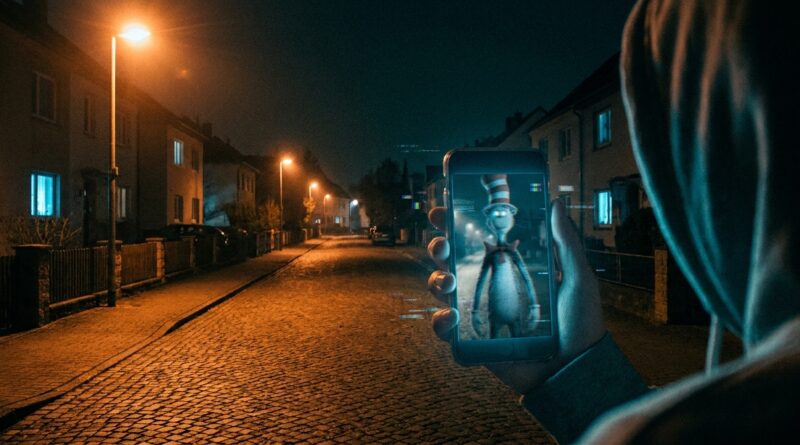
Your feed is not imagining this. One minute you are scrolling past dance clips and outfit hauls, and the next you get shaky nighttime video of a tall, stretched-out Cat in the Hat standing under a streetlight while the caption insists it was caught “near my house” and is “not edited.” That weird stomach-drop feeling is the whole point. The new Cat in the Hat TikTok horror trend taps the same nerve as the killer clown panic years ago, but this version is faster, cheaper, and much easier to fake. AI image tools, simple video editing apps, recycled local-news style captions, and comment boosting can turn a goofy children’s character into a neighborhood threat in a few hours. The result is part joke, part creepypasta, part engagement trap. If you know how these clips are made and pushed, they get a lot less spooky, and a lot easier to spot.
⚡ In a Hurry? Key Takeaways
- The Cat in the Hat TikTok horror trend is usually a manufactured AI-assisted urban legend, not a real public safety threat.
- Check for classic tells like vague location claims, overdramatic captions, repeated footage, and comments trying too hard to sell it as “real.”
- Younger viewers can get genuinely rattled by these clips, so it helps to name the format, explain the trick, and share remixes that are funny or clearly fictional.
Why this trend hits so hard
The character choice is not random. Cat in the Hat already lives in people’s heads as something playful, familiar, and a little chaotic. Stretch that figure to eight feet tall, drop it at the end of a dark suburban street, add grain and bad phone zoom, and your brain does the rest.
That is what makes this format work. It takes a safe childhood image and twists it just enough to feel wrong. Not monster-movie wrong. Neighborhood wrong. Close to home wrong.
For Gen Z, that mix feels familiar. It is meme culture meeting horror language. You are meant to laugh, then zoom in, then read the comments, then maybe send it to a friend with “okay but what if?”
How the Cat in the Hat TikTok horror trend is usually built
Step 1: Start with a cheap scare setup
Most clips use one of a few simple templates. A dark street. A backyard at night. A school parking lot. A Ring camera angle. The footage is often intentionally low quality because blur hides bad editing.
The worse it looks, the easier it is to believe there was “just enough” time to catch something strange.
Step 2: Add the figure
This is where AI and editing apps come in. Some creators use AI image generation to make a creepy Cat in the Hat pose, then composite it into video. Others use motion tracking, basic masking, or prebuilt effects from mobile editors. You do not need a Hollywood workflow. You need something unsettling for two seconds.
The figure is usually too tall, too still, or slightly off in proportion. Oddly, those flaws help. People read them as eerie instead of fake.
Step 3: Sell it with a caption
The caption does a lot of the heavy lifting. Think “caught this outside my cousin’s apartment,” “people in my town are seeing this,” or “tell me why this was standing at the end of our block at 2 a.m.”
Notice the pattern. Specific enough to feel local. Vague enough that no one can verify it.
Step 4: Use comments as part of the performance
This is where comment farms and coordinated engagement matter. A scary clip gets stronger when the replies say things like “we saw this in Ohio too,” “delete this now,” or “that thing has been spotted for weeks.” Even if those comments are fake, planted, or copied from other videos, they create social proof.
People stop asking “is this edited?” and start asking “wait, is this spreading?”
Why AI urban legends spread faster than old-school creepypasta
Old internet urban legends needed time. Someone had to write them. People had to repost them. Rumors moved in chunks.
AI-assisted folklore moves like a meme. One creator posts a creepy Cat clip. Another stitches it with “different angle from my area.” Someone else does a fake news report. Then parody accounts join in. Then copycats flood your For You Page.
The line between joke, roleplay, and deliberate deception gets blurry fast.
We have seen a similar pattern in other strange TikTok world-building trends, including Inside TikTok’s ‘Folk Valley’ Fake‑Town Takeover: How One Uncanny Cat Edit Quietly Turned Imaginary Places Into 2026’s Weirdest New Coping Mechanism. Different tone, same engine. A weird fictional idea gets repeated so often, and with such confidence, that it starts to feel half real.
Why people keep watching even when they know it is fake
Because “fake” does not mean ineffective. Horror has always worked like that. You know the haunted house is staged, but your body still reacts.
TikTok makes that effect stronger for three reasons.
It looks local
A fake monster in a movie is safely somewhere else. A fake monster in a cul-de-sac that looks like yours lands differently.
It feels social
You are not just watching. You are watching other people react, argue, joke, and panic in real time.
It rewards uncertainty
The platform does very well when people linger, replay, zoom, and debate. “Obviously fake” often gets less engagement than “probably fake but weird enough to discuss.”
How these clips get monetized
This is the part worth paying attention to. Manufactured fear is not just internet nonsense. It can be a business model.
Views and creator payouts
Even small pages can turn a recurring horror format into steady traffic. More views can mean more ad-related income, brand attention, or account growth.
Theme-page recycling
A lot of these clips get reposted by faceless meme pages. The original context disappears. The scary claim stays.
Affiliate links and merch
Some accounts use viral horror posts to build audiences, then pivot into selling presets, editing packs, shirts, or random products unrelated to the scare itself.
Account farming
Sometimes the point is not the Cat in the Hat at all. It is building a high-engagement account that can later be repurposed, sold, or used to push something else.
How to spot a manufactured scare quickly
You do not need forensic software. Just look for patterns.
Red flag 1: The location is suspiciously vague
“My town.” “Near my house.” “A few streets over.” Lots of urgency, very little checkable detail.
Red flag 2: The footage is too conveniently bad
Not all grainy video is fake, of course. But many of these edits rely on darkness, digital zoom, compression, and camera shake to hide rough edges.
Red flag 3: The comments are doing scripted theater
If the replies all push the same emotional beat, especially with little real conversation, you may be looking at coordinated engagement or copycat behavior.
Red flag 4: The same monster appears in wildly different places
Once a format catches on, creators in different cities start claiming the exact same figure. That is not a spreading threat. That is a spreading template.
Red flag 5: Nobody shows the boring part
Real local incidents usually come with context. Time, place, follow-up, other angles, police statements, neighborhood groups. Fake urban legend clips usually cut off before any of that could appear.
What to tell younger viewers who are actually scared
This part matters. A lot of adults brush these trends off as obvious jokes, but younger teens do not always process them that way, especially late at night, alone, with autoplay doing its thing.
Try this instead of eye-rolling:
Name the format
Call it what it is. “This is a horror edit” or “this is an AI urban legend.” Giving it a label takes away some of the power.
Explain the trick simply
Show how captions, blur, comments, and repetition create the feeling of truth. Once they see the recipe, the fear usually drops.
Check whether the account posts only bait
If every video is “caught on camera,” “you won’t believe this,” or “100% real,” that tells you a lot.
Clean up the feed
Use Not Interested. Skip quickly. Avoid reading every panic comment. TikTok learns from hesitation.
How creators can join the trend without feeding misinformation
Not every Cat in the Hat horror post is malicious. Some are genuinely creative. The problem is when creators blur fiction and real-world danger too hard.
If you want to play with the format, you can do it in smarter ways.
Make the fiction clear
You do not need to ruin the joke. A small signal helps. Put “analog horror,” “fiction,” or “VFX test” in the description or hashtags.
Build a world instead of faking a threat
The best versions often feel like mini stories, not neighborhood warning posts.
Credit your process
Behind-the-scenes clips can perform well too. People like seeing how a creepy edit was made.
Do not borrow real local fear
Avoid packaging your fiction as an active public safety alert in a real town, school, or apartment complex. That is where fun turns sloppy.
Why this feels like the killer clown era all over again
If you are old enough to remember the clown panic, the emotional rhythm is almost identical. Strange sightings. Bad footage. Friend-of-a-friend stories. Lots of “just in case” sharing.
The difference is speed. Back then, rumors spread across schools, Facebook posts, and local chatter. Now one creepy visual can get remixed thousands of times before anyone pauses to ask where it came from.
That is why the Cat in the Hat TikTok horror trend matters more than it may seem. It is not just a silly scare. It is a good example of how AI images, low-effort editing, and engagement tactics can turn folklore into a product.
At a Glance: Comparison
| Feature/Aspect | Details | Verdict |
|---|---|---|
| What you are seeing | Grainy “sighting” clips of a creepy Cat in the Hat figure, often framed as local and real | Usually fictional or heavily edited |
| How it spreads | AI visuals, horror edits, stitched reposts, vague captions, and engagement-heavy comments | Built to travel fast and feel believable |
| Best response | Treat it like internet folklore, verify before sharing, and help younger viewers separate fiction from fear bait | Stay curious, not gullible |
Conclusion
The next time a too-tall Cat in the Hat shows up at the end of somebody’s block on your FYP, you do not have to choose between “this is dumb” and “wait, should I be worried?” There is a third option. Understand the format. These AI-assisted urban legends are built from familiar parts. A creepy visual, a fake-local caption, planted social proof, and an algorithm that loves uncertainty. Once you can see those parts, manufactured fear loses a lot of its grip. That is useful for everyone, especially teens and young adults getting pulled between laughing at the meme and wondering if their own neighborhood is unsafe. It also gives smaller creators a better path. They can remix the horror wave creatively, clearly, and on their own terms, instead of becoming unpaid extras in someone else’s engagement farm.