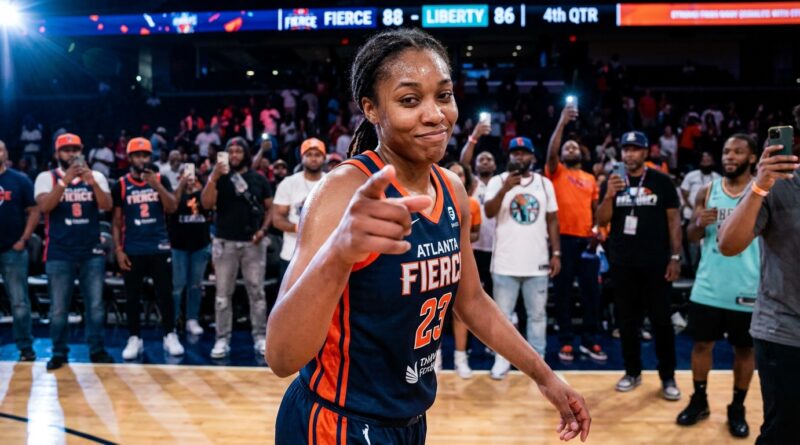
Inside The Sophie Cunningham Pointing Meme Explosion: How One WNBA Screenshot Took Over Your Feed Overnight
If your social feed suddenly looks like Sophie Cunningham is pointing at every bad opinion, awkward text, overdue bill, and office disaster on earth, you are not imagining it. This meme moved fast. Faster than most people could even figure out where the screenshot came from. That is part of why it feels weirdly hard to pin down. One minute it was a WNBA freeze-frame. The next, it turned into a reaction format that worked for sports fans, group chats, politics jokes, workplace posts, and plain old internet nonsense. If you have been trying to understand why this one image broke out so hard, the short answer is simple. It has the perfect face, the perfect gesture, and the perfect amount of built-in attitude. The longer answer is more interesting. This was not just a funny still. It became a piece of internet shorthand almost overnight, and that says a lot about how memes spread now.
⚡ In a Hurry? Key Takeaways
- The Sophie Cunningham pointing meme explained in one line: a WNBA game screenshot became a universal reaction image because the pose instantly communicates “there, that, exactly that” without needing context.
- If you want to keep up, watch the caption pattern. Most versions use her pointing to call out a problem, assign blame, or spotlight something painfully relatable.
- This matters beyond jokes. It is a sign that women’s sports clips are now moving into mainstream meme culture at the same speed as any viral internet moment.
What is the Sophie Cunningham pointing meme, exactly?
At the most basic level, it is a screenshot of WNBA player Sophie Cunningham pointing, paired with captions that turn the image into a reaction. The joke works because the image is readable in a split second. Even if you know nothing about basketball, you can look at it and immediately get the vibe.
She is not just pointing. She looks like she is calling something out. Exposing it. Naming the obvious thing everyone else is pretending not to see. That makes the image flexible, which is the number one trait of a meme that spreads fast.
People started using it to point at bad takes, bad timing, red flags, embarrassing habits, rent due dates, work emails, situationships, and the one friend who always says “we should do brunch” and never books brunch. Once a reaction image can jump from one topic to all topics, it stops being a niche joke and starts becoming a language.
Why did this screenshot spread so quickly?
It tells the whole joke before you read the caption
The best memes do not need much setup. This one is visually complete. The gesture is crisp. The expression carries attitude. The frame feels dramatic enough to matter, but simple enough to edit and repost everywhere.
That matters because social platforms reward speed. If an image makes sense in under a second, people are more likely to share it, remix it, and reuse it.
It is useful, not just funny
A lot of viral images are funny once and then disappear. The Sophie Cunningham pointing meme has staying power because it is useful. It can mean “Look at this.” It can mean “That is the problem.” It can mean “I told you so.” It can mean “This is who did it.”
That range is gold online. A flexible meme survives because different groups can make it their own without breaking the format.
It arrived at the right moment
The internet is always looking for a fresh reaction image. Older ones get tired. New ones are tested in real time. This screenshot landed at a moment when people wanted something direct, expressive, and easy to caption.
At the same time, women’s sports are getting more attention, more clipping, and more casual viewers than before. So the image was not trapped inside sports media. It had a clear path into the wider internet.
Why this feels bigger than a normal sports meme
That is the part many people miss. Yes, this started with a sports image. But the reason it matters is that it escaped sports almost immediately.
Years ago, a moment like this might have stayed inside fan accounts or basketball circles. Now it can hit TikTok, X, Instagram, Threads, Reddit, and private group chats in the same day. Once that happens, the original event almost becomes secondary. The image starts doing a different job.
It becomes shorthand.
That shift is important because it shows how women’s sports can now generate not just highlights, but internet vocabulary. Not “good for women’s sports.” Actual mainstream meme energy. The same kind that used to be reserved for movie stills, reality TV faces, and NBA sideline shots.
How the caption styles mutated in less than 24 hours
This is where the meme really took off. People did not just repeat one joke. They built several mini-formats around the same image.
1. The call-out format
This is the most obvious version. Sophie points at the thing everyone knows is the problem.
Examples in structure, not specific posts: pointing at the broken office printer, the group project slacker, the “low battery” warning, or the person who said “circle back” in a meeting.
2. The relatable dread format
Here, the image points at a looming problem in your own life. Rent. Deadlines. Laundry. Monday morning. A text you forgot to answer three days ago.
This version works because the point is not accusation. It is recognition. The meme says, “Yep, there it is. I see it too.”
3. The bad-take detector format
This is the version that spreads well on fast-moving social platforms. Someone posts a terrible opinion. The meme appears. No long argument needed.
That economy matters online. One screenshot can do the work of a whole paragraph.
4. The fandom remix format
Once a meme gets traction, fandoms jump in. TV fans, music fans, political posters, and office humor accounts all map it onto their own universe. That is when a meme stops belonging to one origin community.
It is also when you know it has gone fully mainstream.
Why Sophie Cunningham specifically fits the meme so well
Not every freeze-frame can do this. The player matters too.
Sophie Cunningham already has a visible, high-energy public presence that translates well into internet culture. She reads as intense, expressive, and confident on camera. That gives the still more force. People are not just sharing a generic sports screenshot. They are sharing a frame with personality baked in.
That personality helps the meme feel less sterile. It feels like a reaction from a real person, not clip-art emotion.
What this says about how memes work now
Memes used to build more slowly. A screenshot would circulate in one corner of the internet, then maybe cross over. Now the cycle is compressed. A post gets clipped, captioned, reposted, stitched, screenshotted again, and fed into recommendation systems that push it far beyond its source audience.
That means a single strong image can go from “sports moment” to “universal reaction format” in hours, not days.
The Sophie Cunningham pointing meme explained this way is less about one joke and more about the modern meme pipeline. First, a visually clear moment appears. Then early adopters test a few caption styles. Then the strongest versions get copied at scale. After that, people who never saw the original event start using the image anyway.
At that point, the meme is self-sustaining.
If you want to use the meme without feeling lost
You do not need to know every variation. Just understand the core emotion. The image works best when it is pointing at something obvious, annoying, overdue, embarrassing, or hilariously true.
A simple rule helps. If your caption could start with “There it is” or “That right there,” you are probably using the format correctly.
Try not to overcomplicate it. The funniest versions are usually the cleanest ones.
Will it last?
Probably not forever in its current peak form. Most reaction memes burn hot. But that does not mean it disappears. Often the image itself survives after the trend cools, becoming a standard response people keep in their meme folder for months.
That is the likely path here. The posting frenzy may calm down, but the screenshot could stick around as a go-to way to call something out quickly.
Why people are paying attention beyond the joke
There is also a bigger cultural layer here. When a WNBA image becomes common reaction language, it signals a shift in who gets seen, clipped, and turned into internet reference points. That visibility matters. It means women’s sports are not only being watched. They are being folded into the everyday social grammar of the internet.
And that is a different level of relevance than a one-off highlight package.
At a Glance: Comparison
| Feature/Aspect | Details | Verdict |
|---|---|---|
| Why it went viral | Clear pointing gesture, expressive face, and easy read even without sports context. | Perfect reaction image material. |
| How people use it | To call out bad takes, spotlight relatable problems, or assign blame in a funny way. | Very flexible, which helps it spread. |
| Why it matters | It shows women’s sports moments can now become cross-platform meme language almost instantly. | Bigger than a one-day sports joke. |
Conclusion
If you felt like this meme appeared out of nowhere and somehow already had ten different meanings by lunchtime, that reaction is fair. The Sophie Cunningham pointing wave moved at internet speed. But once you slow it down, the pattern is easy to see. A strong visual from the WNBA met the internet’s constant hunger for a new reaction image, and people instantly bent it into multiple caption styles that worked far beyond basketball. That is why covering it now matters. It sits right at the meeting point of women’s sports getting real meme-level visibility and the web finding a fresh piece of shorthand everyone can use. Understanding how one screenshot became so many jokes in under a day helps you do more than just watch the trend fly past. It helps you see how culture moves now, and maybe join in before the next freeze-frame takes over your feed.