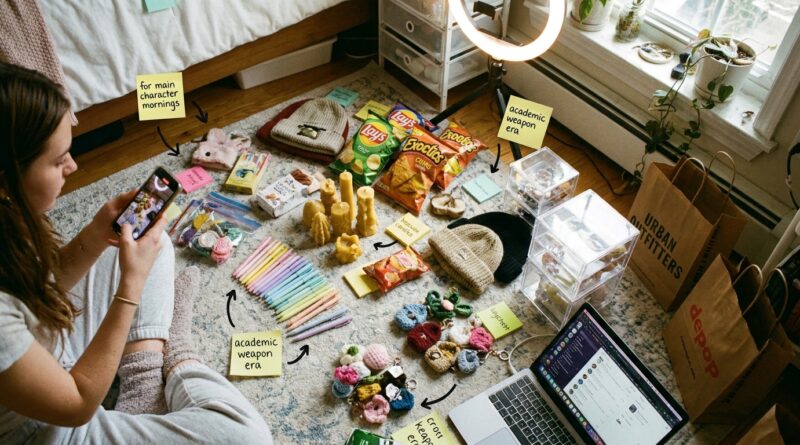
Inside TikTok’s ‘Hyper‑Niche Haul’ Wave: How Ultra‑Specific Shopping Lists Quietly Became Gen Z’s Latest Personality Flex
You are not imagining it. TikTok’s hyper niche haul trend can make a perfectly normal backpack, notebook, or lip balm suddenly feel embarrassingly basic. One creator shows a “back-to-school but only if you’re a library girl with migraines and a film camera” cart, and somehow every tiny item comes with a full personality attached. A striped pencil pouch is not just a pouch anymore. It means you are organized, tasteful, soft-spoken, maybe a little mysterious. That is the trick.
What makes these videos so powerful is that they do not look like old-school bragging. They look helpful. Curated. Even comforting. But under the surface, the TikTok hyper niche haul trend is selling more than products. It is selling an identity script, one oddly specific object at a time. If your feed has started making you feel behind before classes, fall, or even a routine Target run, it helps to know what game you are actually being pulled into. Once you can name it, you can stop letting the algorithm define what “good taste” is supposed to look like for you.
⚡ In a Hurry? Key Takeaways
- The TikTok hyper niche haul trend turns ordinary shopping into an identity test by attaching personality labels to very specific products.
- If a haul makes you want everything at once, pause and split the cart into three lists: need, nice, and pure vibe.
- These videos can be fun inspiration, but they are also designed to trigger FOMO, so treat them like entertainment, not a shopping instruction manual.
What the TikTok hyper niche haul trend actually is
This trend is not just “look what I bought.” It is “look who I am because of what I bought.” That is the key difference.
Traditional hauls were usually broad. Back-to-school supplies. Fall favorites. Sephora trip. Hyper-niche hauls go narrower and weirder on purpose. Think “things for a commuter girl who journals in blue ink and gets cold in lecture halls” or “desk items for an anxious honors student who wants her notes to feel European.”
That specificity is the product. The items matter, sure. But the real hook is the feeling that there is a perfect micro-version of you waiting to be assembled in a shopping basket.
Why these hauls hit so hard right now
1. Back-to-school season is identity season
Every fall, people feel the urge to reset. New semester. New routine. New version of yourself. TikTok knows this. So does every brand with a pastel highlighter set and a “that girl” tote.
When you are already in a self-editing mood, hyper-curated lists land harder. They do not just offer supplies. They offer a way to become more put together, more interesting, more legible to other people.
2. They look less flashy than old flex culture
Luxury flexing is obvious. A $2,000 bag is a brag. A $9 imported pen case, a tiny pill holder, a niche hand cream, and a very specific cable organizer feel different. More subtle. More tasteful.
But subtle flexing is still flexing. In some ways, it is stronger because it says, “I know the right tiny things before everyone else does.” That reads as insider status.
3. They borrow the language of anti-consumerism while still selling stuff
Many of these videos sound thoughtful. They frame shopping as intentional. Not more things, just better things. Not random clutter, just highly specific essentials.
That is part of why people drop their guard. The haul does not look excessive because each object arrives with a reason. Hydration. Focus. Sensory comfort. Aesthetic calm. Suddenly 27 items feel justified.
The real engine behind the trend: algorithmic FOMO
TikTok is very good at spotting when you pause on a video that feels a little too specific to you. Maybe it was a haul for people with ADHD. Maybe it was a dorm cart for introverts. Maybe it was “cozy office supplies for girls who hate fluorescent lighting.”
Once you watch one or two, the app starts building a world where everyone seems to own these micro-objects. That can quickly distort your sense of what is normal.
This is where the TikTok hyper niche haul trend gets sneaky. It does not just create desire. It creates social proof. If enough videos repeat the same categories and same coded items, your brain starts to read them as baseline, not bonus.
Then your old tote bag does not just look functional. It starts to feel like a lack of self-definition.
How ordinary objects became personality markers
This is the part a lot of people feel but do not always put into words.
A water bottle used to be a water bottle. Now it can imply wellness, class schedule, fitness habits, budget, even what kind of friend group you probably have. The object is doing social work.
Hyper-niche hauls depend on that. They assign little identity roles to neutral things:
- A specific notebook means disciplined but creative.
- A niche balm means self-aware and gently high-maintenance.
- A tiny emergency pouch means prepared, anxious, and cute about it.
- A muted color palette means refined taste, not trying too hard.
None of this is random. Online culture has trained us to read products as personality shorthand. The haul simply speeds up the process.
Why Gen Z is especially fluent in this style of shopping
Gen Z grew up with identity performance baked into platforms. Profiles, aesthetics, “cores,” moodboards, photo dumps, close friends stories. Shopping does not sit outside that system. It feeds it.
Buying an item can feel like editing your character design. Posting it confirms the update.
That does not mean young people are shallow. It means the line between self-expression and shopping has gotten blurry. When platforms reward clear, aesthetic identity signals, products become an easy way to send them.
Is this trend always bad? Not exactly
There is a reason these videos are enjoyable. Sometimes they really are useful. People share storage fixes, comfort items, disability aids, study tools, travel organizers, and affordable swaps you may not have found otherwise.
Hyper-specific recommendations can genuinely help when they come from lived experience instead of pure performance.
The problem starts when every object is loaded with emotional meaning. That is when buying stops being practical and starts feeling like a test you can fail.
How to tell when a haul is helping you versus manipulating you
Helpful haul signs
- The creator explains how they actually use the item over time.
- There is context about what did not work before.
- They mention downsides, price, or alternatives.
- The products solve a real problem, not just an image problem.
Manipulative haul signs
- Every object is presented as essential.
- The vibe matters more than the use case.
- You feel vaguely inadequate after watching.
- The cart seems built to signal a personality, not support a routine.
Three ways to enjoy the trend without letting it drain your wallet
1. Use the “need, nice, vibe” test
When a haul tempts you, make three quick columns.
- Need: I will use this weekly and it solves a real problem.
- Nice: Useful, but I can wait.
- Vibe: I mostly want the identity attached to it.
This little sorting trick is surprisingly good at cutting through algorithm fog.
2. Build a theme from what you already own
You do not need 19 new objects to participate in a micro-aesthetic. Pick the items you already have that fit the mood and arrange them better. Half of “taste” online is styling, lighting, and naming.
Your plain tote can become “minimal campus carry” very quickly once you stop letting the app write the label for you.
3. Wait 72 hours before buying anything from a haul
This is the boring advice that works. Hyper-niche videos create urgency by making an object feel emotionally exact. Give your brain time to cool off.
If you still want it in three days and can explain the use in one sentence, maybe it is worth it. If not, you probably wanted the story, not the item.
How to participate on your own terms
If you love the format, keep the fun part and drop the pressure.
Try making your own version with boundaries. “Five things I actually use every day.” “Desk items under $20 that solved real annoyances.” “Back-to-school stuff I already owned but styled better.” That keeps the creativity without feeding the endless cart machine.
You can also treat hyper-specific lists like idea boards instead of checkout lists. Save the concept. Ignore the exact links.
What this trend says about taste right now
Having taste used to mean picking good things. Online, it increasingly means proving you know the right tiny categories before they go mainstream.
That is why the TikTok hyper niche haul trend matters more than it might seem. It is quietly changing the standard. Not just what people buy, but what counts as being interesting, thoughtful, or put together.
Once taste gets tied too tightly to consumption, identity becomes expensive. And exhausting.
At a Glance: Comparison
| Feature/Aspect | Details | Verdict |
|---|---|---|
| Why it feels persuasive | Products are framed as solutions for a very specific kind of person, so the shopping feels personal instead of promotional. | Smart format, but easy to internalize as pressure. |
| Main emotional trigger | Algorithm-driven FOMO. You start seeing the same niche items often enough that they look necessary. | Useful to recognize early before impulse buying kicks in. |
| Best way to respond | Separate practical needs from identity shopping, wait before buying, and remix what you already own. | You can enjoy the trend without letting it define you. |
Conclusion
The biggest thing to remember is this. A hyper-curated cart is not proof that someone knows themselves better than you do. It is often just a very polished story about taste, belonging, and aspiration. This breakdown matters right now because the TikTok hyper niche haul trend is quietly resetting what “having taste” looks like, especially during fall and back-to-school season when people are already primed to compare themselves. Once you can see how these videos mix flex culture, anti-haul language, and algorithm-driven FOMO, you can stop treating every oddly specific purchase as a referendum on your personality. Take what is genuinely useful. Leave the identity pressure behind. Your taste is not something you have to keep proving through other people’s carts.