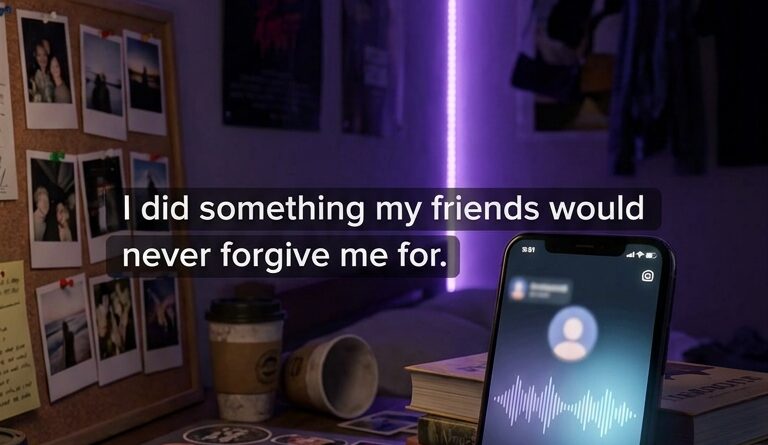
Inside TikTok’s ‘AI-Voiced Confession’ Wave: How Anonymous Audio Drops Quietly Became Gen Z’s Boldest New Truth Dump
People are tired of fake honesty online. You can feel it. The polished crying selfie, the carefully lit “I’m being so real right now” post, the captions that sound vulnerable but still read like branding. At the same time, almost nobody wants to be the one who posts a truly messy truth under their real face and real voice. That tension is exactly why the TikTok AI voice confession trend is taking off so fast. Users are dropping secrets, regrets, petty thoughts and oddly specific life updates with text on screen and a clean robotic voice reading it all out. It feels more raw than traditional influencer content, but still safer than speaking directly to camera. That mix is the whole appeal. It gives creators a way to test honesty without fully exposing themselves, and it gives viewers the kind of low-stakes intimacy they have been missing from feeds that started to feel way too rehearsed.
⚡ In a Hurry? Key Takeaways
- The TikTok AI voice confession trend lets users share personal stories with synthetic narration, which makes content feel honest while keeping some distance.
- If you make content, watch these posts for early signals on what topics people are ready to discuss before they become full trends.
- Anonymous does not mean risk-free. Details, screenshots, locations and timing can still identify someone faster than people think.
What is actually happening with these AI-voiced confession clips?
At the simplest level, people are typing out confessions and letting TikTok’s text-to-speech voice read them over a video. Sometimes it is a static background. Sometimes it is B-roll of daily life, Subway rides, ceiling fans, gameplay or skincare routines. The point is not the visuals. The point is the reveal.
These clips usually sound casual, even detached. That is part of why they work. A flat AI voice saying something deeply personal can hit harder than a dramatic on-camera monologue. It feels like somebody slid a note across the table instead of making a scene.
And yes, some are real. Some are exaggerated. Some are probably fully planned content experiments dressed up as spontaneous honesty. All three can go viral.
Why this trend blew up now
People want honesty, but not exposure
That is the whole engine here. Users want to say the thing. They just do not want their real voice attached to it forever. AI narration creates a buffer. It says, “This is me, but not fully me.” For Gen Z especially, that middle ground is powerful.
Curated “relatable” content stopped feeling relatable
A lot of social content spent the last year pretending to be casual while being extremely planned. Viewers noticed. The TikTok AI voice confession trend works because it sounds less polished, even when it is still strategic.
The format is easy to copy
No expensive setup. No need to look camera-ready. No pressure to perform emotion on cue. Type the text, choose the voice, add a background clip, post. That low friction matters. When a format is emotionally easy and technically easy, it spreads fast.
Why the robotic voice makes confessions feel more believable
This is the weird part. You would think an artificial voice would make posts feel fake. Sometimes it does. But in this format, it often has the opposite effect.
The AI voice removes the usual social signals people distrust. No shaky influencer voice. No dramatic pause that feels rehearsed. No suspiciously perfect lighting. Just words. That can make viewers focus on the confession itself instead of judging the performance around it.
It is similar to why anonymous text posts have always done well online. The less “personal brand” energy a post has, the more people sometimes trust it.
What kinds of confessions are doing well?
Not every secret lands. The clips getting traction tend to fall into a few buckets.
Messy relationship truths
Cheating, ghosting, rebound regrets, secret crushes, “I never told my partner this.” These are easy to understand and easy to react to.
Work and school burnout
Quiet quitting stories, job resentment, class stress and fear about money. These topics feel shared, not niche.
Morally gray admissions
Things like “I let my friend think this was an accident” or “I stayed for the perks, not the person.” These spark comments because viewers want to judge, defend or confess something similar.
Small but painfully specific truths
Sometimes the most viral posts are not huge scandals. They are tiny emotional cuts. “I muted my best friend because I could not handle seeing her happy.” That kind of line sticks in people’s heads.
How to tell when a “random confession” is actually a test balloon
If you work in content, brand strategy or trend spotting, this is where things get useful. A lot of these posts are not just emotional dumps. They are also audience tests.
Watch for repeated framing. If several creators use almost the same setup, same pacing and same type of secret, somebody is testing what version gets the strongest response.
Look at comments more than likes. Comments reveal whether people are shocked, relating, arguing or asking for part two. That tells you what topic has room to expand.
Pay attention to the follow-up clip. If a creator quickly turns one confession into a series, they have probably found an angle that converts curiosity into repeat views.
This is not new for TikTok. The platform keeps finding ways to package emotion into safer, more shareable forms. You can see a related version of that in Inside TikTok’s ‘AI Boyfriend Playlist’ Wave: How Custom Love Songs Quietly Became Gen Z’s Weirdest New Coping Mechanism, where artificial distance actually made emotional content easier to post and easier to consume.
How creators are using the trend strategically
Some people are absolutely using the TikTok AI voice confession trend as a low-risk storytelling tool.
To test sensitive topics
If someone wants to talk about family conflict, dating shame, money problems or identity questions, AI narration lowers the emotional barrier.
To build a “real but safe” persona
Creators can seem more open without giving away every personal detail. That balance matters if your audience wants intimacy but you still want boundaries.
To spark comment-led content
Confession posts are built for replies. People ask for context, backstory and updates. That means one short clip can become a whole mini-series.
The privacy catch nobody should ignore
Here is the part worth saying clearly. Anonymous-looking content is not always anonymous.
Your face may not be visible. Your real voice may be hidden. But people can still identify you through timing, screen text, story details, locations, relationships, usernames, background objects and mutuals in the comments.
If the confession involves another person, there is extra risk. A vague post can turn very specific to someone who knows the situation. That can lead to harassment, friend-group blowups or worse.
So if you are making this kind of content, strip out unnecessary details. Change timelines. Avoid showing your area, job badge, school name or anything unique in the background. Synthetic voice is not a magic privacy shield. It is just one layer.
What this means for brands, marketers and trend watchers
Do not copy the tone blindly. That is the fastest way to look awkward.
Instead, study what people are using the format for. The big shift is not “robot voices are cool.” The shift is that audiences want more direct emotional stakes, but delivered in a way that feels less performative.
That has a few practical effects.
Expect more voice-masked storytelling
Not just confessions. Think customer stories, anonymous hot takes, quiet rants and “I need advice” clips.
Expect comments to matter even more
These posts live or die on reaction. The comment section is basically part of the content.
Expect niches to form quickly
Dating confessions, workplace confessions, family confessions, creator-industry confessions. Once one bucket starts popping, it can split into sub-trends fast.
How to use this trend without chasing it too late
If you are trying to build a smart content strategy, do not just ask, “Should we do AI confessions too?” Ask better questions.
What topic are people finally ready to say out loud?
The winning angle is usually not the format. It is the feeling underneath it.
What level of anonymity makes people participate?
Sometimes the best post is not a direct confession. It might be a question sticker, a stitched reaction or a community roundup.
What can you learn before the trend gets crowded?
Watch the first wave closely. Once brands and big creators flood in, the emotional edge usually disappears.
At a Glance: Comparison
| Feature/Aspect | Details | Verdict |
|---|---|---|
| Emotional impact | AI narration makes confessions feel stripped down and less performative, which can make them hit harder. | Strong format for attention and comments |
| Ease of creation | Users only need text, a background visual and TikTok text-to-speech. | Very easy to copy, which helps trends spread fast |
| Privacy and safety | The voice is hidden, but details in the story can still reveal the poster or the people involved. | Useful but not fully safe, caution needed |
Conclusion
The TikTok AI voice confession trend is not just another quirky filter moment. It is a sign that the platform is moving away from polished “I’m so relatable” posting and toward rawer confession culture that still gives people cover. That matters. It will shape what sounds natural, what topics break out and which creators feel worth trusting next. If you understand how these anonymous AI-voiced confession clips work, you can spot which “random secrets” are really trial runs for bigger conversations, see what is about to take over For You pages and build smarter, safer content plans instead of showing up after the wave has already passed.