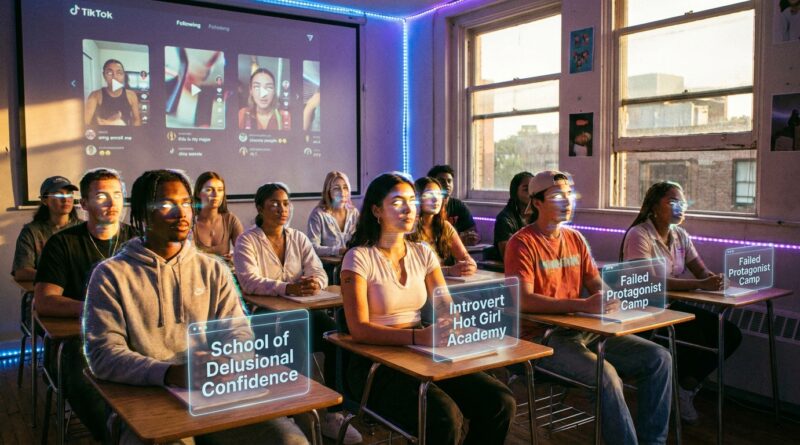
Inside TikTok’s ‘AI Summer Camp’ Wave: How Gen Z Is Quietly Turning Hyper‑Specific Niche Schools Into The Next Big Flex
You are not losing the plot. One minute your TikTok feed is normal, and the next it looks like everybody got accepted into “Fake Grad School of Girlhood,” “Hot People With Social Anxiety Club,” or “No Thoughts Just Vibes Academy.” It is weirdly funny, a little confusing, and easy to dismiss as just another joke trend. But there is more going on here. The TikTok AI summer camp fake school trend is turning identity into a kind of pop-up roleplay. People are using AI images, mock acceptance letters, made-up campus lore, and highly specific social “schools” to signal who they are, or who they want to try being, without saying it too directly. That is why it is spreading so fast. It gives creators a format, viewers a feeling of belonging, and everyone a low-pressure way to join a group, test a vibe, and collect status points online without needing a real institution behind it.
⚡ In a Hurry? Key Takeaways
- The TikTok AI summer camp fake school trend is a social identity game dressed up as a fake institution.
- If you want to join in, pick one clear niche, set boundaries early, and keep the bit simple enough to sustain.
- These “schools” can build community, but they can also create clique pressure, burnout, and messy parasocial expectations.
What this trend actually is
On the surface, it looks silly. A creator makes a fake academy, club, boarding school, fellowship, camp, or institute for a very specific type of person. Then they post “orientation” clips, admissions jokes, campus rules, starter packs, uniforms, electives, and inside references.
AI helps because it makes the whole thing feel polished fast. You get dreamlike campus posters, fake brochures, glossy acceptance emails, and mood-board visuals that make a made-up concept feel oddly real.
But the hook is not the AI. The hook is recognition.
People see “Girlhood Grad School” or “Avoidant Attachment Sailing Camp” and think, “Unfortunately, that is me.” That moment matters. It turns a joke into a badge.
Why Gen Z is so into hyper-specific fake schools
It is identity without the pressure of a serious label
A lot of people do not want to make a giant announcement about who they are, what stage of life they are in, or what subculture they belong to. A fake school gives them a softer option. You are not declaring a permanent identity. You are just “attending” a camp for people who overthink texts and own three water bottles.
That sounds trivial, but it solves a real online problem. It lets people test a self before they commit to it.
It turns self-awareness into entertainment
TikTok loves a format. Fake schools give creators one. Once the premise is clear, every post becomes easier to make. Dorm tour. Orientation day. Class schedule. Dean’s warning. Midterm meltdown. Graduation slideshow. The structure keeps the content machine moving.
And for viewers, it is satisfying because the joke keeps expanding. People do not just watch. They comment, nominate friends, add departments, and build lore.
It offers belonging without asking for too much
Joining a fandom can be intense. Joining a political identity can be risky. Joining a fake camp for “people who need alone time after hanging out with their best friend” feels safe.
That low-stakes belonging is a huge part of the appeal.
Why the “AI summer camp” version feels different
We have had niche identity memes forever. What feels newer is the packaging. AI image tools and editing apps make these fake institutions look official enough to trigger the same social instincts that real exclusivity does.
That matters because aesthetics create status. If a creator can make a camp look selective, cinematic, and emotionally precise, people start treating the bit like a real scene they want access to.
It is cosplay for personality. Branding for belonging.
What these fake schools are really selling
Most of them are not selling education, obviously. They are selling one or more of these things:
- A shortcut to self-description
- A safe way to say “these are my people”
- A funny wrapper for insecurity
- A tiny hit of exclusivity
- A ready-made social script for comments and replies
That is why the trend can feel strangely powerful even when it is unserious. It gives people language for parts of themselves that are usually messy, private, or hard to explain.
Why some of this starts to feel like a “flex”
Here is the part worth paying attention to. Once enough people join in, the fake school is no longer just a joke. It becomes a status marker.
If you are “accepted” into the right fake club, you are signaling taste, humor, self-awareness, and social fluency. You understood the bit. You fit the vibe. You know the references. In a feed built on identity cues, that can work almost like wearing the right brand.
So yes, these camps are playful. But they are also little social sorting machines.
The upside for creators
It is a strong content engine
If you are a creator, this trend is appealing because one idea can fuel a week or a month of posts. You are not reinventing your format every time. You are adding another chapter.
It builds community fast
The best versions invite participation. People can duet, stitch, apply, submit “student profiles,” or create rival schools. That kind of interaction boosts reach and gives your audience a reason to come back.
It helps you find your people
If your niche has always felt too odd to name, a fake school can make it visible. Suddenly your audience is not random. It is organized around a shared mood or experience.
The downside for creators
The bit can eat your whole account
A fake institution is fun until your followers expect daily announcements from the dean. Then it becomes homework. If every comment asks for more lore, more roles, more admissions rounds, you can end up trapped inside your own joke.
Parasocial stuff can get messy fast
As soon as people feel “seen” by a niche school, some will want real emotional access in return. They may expect personal validation, conflict mediation, or actual membership decisions. That is a lot for a creator who just wanted to make a funny fake campus flyer.
Exclusion can sneak in
Even when the joke is light, selective language can turn sour. “Accepted” versus “rejected” plays differently when people already feel insecure or left out online. A bit that starts as community can drift into ranking.
If you are a creator, how to use the trend without burning out
Pick one tight concept
Do not start with a whole fake universe. Start with one clear idea people instantly get. If you need three paragraphs to explain your academy, it is too broad or too vague.
Set boundaries early
Make it obvious that this is a playful format, not a real gatekeeping system. You do not need to manually “admit” everyone. You do not need to answer every comment in character. A little distance saves a lot of stress.
Make participation easy
Give viewers simple prompts. “What class would you teach here?” works better than building a giant rulebook. The easier it is to join, the healthier the trend feels.
Plan an exit ramp
Before you post part one, think about how the series ends or slows down. Graduation week. Summer break. Budget cuts. Campus closure. Anything is fine. You just want a graceful way to stop without ghosting your audience.
If you are a watcher, how to decode what you are seeing
You do not need to treat every fake school like a serious movement. But it helps to ask a few simple questions.
Is this inviting me to laugh, belong, or perform?
Sometimes it is just a joke. Sometimes it is community. Sometimes it quietly pressures you to adopt a personality package because it looks socially rewarded.
Does this feel freeing or narrowing?
A good niche identity can help you feel understood. A bad one can make you feel like you need to become more stereotyped to stay visible in the group.
Am I here because it fits me, or because it is trending?
That question sounds small, but it is useful. TikTok is very good at making a temporary aesthetic feel like your true self.
Why this trend matters beyond the joke
This is not just another meme format passing through. It is a glimpse of how online identity is changing. People increasingly sort themselves into tiny, emotionally precise categories. AI and social video make those categories feel vivid and shareable. Then the algorithm rewards the clearest, funniest, most visually complete versions.
That means belonging online is getting more modular. Less “I am this forever.” More “I am trying this role on right now.”
Honestly, that can be healthy. It can also be slippery. If your sense of self keeps getting packaged for content, it becomes harder to tell where the joke ends and the self-branding starts.
At a Glance: Comparison
| Feature/Aspect | Details | Verdict |
|---|---|---|
| For viewers | Offers a funny, low-pressure way to test identities and find people with the same oddly specific vibe. | Mostly positive, as long as you remember it is a format, not a life assignment. |
| For creators | Great for repeatable content, world-building, and fast audience engagement, but easy to overcommit to. | Useful if you set boundaries and keep the concept manageable. |
| Social impact | Turns niche identity into shareable status signals and can create community, cliques, or pressure to fit the bit. | Worth watching closely because it changes how belonging works on TikTok. |
Conclusion
The TikTok AI summer camp fake school trend looks light, but it is doing real social work. It gives people a low-stakes way to try on a new self, test a social role, or find their people without making some huge declaration. That is why it feels fun and weirdly meaningful at the same time. If you are a creator, there is real opportunity here, but only if you keep the bit sustainable and do not let audience expectations turn into a full-time campus administration job. If you are a watcher, you now have clearer language for what these clips are really offering. Not education. Not truth. A playful little identity sandbox. And right now, that sandbox is shaping status, belonging, and self-expression on TikTok in real time.