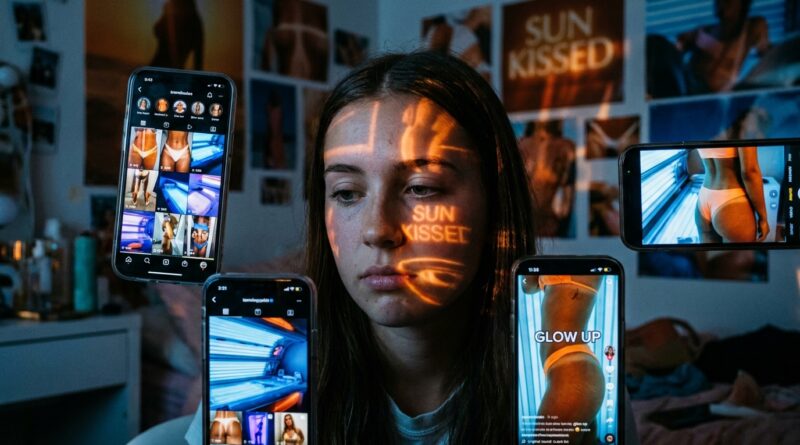
Inside TikTok’s ‘Tanning Wellness’ Era: How Bronze-Obsessed Gen Z Turned Sunbeds Into a Status Symbol
If your TikTok feed suddenly looks like a rolling ad for bronzed skin, tan lines and “glow routines,” you are not imagining it. A very online beauty trend has started to blur into something bigger. For a lot of Gen Z users, being tan is no longer just a summer look. It is being framed as proof of health, discipline, confidence and even status. That is where the discomfort creeps in. What looks like harmless aesthetic content can quietly turn risky when sunbeds, UV exposure and “base tan” habits get wrapped in the language of self-care. It is confusing on purpose. The TikTok tanning wellness trend works because it borrows the visual language of skincare, fitness and routine culture, then repackages tanning as a kind of personal upgrade. If you are trying to work out where the vibe ends and the danger starts, the short answer is this. The style is real. The wellness claim is not.
⚡ In a Hurry? Key Takeaways
- The TikTok tanning wellness trend turns bronzed skin into a lifestyle badge, but a tan is not a sign of better health.
- If you like the look, use safer options like self-tanner, bronzing drops or spray tans instead of sunbeds or intentional UV damage.
- The bigger issue is cultural. TikTok is selling an identity, not just a beauty tip, and younger users can absorb that fast.
Why this trend feels different from old-school tanning
Tanning trends are not new. What is new is the packaging.
Older beauty culture often sold tanning as sexy, glamorous or vacation-coded. TikTok adds a fresh layer. Now the tan is shown alongside workout routines, green juices, “clean girl” skincare, morning resets and glow-up diaries. That mix matters. It makes tanning look less like a beauty choice and more like part of a balanced life.
That is why the TikTok tanning wellness trend spreads so easily. It does not arrive shouting. It arrives looking organized, calm and aspirational.
How the rebrand works
Creators often present tanning as one piece of a polished routine. You might see “get ready with me” videos that move from gym, to skincare, to tanning bed, to iced coffee, to outfit reveal. Nothing in that chain says danger out loud. But the sequence does something powerful. It normalizes tanning by placing it next to healthy-looking habits.
That is how risky behavior can start to feel ordinary. Or worse, responsible.
How bronzed skin became social currency
On TikTok, appearance is never just appearance. It is identity, tribe and status all at once.
A tan can signal that someone has time, money and access. It suggests holidays, beauty upkeep, gym culture and confidence. In short-form video, these signals travel fast. Bronzed skin reads well on camera. It can make muscle definition pop, make outfits look more expensive and fit neatly into “that girl” style content.
So the reward is not just the tan itself. The reward is what the tan seems to say about the person wearing it.
What younger viewers are really being sold
They are being sold a story. The story says: if you look bronzed, you look well. If you look well, you look desirable. If you look desirable, you are doing life right.
That is a lot to load onto a skin tone.
For teens and young adults especially, that message can sink in before they have any reason to question it. Trends become norms when enough people stop seeing them as choices.
Where the real risk begins
Here is the plain-English version. A tan from UV exposure is your skin responding to damage. That includes sunbeds.
That point gets lost online because “healthy glow” sounds softer than “skin injury.” But the biology does not change because the lighting is good.
Sunbeds are not a wellness tool
Sunbeds are often framed online as a fast, controlled way to build color. Some users talk about a “base tan” like it is protective armor. Dermatologists have pushed back on this for years. A base tan does not make intentional UV exposure healthy. It is still damage.
The problem with the TikTok tanning wellness trend is not just that it makes tanning look attractive. Beauty trends do that all the time. The problem is that it makes a risky habit look smart.
Why the wording matters
Words like “routine,” “balance,” “maintenance” and “wellness” lower people’s guard. They make you think of care, not harm. Once tanning gets folded into that language, concern can sound uptight or old-fashioned, even when it is reasonable.
That is part of the social power of the trend. It changes the emotional setting around a behavior without changing the behavior itself.
Why TikTok is such a good engine for this trend
TikTok is built to reward visuals that read instantly. A bronzed before-and-after works in a second. A tan line reveal works in a second. A glow-up montage works in a second.
The app also rewards repetition. If you pause on one tanning video, you may get more. Soon it can feel like everyone is doing it, even if you are really just seeing what the algorithm knows will keep you watching.
The loop is simple
Pretty result. Short video. Lifestyle framing. Repeat.
That loop can make a niche aesthetic feel like a mainstream expectation very quickly. For parents, educators and creators, that is the part worth paying attention to. Not every trend sticks. But some reshape what “normal” looks like.
What to watch for if you are a parent, creator or trend-watcher
You do not need to panic, but you do need a clear eye.
For parents
If a teen starts talking about needing a “healthy glow” or a “base tan,” ask where that idea came from. Keep the tone calm. Shame usually shuts the conversation down. Curiosity keeps it open.
It also helps to point out how often platforms package appearance as self-improvement. Once kids can spot the sales pitch, it loses some of its magic.
For creators
If you post beauty or lifestyle content, think about the frame around the image. You may mean to share a look, but viewers may absorb a rule. That does not mean every bronzed photo is harmful. It means context matters. If a look depends on risky behavior, saying so honestly is better than dressing it up as wellness.
For trend-watchers
The story here is bigger than tanning. It is about how platforms remix old beauty pressures into fresh language. “Wellness” is one of the most effective wrappers because it sounds positive and personal.
Safer ways to get the look without buying the myth
Plenty of people simply like how bronzed skin looks in photos or with makeup. Fair enough. The key is separating the aesthetic from the false health message.
Better options
Self-tanning mousse, tanning drops, bronzing serums and spray tans can create the same visual effect without UV exposure. They are not perfect. Some are streaky, some smell odd, and some take practice. But they do not ask your skin to absorb damage for the sake of a trend.
That is the practical answer most people need. You can like the look without accepting the logic behind it.
Why this trend matters beyond beauty
The TikTok tanning wellness trend is really a case study in how fast online culture can rewrite meaning.
Something once seen mainly as cosmetic is now being sold as evidence of vitality. That shift affects how people judge themselves and each other. It can also push those who do not tan naturally, or do not want to, into feeling dull, pale or somehow less put together.
That is how beauty standards spread in 2026. Not by formal rules. By endless soft suggestions.
At a Glance: Comparison
| Feature/Aspect | Details | Verdict |
|---|---|---|
| How tanning is framed on TikTok | Shown as part of glow-up, fitness and self-care routines | Visually persuasive, but misleading when it implies health |
| Sunbeds and intentional UV exposure | Often marketed as a controlled path to a “healthy bronze” or “base tan” | Not a wellness practice. Risk outweighs the trend appeal |
| Safer alternatives | Self-tanner, bronzing products and spray tans mimic the look | Best choice if you want the aesthetic without the UV story |
Conclusion
The big thing to remember is this. Tanning TikTok is not just pushing a seasonal look. It is pushing a worldview, one where bronzed skin gets treated like a shortcut to health, beauty and belonging. That is why it deserves a closer look now, before the message hardens into background noise. If you are a creator, parent or just someone trying to read internet culture clearly, the value is in spotting the mechanics early. Once you see how aspiration, health language and identity get mixed together, the trend becomes easier to question. And that is useful. Because you should get to choose what you like, without an app quietly telling you what your body is supposed to prove.