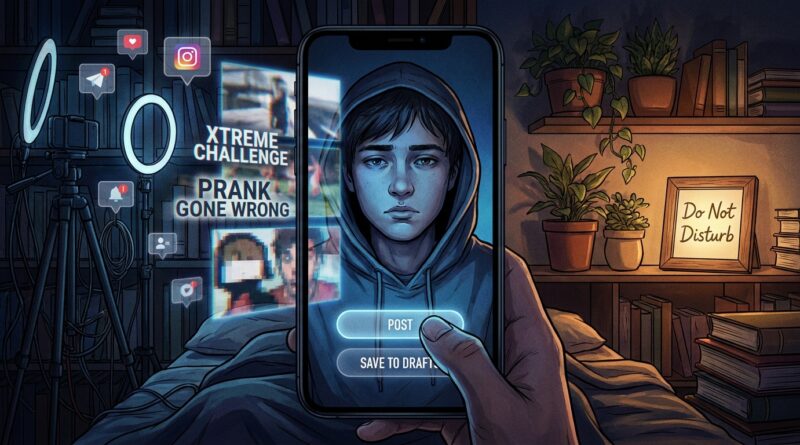
Inside TikTok’s ‘Humiliation Era’ Backlash: How Users Turning Off The Camera Just Became Social Media’s Quietest Revolt
If TikTok has started to feel less fun and more like watching people volunteer for public embarrassment, you are not imagining it. A lot of users are suddenly calling this the tiktok humiliation ritual trend, and the phrase is sticking because it names a very real mood shift. What used to feel silly, creative, or chaotic in a harmless way now often feels meaner, more desperate, and weirdly exhausting to watch. The pressure to overshare, perform, confess, cry, prank, or degrade yourself for engagement has become so normal that stepping back can feel almost rebellious. That is the quiet backlash happening right now. People are not just complaining. They are posting less, turning off the camera, muting creators, and asking a simple question: why does everything online suddenly feel like a dare? If your gut has been telling you something is off, it probably is.
⚡ In a Hurry? Key Takeaways
- The backlash is real. Many users feel TikTok now rewards embarrassment, overexposure, and discomfort more than creativity.
- You can reset your feed fast by using Not Interested, unfollowing stress-inducing accounts, and taking short breaks from posting.
- If content makes you feel gross, anxious, or numb, that is useful information. You do not owe the algorithm your attention.
Why people are calling it a “humiliation ritual”
The phrase sounds dramatic at first. Then you scroll for five minutes and it starts to make uncomfortable sense.
A lot of short-form content now runs on the same formula. Someone gives away too much. Someone gets mocked. Someone records a private moment that should probably stay private. Someone pushes a joke past the point of being funny. Then the app rewards it with views.
That reward loop matters. TikTok does not force people to do humiliating things, of course. But it does create an environment where shock, awkwardness, and emotional exposure can travel faster than thoughtful or ordinary posts. If you are a creator trying to stay visible, that can slowly distort your sense of what is “normal” to share.
And if you are just watching, it can leave you feeling grubby in a way that is hard to explain. Not entertained. Not informed. Just a bit drained.
What changed on the For You Page
This did not happen all at once. It built up through dozens of tiny trends.
Confession content got more extreme
There was a time when “storytime” meant a mildly awkward date or a workplace mix-up. Now it often means sharing trauma, betrayal, family fights, cheating accusations, money problems, or deeply personal health details with millions of strangers.
The line between honest and exploitative got blurry fast.
Pranks stopped being funny
Plenty of prank videos were always annoying. But now many are built around discomfort itself. Embarrassing a partner in public. Tricking a friend into panic. Filming a stranger without clear consent. The payoff is not the joke. The payoff is the reaction.
“Relatable” became overexposure
There is nothing wrong with being real online. In fact, some of the best creators are popular because they are honest. The problem comes when “authenticity” turns into a demand to constantly bleed in public. Cry on camera. Admit your worst moment. Turn every low point into content. That is not always honesty. Sometimes it is pressure in a nicer outfit.
Rage bait became a business model
Some people post things specifically designed to make viewers angry, disgusted, or morally outraged. It works because strong emotion fuels comments, stitches, and duets. Even when viewers hate the video, they are still feeding it.
Why this feels worse lately
Two things can be true at once. TikTok is still full of funny, useful, wildly creative people. It is also getting harder to ignore how much of the app runs on spectacle.
Part of the reason it feels sharper now is simple burnout. Users have spent years being told to post more, be more vulnerable, follow more trends, and stay visible at all costs. That constant pressure changes your relationship with the app. You stop asking, “Do I want to share this?” and start asking, “Will this perform?”
That is where the emotional hangover starts.
For viewers, the burnout looks a little different. You open the app for a quick break. Instead you get public meltdowns, secondhand shame, strangers debating someone’s worst moment, and creators escalating because ordinary posts no longer cut through. After a while, your nervous system notices before your brain does.
The quiet revolt is not deleting the app. It is opting out of the performance
What is interesting about this backlash is how subtle it is. Most people are not making grand exit speeches. They are just pulling back.
They are posting less. Leaving drafts unfinished. Turning off comments. Switching to close friends on other platforms. Watching without engaging. Or not watching at all.
That matters because social apps depend on participation. Not just your content, but your reactions. Your watch time. Your outrage. Your “I cannot believe this” comment. When users stop feeding that machine, even quietly, it changes the atmosphere.
In other words, turning off the camera has become its own kind of statement.
How to tell if your feed has crossed the line
You do not need a media studies degree for this. A few simple gut checks work surprisingly well.
Ask yourself these three questions
When I finish scrolling, do I feel entertained or vaguely gross?
Am I watching people because they are interesting, or because I cannot look away from the train wreck?
Do I feel pressure to share more of myself than I actually want to?
If your answers keep landing on the bad side, that is your signal. The app may be entertaining you less than it is conditioning you.
How to reclaim control without becoming a social media monk
You do not have to throw your phone into a lake. Small changes work.
Use “Not Interested” aggressively
This tool is boring, but it helps. If a video feels humiliating, cruel, invasive, or just emotionally sticky in a bad way, tap and tell the app you do not want more of it. Do it often. The algorithm learns from your silence, but it learns faster from your direct feedback.
Unfollow accounts that make you feel behind or contaminated
That sounds harsh. It is not. If someone’s content keeps leaving you tense, cynical, or weirdly sad, you do not need a legal case to unfollow them.
Stop posting on bad days
If you are a creator, this one matters. The app is very good at making every feeling look monetizable. Some moments are better lived than uploaded. If you are hurt, angry, lonely, or looking for validation, draft first and post later. Or do not post at all.
Make your own rules before the app makes them for you
Try a short personal policy. For example: I do not film strangers. I do not post fights. I do not share private relationship issues in real time. I do not make content from fresh pain. Having rules ahead of time makes it easier to resist the heat of the moment.
Replace one scroll session with something that gives energy back
That could be YouTube from creators you trust, a group chat, a podcast, or ten minutes of doing absolutely nothing. The point is not purity. The point is giving your brain a chance to stop bracing for impact.
For creators, this is also a business warning
If your audience is starting to feel sick of spectacle, that affects creators too. Chasing bigger reactions can work in the short term, but it often burns trust. Once followers start feeling used, manipulated, or emotionally cornered, they drift.
The safer long-term bet is not “be boring.” It is “be intentional.” Make content that has a point beyond extracting a reaction. People can feel the difference.
What better content often looks like
Useful content. Genuinely funny content. Thoughtful commentary. Skill-based posts. Niche hobbies. Stories told with a little distance and a little care. Things made by a person, not squeezed out by a slot machine.
What this backlash is really about
At its core, this is not just about TikTok. It is about what happens when every part of life gets pushed toward performance. The meal is not lunch. It is content. The argument is not private. It is content. The vulnerable moment is not something to process. It is content.
People are getting tired of living like that. Fair enough.
The rise of the “humiliation ritual” language gives users a way to describe the feeling that the app has crossed from messy and human into something more extractive. Once people can name that feeling, they can respond to it.
At a Glance: Comparison
| Feature/Aspect | Details | Verdict |
|---|---|---|
| Current FYP mood | More confession bait, public awkwardness, rage farming, and discomfort-driven engagement | Many users feel the feed is tipping from entertaining to emotionally exhausting |
| User response | Posting less, muting creators, avoiding trends, and quietly stepping back from camera-first sharing | A low-key but meaningful backlash is already happening |
| Best next step | Reset your feed, set posting boundaries, and stop rewarding content that feels degrading or invasive | You can improve your experience without quitting social media completely |
Conclusion
If TikTok has felt off lately, that uneasy feeling is worth trusting. The current backlash matters because it puts words to something both creators and casual viewers are finally saying out loud: short-form culture can start to feel like a nonstop spectacle where people will do almost anything for views, and the audience feels gross watching it. Once you can name that pattern, you are no longer stuck inside it. You can change what you watch, what you reward, and what you share. You do not need to win an argument with the internet. You just need to protect your attention a little better. For a lot of people right now, that simple choice, posting less, scrolling less, turning off the camera, is not giving up. It is relief.