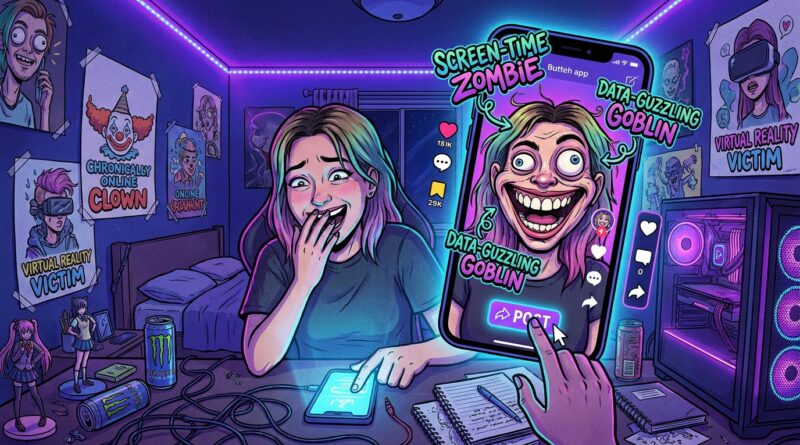
Inside TikTok’s ‘Roast Me Caricature’ Wave: How Letting AI Drag Your Selfies Became 2026’s Favorite Ego Check
Everyone is a little exhausted by perfect-face internet. The skin is too smooth, the jawline is too sharp, and every selfie looks like it was approved by a committee of ring lights. But posting an actually rough photo still feels risky if your feed is part diary, part personal brand. That is why the TikTok roast me AI caricature trend is hitting so hard. It offers a weird middle path. You still post your face, but you let an AI turn it into a chaotic cartoon first. Big nose. Tired eyes. Gremlin grin. Somehow that self-own reads as confidence, not failure. People look less polished and more human, which in 2026 is starting to feel like a status symbol of its own. The joke is not “I am ugly.” The joke is “I am in on how fake this all got.” That difference matters, and it explains why these clips are spreading so fast across TikTok, Instagram, and X.
⚡ In a Hurry? Key Takeaways
- The TikTok roast me AI caricature trend works because people are swapping beauty-flex posts for funny, self-aware ones that feel more real.
- If you want to join in, keep the joke playful, use a clear selfie, and add a caption that shows you are laughing with the AI, not attacking yourself.
- Be careful with privacy, copyright, and mental health. Not every AI app is safe, and not every joke lands the same for every person.
Why this trend blew up so fast
The basic format is simple. A creator uploads a selfie to an AI image tool, asks for a savage caricature or roast-style cartoon, then posts the result with a reaction video, side-by-side comparison, or dramatic reveal.
That sounds small. It is not. It taps three big internet habits at once.
1. People are tired of polished fake-perfect selfies
For years, the social deal was clear. Post the best angle. Fix the lighting. Smooth the skin. Pretend you woke up like that. Now that routine feels stale. It also feels obvious. Everyone knows the game.
The roast me AI caricature trend breaks that script without asking people to fully give up vanity. You are still curating. You are just curating your own humiliation a little. That reads as brave, funny, and more trustworthy.
2. Self-awareness is now a kind of social currency
Online status used to come from looking flawless. Now, at least on short-form video, it also comes from showing you are not desperately chasing flawless. Letting AI exaggerate your forehead into a runway or your smile into a villain arc says, “Relax, I get the joke.”
That is often more appealing than one more perfect thirst trap.
3. AI gave the joke a visual payoff
Old self-roast posts relied on captions. AI makes the punchline instant and visual. People do not have to imagine the insult. They see it. A cartoon version of your face looking like a sleep-deprived Disney side character is simply stronger meme fuel than text alone.
What “roast me” means in this version
This is not quite the old-school internet roast, where strangers tried to be as cruel as possible. It is softer. More performative. More controlled.
The best TikTok roast me AI caricature trend posts usually do three things:
- They exaggerate real features instead of inventing nasty ones.
- They keep the tone absurd, not mean.
- They frame the result as a shared laugh.
That is why these posts often feel warm, even when the image is ridiculous. The creator is choosing the joke. The audience is joining in. It is closer to playful caricature art at a boardwalk than a bullying pile-on.
Why people come out more likable after getting “dragged” by AI
This is the sneaky genius of the trend. A flattering selfie can get likes, but a funny self-own often gets affection. Those are not the same thing.
When someone posts an AI caricature that makes them look like a raccoon who runs a startup, viewers feel like they learned something real about that person. Not their actual bone structure. Their vibe. Their sense of humor. Their level of comfort in their own skin.
That makes them easier to root for.
For creators, that can be more useful than another polished post. It lowers the distance between them and the audience. For small brands, it can soften the corporate tone that usually makes people scroll away.
How the trend usually works behind the scenes
Most people are not using one single official “roast me” app. They are bouncing between AI image generators, caricature filters, face-stylizing apps, and text-prompt tools.
Common workflow
- Take or upload a well-lit selfie.
- Use an AI app or generator that supports cartoon or caricature styles.
- Add a prompt like “make this into a savage but funny caricature” or “exaggerated cartoon roast, playful, not cruel.”
- Generate several versions.
- Pick the one that feels funniest, not the one that feels most brutal.
- Post it with a reaction clip, reveal, or caption.
Why prompts matter
If the prompt is too vague, the AI might just make a generic cartoon. If it is too harsh, it can cross into ugly territory fast. The sweet spot is playful exaggeration. Think “Saturday morning villain energy” more than “destroy my self-esteem.”
How to join the TikTok roast me AI caricature trend without making it weird
If you want to try it, the biggest mistake is going too dark. People do not want to watch a public self-esteem spiral. They want a confident joke.
Start with the right selfie
Use a clear image with decent lighting and a neutral or expressive face. AI tends to exaggerate strong features better when it can actually see them. Sunglasses, heavy shadows, or crowded backgrounds often produce random junk.
Use a caption that sets the tone
Your caption does a lot of work. “AI did me dirty” is different from “Honestly this is my truest form.” Both can work. What you want is a wink, not a cry for help.
Keep the edit short
These posts work because the payoff is quick. Show the selfie. Show the caricature. Show your reaction. Done. If you stretch the setup too long, the joke loses steam.
Do not force fake insecurity
Audiences can smell it. If the post feels like fishing for compliments disguised as self-roasting, people tune out. The trend works best when the creator seems genuinely amused.
What small brands can learn from it
This trend is not just for influencers and college students. Small brands can borrow the logic without copying the exact format.
Good brand uses
- A coffee shop turning its mascot into an overcaffeinated AI gremlin.
- A local gym posting “AI roasted our leg day face.”
- A bookstore letting AI caricature “the average fantasy reader at 2 a.m.”
The key is not making the customer the butt of the joke. Make the brand, the mascot, or a shared experience the target. That keeps it fun and inviting.
Bad brand uses
- Roasting employees who did not agree to it.
- Mocking customer appearances.
- Using the format to smuggle in old-school mean humor.
If your brand voice is “we are all in on the joke,” great. If it starts sounding like “we enjoy humiliating people,” stop immediately.
Where the line is between funny and harmful
This part matters more than the meme.
The TikTok roast me AI caricature trend looks harmless because it is wrapped in cartoon style and upbeat music. But exaggerating faces can still touch real insecurities around weight, skin, age, race, disability, gender expression, or facial features people have been mocked for their whole lives.
Questions to ask before posting
- Am I laughing at a vibe, or at a real insecurity?
- Would this joke feel different if someone else posted it about me?
- Does this invite people to join the fun, or pile on?
- Would I be fine if this image circulated without my original caption?
If any of those answers make you wince, tweak the prompt or skip the post.
Privacy and app safety are not boring here
Any time you upload your face to an AI tool, you should pause for a second. Yes, even for a joke.
Watch for these risks
- Apps that keep your photos for model training.
- Weak privacy policies written in foggy language.
- Tools that ask for unnecessary permissions.
- Sketchy websites using viral trends to collect face data.
If the app looks rushed, stuffed with ads, or impossible to identify, that is your sign to back out. Use tools with clear terms, recognizable developers, and delete options if possible.
A simple rule
If you would not trust the app with your passport photo, maybe do not trust it with a high-resolution selfie either.
What this says about online identity in 2026
This is the interesting part under the meme. The roast me AI caricature trend is not just about funny drawings. It suggests a bigger shift in what reads as cool online.
People still want attention. That has not changed. What is changing is the style of the performance. Perfect no longer looks impressive by default. Sometimes it looks anxious. Overmanaged. A little behind the times.
Meanwhile, controlled imperfection looks modern. If you can survive being turned into a cartoon gargoyle and still post it proudly, you signal that your image is not so fragile. That confidence has value.
In other words, the flex is changing. It is no longer only “look how good I look.” It is also “look how little I need to protect the illusion.”
Will the trend last?
The exact format probably will not last forever. TikTok burns through formats fast. But the instinct behind it is likely to stick around.
We will probably keep seeing more content that trades polish for self-aware chaos, especially when AI can manufacture the chaos on demand. That could mean roast filters, fake paparazzi fails, deliberately cursed avatars, or new tools that parody your own personal brand back at you.
The deeper trend is not caricatures. It is anti-perfection performance.
If you want to try it, here is the safe playbook
For creators
- Use a photo you are comfortable seeing reused.
- Keep prompts funny, not cruel.
- Post one or two best results, not a whole spiral of self-destruction.
- Moderate comments if the pile-on gets nasty.
For brands
- Roast the brand persona, not random people.
- Get consent from anyone featured.
- Keep it quick and visually obvious.
- Do not turn the joke into an ad with a coupon code glued onto it.
For viewers
- Remember the app is not “telling the truth” about someone’s face.
- Do not use the comment section to say what the AI “missed.”
- If a post feels off, trust that feeling.
At a Glance: Comparison
| Feature/Aspect | Details | Verdict |
|---|---|---|
| Why people like it | It replaces polished selfie culture with humor, self-awareness, and quick visual payoff. | Strong trend fit for 2026 social culture. |
| Best way to use it | Choose a clear selfie, use a playful caricature prompt, and post a short reaction or reveal. | Works well for creators and careful brands. |
| Main risk | Mean-spirited results, comment pile-ons, and privacy issues from untrusted AI apps. | Fun if handled lightly and safely. |
Conclusion
The TikTok roast me AI caricature trend matters because it is more than a goofy filter fad. It sits right where AI, meme culture, and online identity are colliding in public. That makes it useful to understand right now, not six months from now when the big recap posts reduce it to a list of apps. For everyday creators, it offers a new way to look relatable without pretending not to care about image at all. For small brands, it shows how humor can feel more human than polish, if the joke is aimed carefully. For everyone else, it is a clue about where status is moving online. Less fake perfection. More controlled chaos. If you try it, keep it playful, protect your data, and remember the point is not to let a bot crush your self-worth. It is to show that your image can survive a little cartoon nonsense, and maybe even come out more likable on the other side.