Inside Gen Z’s ‘Cockroach Janta Party’ Wave: How A Mock Political Meme Turned Into 2026’s Loudest Youth Rebellion
Your feed probably feels broken right now. One minute it is jokes about cockroaches, the next it is fake campaign posters, metal plate protests, remix edits, and people talking like a meme account has become a real political front. That confusion is the whole point. The cockroach janta party meme trend matters because it is not just another one-day joke. It is a fast-moving example of how Gen Z turns an insult into a badge, then turns that badge into a shared language for anger, mockery, and protest. If you are trying to work out whether this is just algorithm bait or something with actual weight, look at the pattern. People are not only reposting memes. They are building symbols, slogans, rituals, and an us-versus-them identity around them. That is when a joke starts behaving like a movement, even if nobody involved wants to call it one yet.
⚡ In a Hurry? Key Takeaways
- The cockroach janta party meme trend is a satirical youth backlash where an insult got flipped into a group identity almost overnight.
- To judge if a meme matters, watch for repeated symbols, shared slogans, offline gestures, and people using it to express real frustration, not just joke farming.
- Be careful before reposting. Fast meme-politics can be funny, but it can also be used for manipulation, dogpiling, and pushing half-true claims at speed.
What the Cockroach Janta Party actually is
At its core, the Cockroach Janta Party is a mock political meme. It seems to have caught fire after young people were described with the kind of language meant to shrink them, dismiss them, or paint them as pests. Instead of arguing politely, they did something internet-native. They embraced the insult.
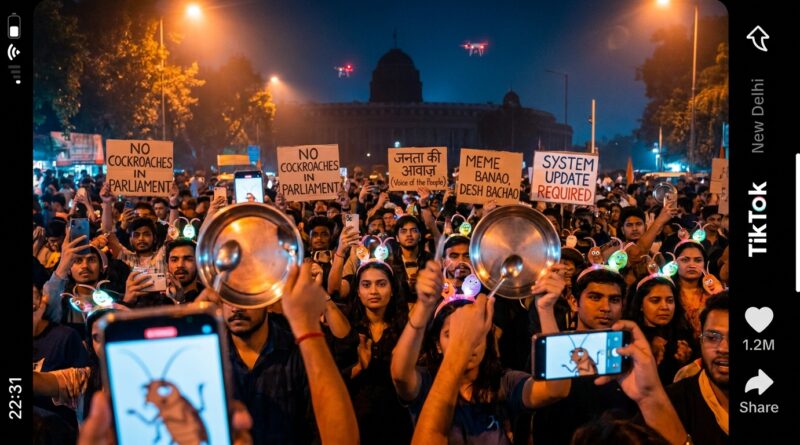
That is why you are seeing cockroach logos, parody manifestos, fake election graphics, slogan edits, and videos of people banging plates as if they are at a campaign rally for a party that does not technically exist. The point is not formal politics. The point is style, speed, and collective mockery.
It says, “If you are going to call us cockroaches, fine. We will become impossible to ignore.”
Why this one broke out so fast
1. It turns humiliation into power
Gen Z is very good at taking language meant to embarrass them and flipping it. Once an insult becomes an inside joke, it stops doing the original damage. It becomes a signal. If you get it, you are in.
2. It is easy to remix
A trend spreads faster when anyone can add to it in seconds. A cockroach icon. A party poster. A slogan on a notes app screenshot. A fake speech over dramatic music. You do not need budget, design skill, or a long attention span.
3. It works across moods
Some people are posting for laughs. Some are posting because they are angry. Some are doing both at once. That mix is strong online because the algorithm does not care whether a clip is ironic, sincere, or somewhere in the middle. It only cares that people react.
4. It has an offline gesture
Once a meme gets a physical ritual, even a simple one like plate-banging, it starts to feel bigger. You can hear it. Record it. Share it. Repeat it. That is often the jump from “trend” to “moment.”
Why the joke feels political even when it looks unserious
This is the part many older viewers miss. Meme politics does not always arrive wearing a suit. Sometimes it arrives as absurdity first.
A fake party is useful because it lets people express real rage without needing a polished leader, official banner, or perfect set of demands. The humor acts like cover. It lowers the barrier to joining in. You do not have to give a speech. You just repost a roach poster, add a caption, and suddenly you are part of a crowd.
That does not mean every participant is politically organized. Most are not. But it does mean the vibe can carry real meaning. People often test the waters of dissent through jokes before they say things more directly.
The playbook behind the cockroach janta party meme trend
If you want to know whether a meme-wave matters, stop looking only at the meme itself. Look at the stages.
Stage 1. An insult or trigger phrase lands
Something is said that feels dehumanizing, smug, or absurd. It gives people a target.
Stage 2. People claim the insult
Instead of denying it, they wear it. This is where the emotional power flips.
Stage 3. Symbols appear
Logos, colors, slogans, posters, reaction images. Symbols are what help strangers feel like a group.
Stage 4. The joke gets rituals
Chants, soundtracks, editing styles, hand signs, plate-banging, profile pictures. These make participation visible.
Stage 5. Media and outsiders react
As soon as people ask, “Wait, what is this?” the trend grows again. Confusion fuels reach.
Stage 6. The meaning starts to split
Some see satire. Some see protest. Some see clout chasing. Some see propaganda. This is usually when a meme becomes hard to ignore.
How to tell if this is real dissent or just algorithm bait
Usually it is not one or the other. It is both. But you can still read the signs.
Signs it has real weight
If people are using the meme to talk about a shared grievance, if there are repeated messages across many accounts, and if offline behavior starts matching the online language, then it is carrying something real.
Signs it is mostly bait
If the message keeps changing to fit whatever gets engagement, if major pages are posting it with no context just for clicks, or if nobody can explain what the anger is actually about, then you are probably looking at trend-harvesting.
The cockroach janta party meme trend stands out because it already has a recognizable identity package. That is usually what gives a meme staying power, even if the exact hashtag fades.
Why Gen Z likes this style of rebellion
Because it fits the internet they live on.
Traditional activism asks for structure early. Meetings, spokespeople, formal messaging, clear demands. Meme rebellion starts lighter. It lets people gather around a feeling first. Anger. Exhaustion. Mockery. Then the message sharpens later, if it sharpens at all.
That makes it messy. It also makes it fast.
For younger users who grew up with irony, fandoms, stan edits, and platform chaos, this is a natural form. A fake political party with absurd posters does not feel unserious to them. It feels legible.
The risks hiding inside the fun
There is a reason to keep your guard up.
Misinformation can hitch a ride
Once a meme explodes, bad actors can slip in fake screenshots, edited clips, and made-up claims. People repost because the joke is good, not because the facts are checked.
Real people can become targets
What starts as satire can turn into pile-ons. Mocking power is one thing. Harassing random people is another.
The original issue can get lost
If the aesthetic becomes the whole story, the grievance that sparked it can disappear behind the edits.
Brands and political operators may try to copy it
Once something works, expect opportunists to imitate the tone. That is when your feed gets even harder to read.
How to engage without getting dragged around
You do not need to be the person shouting “touch grass” at everybody. But you also do not have to let the algorithm think for you.
Ask three simple questions
What happened first. Who benefits if this keeps spreading. Are people adding information, or just adding noise.
Check the earliest posts you can find
The first wave often tells you more than the viral wave. Later copies tend to flatten the meaning.
Separate the symbol from the claim
The roach icon might be funny. A quote attached to it might still be fake.
Watch for offline echoes
If a trend jumps from edits to actual coordinated behavior, that is your sign to pay closer attention.
Decide your role on purpose
You can join in, remix, observe, or call out bad info. All are valid. Doing it consciously is the important bit.
What happens next
Most meme-parties burn out. A few mutate. They shed the original joke and leave behind language, images, and habits that continue in later protests. That may be what matters most here.
Even if the exact phrase “Cockroach Janta Party” peaks quickly, the method is likely to stick. Insult gets reclaimed. Reclaimed insult becomes aesthetic. Aesthetic becomes community. Community becomes pressure.
Once you see that sequence, you start spotting it everywhere.
At a Glance: Comparison
| Feature/Aspect | Details | Verdict |
|---|---|---|
| Origin | A mocking label was flipped into a satirical group identity with memes, posters, and slogans. | More than a random joke. The reclaiming is the engine. |
| Why it spreads | Easy to remix, funny on sight, and flexible enough to carry real frustration. | High viral potential with real emotional stickiness. |
| What to watch for | Repeated symbols, offline rituals, fact-free reposting, and attempts by larger accounts to hijack the vibe. | Worth tracking, but with skepticism switched on. |
Conclusion
The big lesson here is not just that the cockroach janta party meme trend is loud. It is that it shows how quickly Gen Z can turn insult into identity, identity into content, and content into a form of dissent that feels native to the internet they actually use. In the last 24 hours, a satirical “party” born from being called cockroaches has filled feeds with memes, rally posters, and plate-banging protest clips, and it is quietly changing how youth rebellion looks and feels online. If you understand that playbook, you are in a much better position the next time a joke account starts leaking into real politics or protest footage. You can spot the pattern early, decide whether to join in, remix it, or push back on the spin, and avoid being pulled along just because the algorithm made the noise impossible to miss.