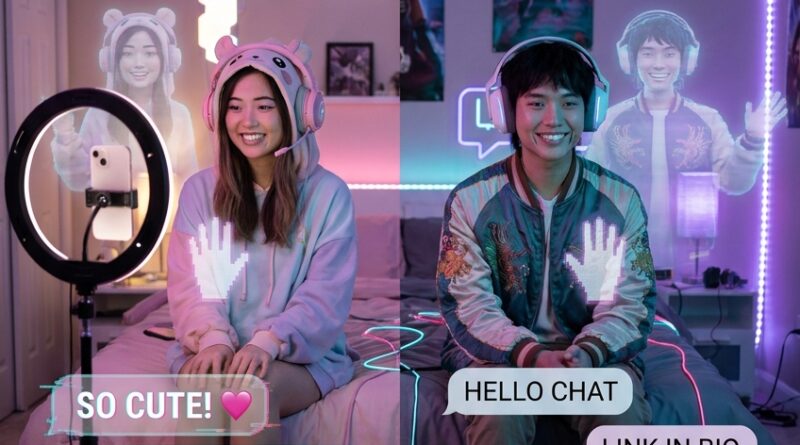
Inside TikTok’s ‘NPC Couple Stream’ Takeover: How AI-Lite Roleplay Just Became Gen Z’s Favorite Second Life
You are not imagining it. One minute TikTok was full of dances, GRWMs, and storytimes. The next, your feed turned into couples sitting side by side, staring into the camera, repeating tiny canned lines like game characters waiting to be clicked. It looks awkward, funny, creepy, oddly soothing, and a little depressing all at once. If you cannot tell whether the tiktok npc couple livestream trend is satire, hustle, flirting, or some early draft of human chatbots, that confusion is part of why it works. These streams feel simple, but they hit several pressure points at once. They are easy to watch, easy to gift, easy to copy, and weirdly comforting in a moment when a lot of people are tired of polished influencer content. What looks like nonsense is really a very online mix of improv, routine, romance theater, and algorithm bait.
⚡ In a Hurry? Key Takeaways
- The tiktok npc couple livestream trend blew up because it turns repetition, gifts, and couple chemistry into a live loop viewers can instantly understand.
- If you are watching or creating, pay attention to the pattern. Short catchphrases, predictable reactions, and strong on-screen roles are what keep people hooked.
- It is not just cringe. It is also a money format, a loneliness format, and a sign that audiences are getting more comfortable with humans acting a little like AI.
What exactly is an NPC couple stream?
NPC stands for “non-player character,” the background figures in video games who repeat the same lines and movements when you interact with them.
On TikTok Live, creators borrowed that idea and turned it into a performance style. Instead of chatting like a normal livestreamer, they react to gifts, comments, and prompts with repeated phrases, set facial expressions, and tiny scripted motions.
The couple version adds another layer. Now it is not just one person acting like a game character. It is two people building a mini world together. They bounce off each other. They assign themselves roles. One might play the sweet one, the bored one, the jealous one, or the “glitchy” one. Viewers are not just watching. They are poking the machine and waiting for the response.
Why did the tiktok npc couple livestream trend blow up so fast?
1. It is instantly legible
You do not need backstory. You open the stream and get the joke in three seconds. Tap a gift, hear a phrase, watch a repeated move. That kind of instant understanding matters on TikTok, where everything lives or dies in a blink.
2. Repetition is not a bug. It is the product
A lot of internet culture still pretends that fresh, original, spontaneous content is the gold standard. In reality, platforms reward familiar loops. People like patterns. Algorithms love patterns even more.
These streams are built from loops. Same phrases. Same reactions. Same pair dynamic. That makes them easy to stay with in the background, like comfort TV for a brain that is already overloaded.
3. Couples raise the stakes
Two-person NPC streams add tension. Are they actually dating? Are they acting? Are they making fun of couple content while also doing couple content? That little bit of mystery keeps people watching.
It also gives the stream a rhythm solo creators cannot always match. Viewers start reading chemistry, power dynamics, in-jokes, and slight breaks in character. Every tiny slip feels meaningful.
4. Gifts become part of the script
This is a big one. TikTok Live is not passive TV. It is a slot machine with social feedback. A viewer sends a gift. The creators respond with a phrase or motion. That reward loop is clean, simple, and immediate.
In couple streams, gifts can trigger duo reactions. That makes the exchange feel bigger and more theatrical, which can mean more repeat gifting.
Why it feels both human and robotic
This is where the trend gets more interesting than it first appears.
These creators are not actually using advanced AI most of the time. But they are copying the feel of machine behavior. Short response sets. programmed-looking gestures. almost no natural conversation. It is AI-lite roleplay. Human beings pretending to be software because the platform rewards software-like consistency.
That sounds bleak, but it is also weirdly smart. A lot of people are already talking to bots, hearing synthetic voices, and living inside recommendation systems. NPC couple streams take that atmosphere and turn it into entertainment you can watch happening in real time.
So yes, it is a joke. But it is also a mirror.
Why viewers keep watching when they know it is silly
It lowers the effort needed to pay attention
You do not have to follow a plot. You do not need to catch every word. The stream is built to be re-entered at any time.
That makes it ideal second-screen content. You can fold laundry, answer messages, half-watch, and still feel like you are “in” on it.
It gives lonely people a low-stakes social space
This matters more than people admit. Lots of viewers are not there because they think the performance is brilliant theater. They are there because the stream is alive, interactive, and predictable. It feels like hanging out without having to actually hang out.
For some people, that kind of controlled social contact is a relief.
It turns cringe into community
TikTok has a special talent for making people gather around something half to enjoy it and half to mock it. NPC couple streams thrive in that zone.
Some viewers are sincerely fans. Some are ironic viewers. Some are hate-watching. Platform-wise, those groups all look pretty similar. They comment. They share. They stay.
Is this just another weird fad?
Yes and no.
The exact format will probably burn hot and mutate fast. TikTok trends always do. Today it is deadpan couples with repeated lines. Tomorrow it might be fake arguments, AI girlfriend roleplay, “glitch” battles, or more polished versions built by stream teams.
But the deeper pattern is likely to stick around. The tiktok npc couple livestream trend points to three things that are not going away:
- audiences like interactive loops more than traditional performance
- creators are increasingly willing to package their personalities into simple repeatable bits
- online romance and online labor are blending together in public
That last point matters. Couple content has always sold fantasy. NPC couple streams just make the fantasy more mechanical and more honest about being a performance.
What small creators should learn from it
You do not need expensive production
One reason this format spread so fast is that it is cheap to start. A phone, a strong bit, a few repeated lines, and a clear on-screen dynamic can be enough.
But “low effort” is not the same as “no skill”
The best NPC streams are tightly controlled. Timing matters. Facial consistency matters. Gift-response mapping matters. Couple chemistry matters even more.
If you are a creator, the lesson is not “act robotic.” The lesson is “make your format easy to understand and easy to repeat.”
Protect your boundaries
Once a relationship becomes content, viewers start feeling entitled to it. They will speculate. They will push. They will test whether the couple is real, stable, fighting, flirting, or faking everything.
That can get messy fast. Anyone trying this format should decide early what stays on camera and what does not.
What regular viewers should watch for
Notice when the loop is doing the heavy lifting
If you find yourself unable to stop watching, ask what is actually holding your attention. Is it the people? The repetition? The gift sounds? The chance that someone breaks character?
That is not about judging yourself. It is about seeing how these formats are built.
Be careful with gifting
The whole system is designed to make tiny payments feel playful and harmless. Sometimes they are. But repeated micro-spending adds up quickly, especially in streams that train you to expect an instant reward.
Do not confuse performance intimacy with real intimacy
These streams can feel close. That is part of their charm. But closeness on a live platform is still a product. Even when the chemistry is genuine, you are watching a monetized version of it.
What this trend says about internet culture right now
People are worn out. Attention is scattered. Loneliness is common. Platforms reward sameness, speed, and clear signals. Put all that together and you get content that feels half-human, half-automated.
That is why this trend landed so hard. It meets people where they are. Tired enough to want easy entertainment. Curious enough to keep watching something strange. Online enough to recognize that acting like a bot can be a very human way to make money.
It also hints at where creator culture may be heading. Less “watch my authentic life.” More “watch me perform a simplified version of myself that the algorithm can read instantly.”
At a Glance: Comparison
| Feature/Aspect | Details | Verdict |
|---|---|---|
| Why it hooks viewers | Instantly understandable format, repetitive lines, and real-time gift reactions make it easy to watch for “just one more minute.” | Very effective. Built for scroll culture. |
| What couples add | Chemistry, tension, roleplay, and constant viewer speculation about what is real versus staged. | This is what turns a gimmick into a mini soap opera. |
| Long-term meaning | Shows how creators are packaging themselves into simple, machine-friendly live formats that still feel social. | More than a fad. The exact style may fade, but the behavior will stick. |
Conclusion
If the tiktok npc couple livestream trend made you feel old, confused, or mildly alarmed, that is a reasonable response. It is strange on purpose. But it is also useful to read it for what it is. Not just a cringe phase, and not just a joke. It is a fast-changing content format where dating performance, AI mimicry, monetization, and comfort viewing all get mixed together. Once you see that, the trend makes a lot more sense. It gives you language for a style of content that feels silly on the surface but says something real about exhausted audiences, lonely viewers, and platforms that reward repetition over depth. For creators, it is a lesson in how simple loops can outperform polished effort. For viewers, it is a reminder to notice when a stream is offering companionship, theater, and a payment trigger all at once. That is why this matters beyond one weird week on TikTok. It is a preview of how the next version of performing yourself online may look.