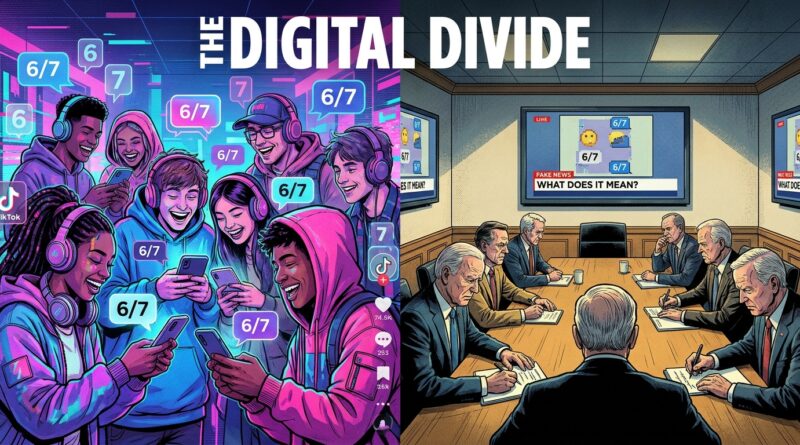
Inside Gen Alpha’s ‘Six-Seven’ Takeover: How One Nonsense In‑Joke Just Hijacked Politics, TikTok And Your Group Chat
You are not imagining it. One minute you are reading comments like a normal person, and the next every reply is just “6/7,” “six seven,” or some variation that looks like a typo nobody bothered to fix. Then your niece drops it in the family group chat. Then a brand account uses it badly. Then somehow political accounts get involved. Annoying, yes. Also useful. If you have been searching what does 6 7 meme mean and finding either smug explainers or overcooked theories, the short answer is this: the joke works because it barely means anything at all. That is the point. “6/7” is part of a Gen Alpha style of humor built on anti-meaning, repetition, and watching older people try to decode what was never meant to have a clean translation. It is silly on purpose, but it also tells you a lot about how internet culture now spreads, mutates, and gets adopted by institutions chasing relevance.
⚡ In a Hurry? Key Takeaways
- “6/7” usually does not have one fixed definition. The meme’s whole joke is that it feels important while staying weirdly empty.
- If you see it everywhere, do not overthink each post. Look at the vibe, who is posting it, and whether they are using it as an in-joke, a reaction, or bait for comments.
- When brands, politicians, or random adults copy it late, the humor often shifts from “funny nonsense” to “look who is trying too hard.” That shift is part of the meme too.
So, what does 6 7 meme mean?
The most honest answer is that “6/7” means different things in different corners of the internet, and often it means almost nothing at all.
That sounds like a cop-out, but it is actually the useful part. Gen Alpha humor has gotten very comfortable with jokes that are funny because they resist explanation. “6/7” acts like a code, a password, a reaction image without the image, and a test all at once. If you ask what it means, that confusion becomes part of the entertainment.
Think of it less like a dictionary word and more like a social signal. People use it to say, “I get the vibe,” “I am in on this,” or sometimes, “Let’s make this thread even more confusing.”
That is why it can pop up under serious videos, random TikToks, sports clips, politics posts, and school memes without one stable definition tying it all together.
Why nonsense is the joke now
Older internet memes often had a clearer punchline. There was an image, a phrase, and a pretty obvious setup. Gen Alpha memes often work differently. They are faster, more disposable, and more interested in the reaction they create than in delivering one neat joke.
“6/7” fits that perfectly.
It rewards confusion
When people flood a comment section with the same odd phrase, others stop scrolling and ask questions. That boosts engagement. Platforms notice. The post gets shown to more people. Confusion is not a bug here. It is fuel.
It feels exclusive
Kids have always liked language adults do not fully understand. Slang, inside jokes, coded references. “6/7” is a lightweight version of that. You do not need a club membership. You just need to know not to explain it too hard.
It is soft rebellion
There is also a tiny act of resistance in these memes. School, family, politics, and brand culture all expect everything to be explained, optimized, and turned into content. A joke like “6/7” says no. It refuses to sit still long enough to be cleaned up into a neat talking point.
How did it spread so fast?
Three things usually drive a meme like this from a weird corner joke to a full-blown takeover.
1. Comment culture now matters as much as the original post
A lot of viral behavior starts below the content, not in it. The comments become the real stage. Once enough people repeat a phrase, it starts to look bigger and more meaningful than it really is.
2. Algorithms love repeated patterns
Platforms are very good at spotting repetition. If thousands of users are typing the same short phrase, that can snowball quickly. The meme does not need deep meaning. It just needs enough people to copy it at the right moment.
3. Adults pile in late
The life cycle is almost predictable now. Kids and smaller communities invent something weird. It spreads sideways. Then bigger creators notice. Then brands start trying it. Then institutional accounts show up. By then, the original joke has often changed. Sometimes the funniest part becomes watching official accounts use the meme with all the grace of a dad wearing a borrowed varsity jacket.
Why even politicians and the White House type accounts would touch this
Because attention is scarce, and institutions now chase cultural relevance in real time.
That is the bigger story here. A throwaway joke from kids is no longer safely contained in kid spaces. Social platforms flatten everything. A school meme can sit next to campaign messaging, news clips, and product launches in the same feed. Once a phrase starts pulling views, institutions try to use it before it goes stale.
The problem is that internet language is not just words. It is timing, tone, and who is allowed to say it. A teenager posting “6/7” under a random video can feel natural. A political account doing it can feel desperate, funny, or accidentally surreal. Sometimes all three.
That tension is why this meme matters more than it seems.
This is not just a meme story. It is a power story.
If you want the useful takeaway, here it is. Cultural authority is moving downward and outward. Not fully, not permanently, but enough that small communities can set the tone before large institutions even know what happened.
That same pattern shows up outside comment sections too. If you want a wider look at how younger communities are changing culture beyond the feed, read From ‘Hot Girl Walk’ To ‘Parking Lot Pimping’: How Viral IRL Meetups Are Quietly Rewiring Youth Culture. It makes the same point from another angle. The internet still matters, but it is not the only place where momentum starts.
How to read “6/7” without sounding lost
You do not need to “get” every meme at a deep level. You just need a quick system.
Look at the setting
Is “6/7” being used in comments as spammy repetition? As a reaction to something awkward? As a signal that the post itself is now part of the joke? Context matters more than the phrase.
Watch who is posting it
If it is peers joking with each other, it is probably community shorthand. If it is a company or official account, they are likely surfing the trend more than shaping it.
Check whether the confusion is the payload
Often the point is not the phrase. The point is making everyone else ask, “Wait, what?” Once you see that, the meme starts making more sense.
Why Gen Alpha finds this funny and older audiences often do not
Because the joke is not built like a traditional joke.
Many adults still expect setup, payoff, and meaning. Gen Alpha is growing up in feeds where remixing, layering, and context collapse happen constantly. Their humor is often post-explanation. It assumes that too much explanation actually ruins the fun.
To them, a phrase like “6/7” can be funny because:
- it is random without being fully random
- it spreads fast with almost no effort
- it annoys people who demand a clear answer
- it turns comment sections into a shared performance
That does not mean every use is brilliant. A lot of it is just pile-on behavior. But pile-on behavior is part of online culture now too.
What creators, marketers, and normal adults should actually learn from this
Do not copy the phrase just because it is trending. Watch what kind of behavior it creates.
For creators
If a small weird phrase starts showing up everywhere, pay attention early. It may be less about the exact words and more about a mood shift. The audience might be asking for playful chaos, not polished messaging.
For marketers
The danger is thinking trend adoption equals relevance. It does not. If you arrive after the joke has already become mainstream, your post may only highlight how far behind you are.
For everyone else
You are not “bad at the internet” because this looks pointless. Sometimes it is pointless. But pointless things can still reveal where attention is moving, who controls the joke, and how quickly platforms turn niche behavior into mass culture.
At a Glance: Comparison
| Feature/Aspect | Details | Verdict |
|---|---|---|
| Meaning | No single fixed definition. It works more like an in-joke, reaction, or social signal than a standard meme phrase. | Intentionally slippery |
| Why it spread | Repetition in comments, algorithm boosts, and curiosity from confused users made it easy to copy and hard to ignore. | Built for virality |
| What it reveals | Kids and niche communities can now spark trends that brands, media, and political accounts rush to imitate. | Important cultural signal |
Conclusion
If “6/7” has been driving you slightly nuts, good. That reaction is part of why it worked. But once you stop trying to pin it down like a vocabulary quiz, the bigger picture comes into focus. This helps the community today because “six-seven” is one of the clearest live examples of how power is flipping in culture. Kids and micro communities can create a meaningless phrase, platforms reward the confusion, and then brands and politicians scramble to copy it before it dies. That gives you a real-time look at where cultural authority actually lives in 2026, how anti-meaning memes work as soft rebellion, and what it looks like when institutions chase clout in a language they barely understand. If you make content, study the early weird stuff. If you just want to keep up, do not panic. You do not need to decode every meme perfectly. You just need to notice who started it, who copied it, and who already missed the moment.