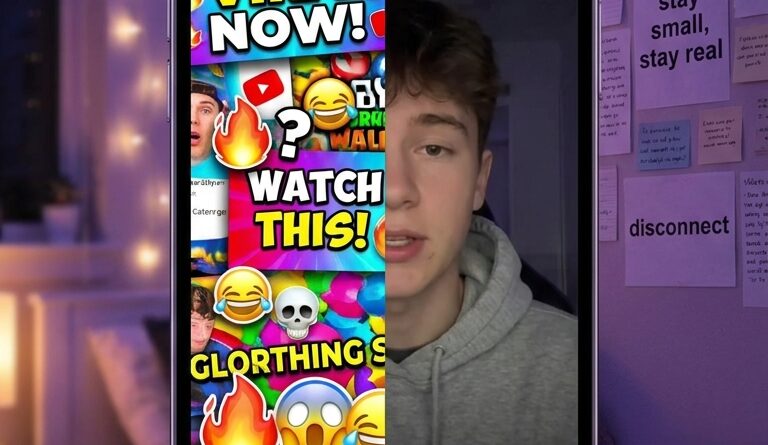
Inside TikTok’s ‘I’m Not Trying To Go Viral’ Wave: How Flop-Core Clips Quietly Became Gen Z’s New Flex For Staying Real
You can feel the pressure every time you open TikTok. Post better. Post more. Hook people in two seconds. Chase the algorithm. Then, weirdly, your feed shows the opposite. People are filming messy rooms, half-finished thoughts, awkward little life updates, and captions that basically say, “I’m not trying to go viral.” That is not laziness. It is a reaction. A lot of Gen Z users are tired of treating every post like a job interview with the internet. The TikTok anti viral trend not trying to go viral is really about taking social media back from performance culture. The flex is no longer “look how huge my reach is.” It is “look how little I need strangers’ approval to post this.” That shift matters because it changes what counts as cool online. Suddenly, smaller audiences, lower stakes, and honest posting feel more impressive than polished clips built to please an app.
⚡ In a Hurry? Key Takeaways
- The TikTok anti viral trend not trying to go viral is a quiet pushback against constant pressure to perform for the algorithm.
- If you want the healthiest part of this trend, post for your actual community, not for random reach. Smaller, slower sharing can feel better.
- This is less about “failing on purpose” and more about protecting your attention, mood, and sense of self online.
What “I’m Not Trying To Go Viral” really means
On the surface, it sounds like a joke. Someone posts a low-effort clip, adds a deadpan caption, and acts almost proud that it might flop.
But underneath that joke is a real cultural shift.
For years, social platforms trained people to think bigger numbers meant better content, better taste, even better lives. If a post did not “hit,” it could feel like you failed. That mindset slowly turned regular posting into unpaid labor. People started editing their personalities for maximum reach.
Now some users are rejecting that whole game.
When they say they are not trying to go viral, they are often saying a few things at once. They do not want to optimize every thought. They do not want every video judged by strangers. They do not want social media to feel like a second shift after school or work.
Why flop-core suddenly feels cool
“Flop-core” sounds silly, but it points to something real. A post that feels casual, undercooked, or almost intentionally unpolished can read as more trustworthy than a perfect one.
That is because people are worn out by content that looks engineered within an inch of its life.
Polished used to signal effort
Now it can also signal calculation. If every frame looks branded, every caption sounds tested, and every emotion lands right on trend, viewers start to feel managed instead of connected to.
Messy now signals honesty
A shaky camera, a rambling story, a weird niche joke, or a clip that only five friends fully get can feel more human. It says, “This was made by a person,” not “This was made for metrics.”
That same shift shows up in other corners of TikTok too. You can see it in smaller behavior-based trends like Inside TikTok’s 30‑Day Eco Swap Wave: How One Tiny Challenge Quietly Became Gen Z’s New Status Symbol, where the appeal is not huge spectacle. It is quiet proof that someone is trying to live a little more intentionally.
Why Gen Z is drawn to this now
Timing matters. This trend did not appear out of nowhere.
Gen Z came of age in a world where posting online was normal, but so was branding yourself. A lot of people learned early that your personality could become content, your hobbies could become side hustles, and your friendships could become audience growth tools.
That gets exhausting fast.
The anti-viral flex makes sense in a culture where burnout is common and attention feels scarce. Refusing to chase scale can feel like taking back control.
It is a status signal, just a different one
There is still a flex here. It is just changed shape.
Before, the brag was reach. Now the brag is detachment. “I do not need to perform for everyone.” “I post what I want.” “I am fine if this only makes sense to my corner of the internet.”
That can be healthier than obsession with numbers, though it is worth saying one thing clearly. Even anti-performance can become a performance if people turn “not caring” into its own brand. The internet is sneaky like that.
How the algorithm accidentally helped create this mood
TikTok made giant audience jumps feel possible. That was exciting at first. Anyone could post and suddenly land on millions of screens.
But that same possibility created a new kind of stress.
When every post has the tiny chance of exploding, every post also starts to feel high stakes. A video meant for friends can suddenly be pulled into front of strangers who do not share the context, humor, or tone. People learned that virality is not always fun. It can be invasive, confusing, and weirdly lonely.
So some users are backing away from the dream they were told to want.
They are not just saying, “I do not think this will go viral.” They are saying, “I do not want my entire online life designed around the possibility.”
What this trend gets right about mental health
The healthiest part of the TikTok anti viral trend not trying to go viral is not the irony. It is the boundary setting.
Smaller audiences can feel safer
Posting to people who roughly understand you usually feels less draining than posting to a giant unknown crowd. Context matters. So does trust.
Lower stakes can make creativity better
When every post is trying to “win,” creativity narrows. You repeat formats that worked. You chase sounds, hooks, and formulas. When virality stops being the goal, people often get more playful again.
It helps separate self-worth from stats
This might be the biggest point. Views are not neutral. They can sneak into your sense of value if you let them. A trend that normalizes low-pressure posting can interrupt that loop.
How to copy the good part without turning it into another trend costume
You do not need to fake being careless. You also do not need to start posting bad videos on purpose just to prove a point.
Here is the useful part to borrow.
Post for a person, not the platform
Before uploading, ask who this is actually for. A friend group. People who share your hobby. Yourself in six months. That one question changes the tone of what you make.
Stop editing every rough edge out
If a post is clear enough, it is probably clear enough. Not everything needs ten retakes, captions engineered for retention, and trend audio glued on top.
Let some posts be small
Not every thought needs to scale. Some things are better when they stay niche. Smaller response does not mean less meaningful response.
Notice how your body feels after posting
This sounds simple, but it is useful. Do you feel relief, dread, compulsion, or calm? If posting leaves you checking numbers every three minutes, that is information.
Curate your feed toward humans, not performers
If your For You page is full of people treating life like a content factory, you will start absorbing that pressure. Follow creators who make the app feel lighter, slower, and more real.
Is this actually anti-viral, or just the next aesthetic?
Honestly, both.
Some of it is sincere. Some of it is style. That is normal on social media. A real feeling appears, then the platform turns it into a recognizable format.
Even so, the feeling underneath is still worth taking seriously.
People want room to exist online without acting like mini media companies. They want feeds that feel social again, not relentlessly strategic. They want connection without always converting it into numbers.
That is why this trend resonates. It puts a label on a frustration many users already had but had not fully said out loud.
At a Glance: Comparison
| Feature/Aspect | Details | Verdict |
|---|---|---|
| Traditional viral mindset | Posts are built for reach, trend fit, retention, and maximum exposure. | Effective for growth, but tiring if it becomes your default. |
| Anti-viral or flop-core posting | Posts feel casual, niche, less optimized, and more aimed at real people than the algorithm. | Healthier for many users, especially if you want lower pressure. |
| Best balanced approach | Use platform tools when helpful, but keep your goals personal and realistic. | The most sustainable option for staying creative without burning out. |
Conclusion
The big value of this moment is that it gives a name to something a lot of people have been feeling for a while. Not everyone wants to be “on” all the time. Not every post should be a pitch for mass attention. The quiet rebellion behind the TikTok anti viral trend not trying to go viral is really about choosing sanity over scale. And that is useful. It gives people permission to make their feeds smaller, slower, and more intentional. If you take one thing from this wave, let it be this. Social media works better when it feels human again, not like an unpaid full-time job where your personality is always up for review.