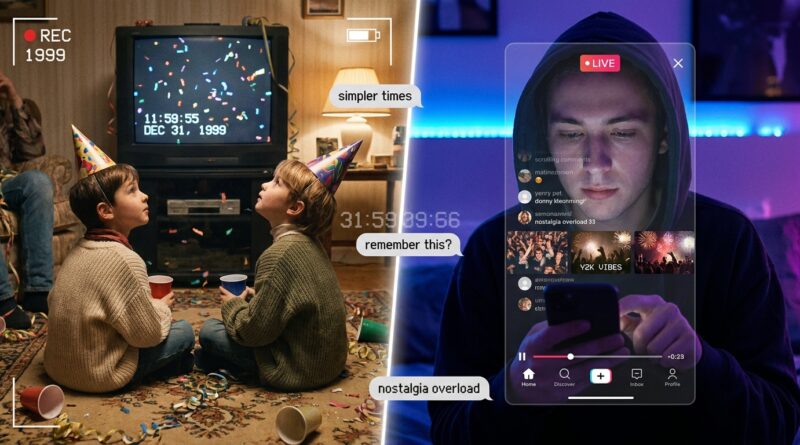
Inside TikTok’s ‘Last Night Of The 20th Century’ Wave: How One Y2K Meme Quietly Became Gen Z’s New Shortcut To Feel Something
Your TikTok feed is probably starting to feel weirdly emotional and weirdly fake at the same time. One clip shows grainy fireworks, a family camcorder timestamp, and some soft caption about “the last night of the 20th century.” Suddenly millions of people are watching like they personally stood in a living room on December 31, 1999, waiting for the world to change. That is the strange power of the TikTok last night of the 20th century nostalgia meme. It is not just another Y2K fashion trend or a lazy throwback. It works because it gives people a shortcut to borrowed memory. Even if they were babies, or not born yet, the format lets them feel like they missed something huge and intimate. That feeling matters, because it explains where nostalgia content is heading next, and why some old clips hit hard while others just disappear into the scroll.
⚡ In a Hurry? Key Takeaways
- The TikTok last night of the 20th century nostalgia meme works because it turns Y2K footage into a tiny emotional story, not just a retro look.
- If you want your own nostalgia post to land, use specific moments, simple captions, and real ambient footage instead of piling on random vintage filters.
- The value here is not accuracy. It is emotional clarity. But if you overstage it, people can tell, and the post starts to feel hollow fast.
What this meme actually is
At the most basic level, the format is simple. A creator posts footage, photos, TV clips, party scenes, street shots, or home video from New Year’s Eve 1999. Then they frame it as the final hours before the 21st century began.
The caption usually does the heavy lifting. Something like, “the last night of the 20th century,” or “imagine not knowing this was the end of an era.” Add wistful music, a soft zoom, and a few comments from people saying they “miss a night they never had,” and you have the full machine.
That is why the TikTok last night of the 20th century nostalgia meme is bigger than a trend sound. It is a packaged emotion.
Why Gen Z is connecting to a night they never lived
This is the part that feels silly at first, until you sit with it for a minute.
Most Gen Z users do not remember December 31, 1999. Many were toddlers. Some were not born. But that does not stop the reaction. In some ways, it helps. The meme gives them a clean, myth-like version of the past. No bills. No burnout. No endless notifications. Just a countdown, old TVs, dim lamps, cheap cameras, and the feeling that history was still happening in big visible chunks.
It offers “borrowed nostalgia”
Borrowed nostalgia is when you feel sentimental about a time you did not directly experience. The internet is full of it. Kids romanticize mall culture, VHS tapes, old bedrooms, Windows XP desktops, and low-resolution family photos because those things now signal emotional warmth.
This meme compresses all of that into one perfect setup. It says, here was a night full of hope, and nobody knew what was coming next.
It turns history into a private memory
There is also something clever about the scale. The year 2000 was a huge public event. But the clips that spread are usually tiny and domestic. A living room. A kitchen. Somebody laughing off camera. Fireworks through a window.
That mix is powerful. A massive cultural turning point gets filtered through ordinary people. So instead of feeling like a history lesson, it feels like a lost family memory.
Why this meme is doing better than standard Y2K content
A lot of nostalgia posts go nowhere because they stop at aesthetics. They give you metallic fonts, low-rise jeans, flip phones, and glitter text, but not much else. Nice to look at. Easy to forget.
The last night of the 20th century format lands harder because it has three things most throwback posts lack.
1. It has a built-in plot
There is a before and after. The clock is about to change. The century is about to end. People in the footage do not know what the next decades will bring. That gives even a quiet clip tension.
2. It has emotional contrast
The viewer is watching innocent, ordinary scenes while carrying everything we now know. Social media. Recession. Pandemic. Constant online life. That contrast creates the ache.
3. It feels personal, not branded
The best videos do not look polished. They look found. That matters. People trust imperfect footage more than a slick nostalgia montage built to farm engagement.
What the meme is really saying
Under the surface, this trend is not really about 1999. It is about longing for thresholds.
People miss moments that feel like a clear turning point. Today, culture often feels messy and endless. Trends overlap. News never stops. Every week feels like ten tabs open at once. A meme about the final night of a century offers something rare. A clean edge. A defined ending. A beginning people can point to.
That is why the format has such a grip. It gives people a story shape they are starving for.
How creators can use this without making empty “comfort content”
If you are trying to make nostalgia content yourself, this trend gives a useful playbook. The lesson is not “post old stuff.” The lesson is “build a feeling around a specific moment.”
Start with a narrow scene
Do not say “the 2000s were better.” That is too broad and too generic.
Say, “the sound of a TV in the next room while everyone waited for midnight.” Or, “the moment a camcorder tried to focus on fireworks through a wet window.” Specific beats general every time.
Use footage that feels lived in
Home video, screen recordings of old interfaces, blurry party photos, forgotten answering machine clips, local news snippets, and low-quality digital camera files all work better than overedited retro templates.
People respond to texture. The shakiness. The room noise. The bad lighting. That is where the emotion hides.
Write captions that suggest, not explain
The strongest captions leave a little room for the viewer. You do not need a paragraph about society collapsing into nostalgia. A short line can do more.
Examples:
“Nobody in this room knew what the next 25 years would feel like.”
“The last few minutes before everything became searchable.”
“A world that still felt local.”
Do not over-filter the past
This is where many creators lose the plot. Too much fake VHS grain, too many dramatic fonts, too much staged sadness, and the clip starts to feel like cosplay instead of memory.
The TikTok last night of the 20th century nostalgia meme works because it feels discovered, not manufactured.
Why brands and creators are paying attention
Nostalgia has always sold. That part is not new. What is changing is the unit of nostalgia. It is getting smaller.
Instead of broad decades, users now react to tiny emotional capsules. One room. One timestamp. One forgotten broadcast. One household ritual. That is easier to share, easier to remix, and easier to make feel personal.
For creators, that means better odds of cutting through. You do not need a giant archive or a full documentary edit. You need one clip with a clear emotional hook.
The risk of this format
There is a downside. Nostalgia can flatten reality. The actual year 1999 was not some perfect glowing pre-digital paradise. It had anxiety, hype, media panic, and plenty of nonsense of its own. The Y2K bug itself was a huge source of fear.
But social media is not rewarding accuracy first. It is rewarding emotional readability. That is why these posts travel. They are less about the truth of the era and more about the truth of the feeling they create right now.
That does not make the trend fake. It just means you should read it as mood, not history.
How to tell if a nostalgia post will actually connect
Before posting, ask three simple questions.
Does it capture a moment, not just a look?
If the answer is no, it may get quick likes but not real comments.
Does it leave room for the viewer to project their own memory?
The best nostalgia posts are slightly open-ended. People need space to insert themselves.
Does it feel human?
If it feels too clean, too branded, or too eager to go viral, viewers pull back.
At a Glance: Comparison
| Feature/Aspect | Details | Verdict |
|---|---|---|
| Standard Y2K aesthetic posts | Focus on fashion, fonts, gadgets, and surface-level retro visuals | Easy to scroll past unless there is a stronger emotional hook |
| “Last night of the 20th century” meme | Uses a specific historical threshold, intimate footage, and wistful framing | Hits harder because it feels like memory, not just style |
| Creator takeaway | Old clips work best when paired with a simple story and one clear emotion | Best approach for making nostalgia content people actually remember |
Conclusion
The TikTok last night of the 20th century nostalgia meme matters because it shows what nostalgia looks like now. It is no longer enough to post a cute throwback and hope people feel something. The clips winning today package the past into tiny emotional stories that feel personal, even when the audience never lived them. That helps the community right now because nostalgia is the engine behind so many viral formats, and this meme is one of the clearest signs of how that engine is changing in real time. Once you see why it works, you can do more than copy the vibe. You can use old footage, screenshots, home videos, and forgotten clips to build micro-stories with real emotional weight. That is the difference between comfort content people half-watch and a post that actually stops the scroll.